InterProcess Sp. z o.o. | Solutions for industry

What tank weighing is
Direct mass measurement instead of estimating a level
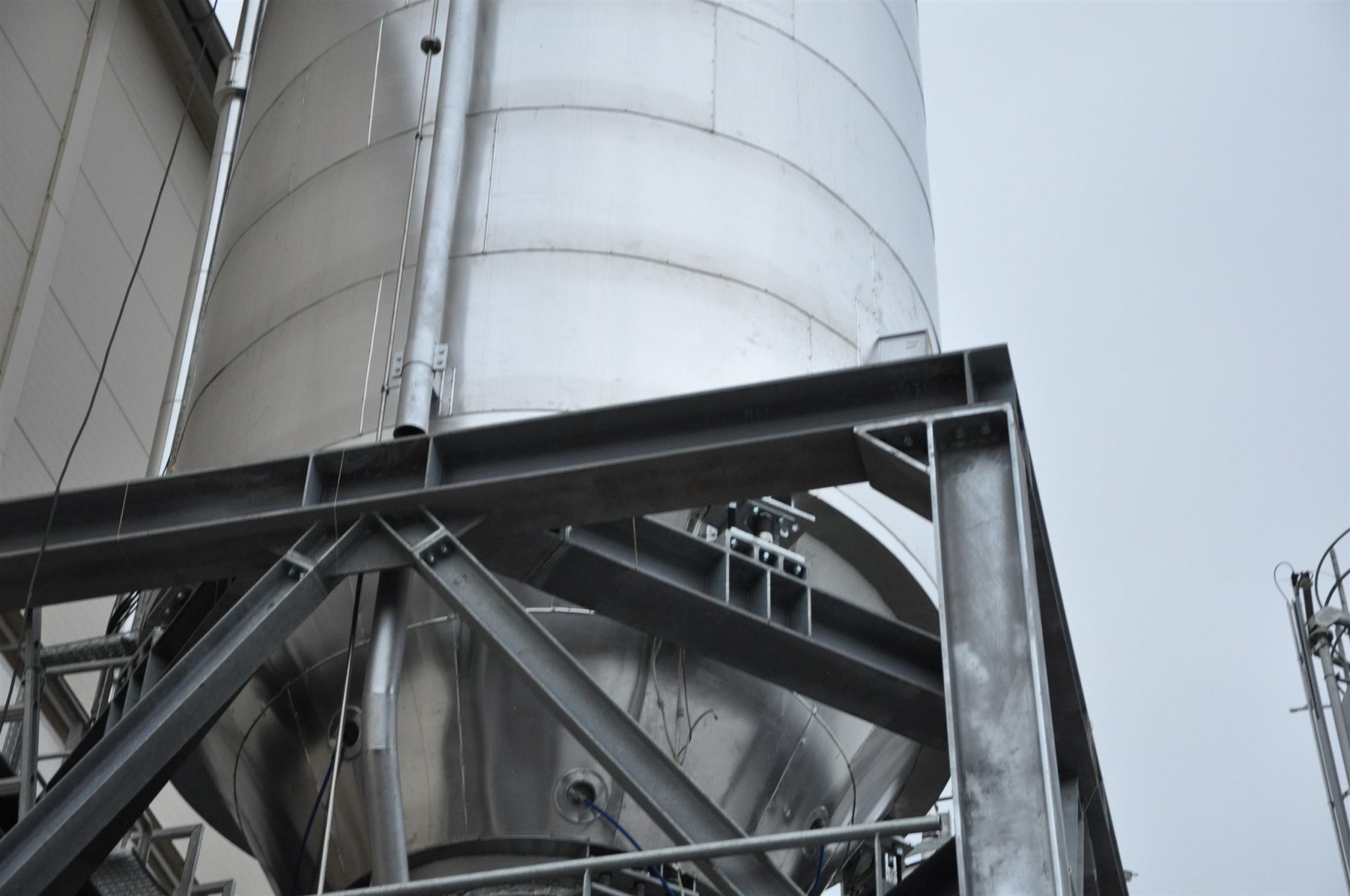
Tank scales, also known as silo scales, weigh modules for tanks or tank weighing systems, measure mass directly rather than a level converted into a volume. Unlike capacitive, radar or ultrasonic probes, the gravimetric method needs no knowledge of the density, the dielectric constant or the speed of sound in the medium, and it is not disturbed by dust, foaming, bridging or caking.
At InterProcess we design tank scales individually, both for tanks still being built and for those already in place. The load cells are mounted directly in the tank supports, with the appropriate load-transfer elements, bumpers, tie rods and a weighing terminal. When upgrading an existing installation, bolt-on strain sensors fitted to the supports are an option: mass measurement without interfering with the structure of the tank.
Operating principle
From the load cell in the support to the mass reading
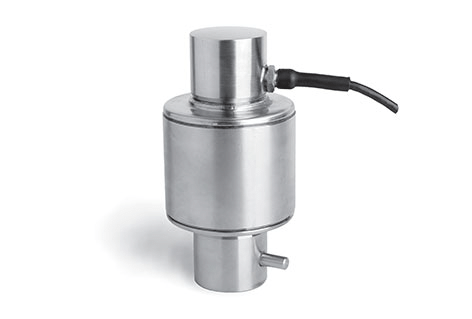
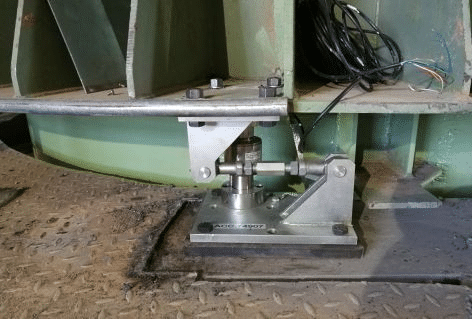
A typical silo scale consists of load cells mounted in the tank supports, mounting kits (weigh modules) that ensure the load is transferred correctly, a junction box and a weighing terminal. The load cells, most often shear or compression types, generate an electrical signal proportional to the load.
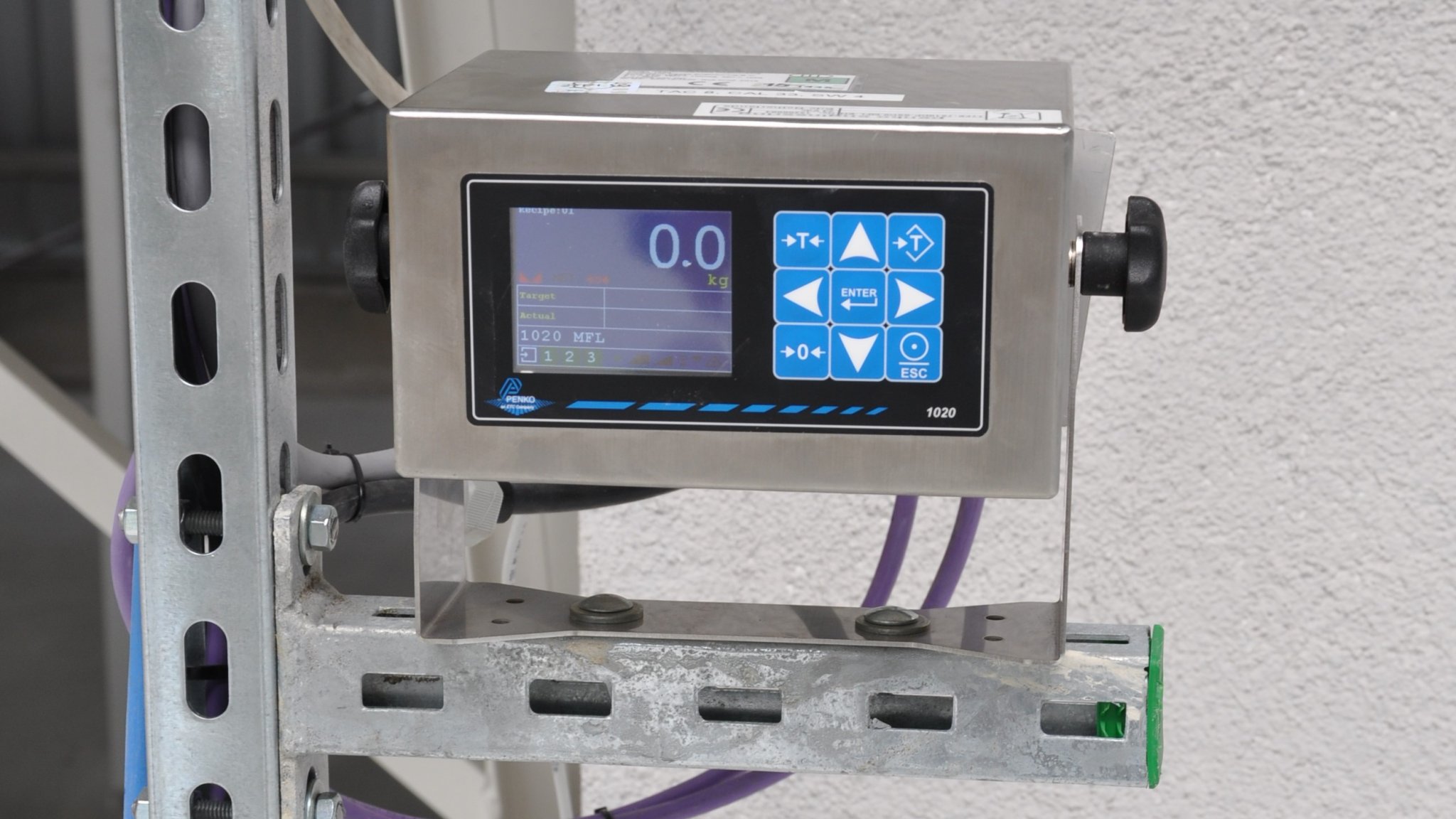
The signals from all the load cells are summed and then converted by the weighing terminal into a mass reading in kilograms or tonnes, which is also available in the plant’s supervisory system.
Diagram of a tank weighing system: the signals from the load cells in the supports are summed in the junction box and converted by the weighing terminal into a mass reading.
What determines the accuracy
The key to a tank scale working properly is eliminating side forces. These can arise from rigid connections between the tank and pipework, ventilation ducting or other parts of the installation. The right weigh modules, with load-transfer elements, bumpers and tie rods, compensate for those forces.
- Compensation of side forcesflexible expansion joints on the connections, bumpers and tie rods in the modules
- Load cell classcapacity and accuracy class selected for the particular application
- Calibrationthe quality of system calibration after installation and in service
- Supporting structurethe stability of the supports and correct load transfer onto the cells
System components
What a weigh module kit for a tank consists of
Every weighing kit is designed individually: for the shape of the tank feet, the environmental conditions and the accuracy required.
Upgrading without touching the structure: strain sensors
We design weighing kits both for tanks still being built and for those already in place. The mounting plates are matched to the shape of the tank feet, so installation calls for no rebuilding of the structure.
On tanks where the supports cannot be modified, we use bolt-on strain sensors, also met with as extensometers. They are bolted to a leg or a supporting beam and measure the deformation of the structure caused by the change in mass, with no structural alterations and without emptying the tank for installation and calibration. The accuracy is lower than with a full weighing kit, inventory-control rather than custody-transfer class, and it depends on the stress level in the support and on the influence of temperature and wind. Where the requirements are higher we therefore fit two sensors per support, with thermal compensation.
Ask about upgrading a tank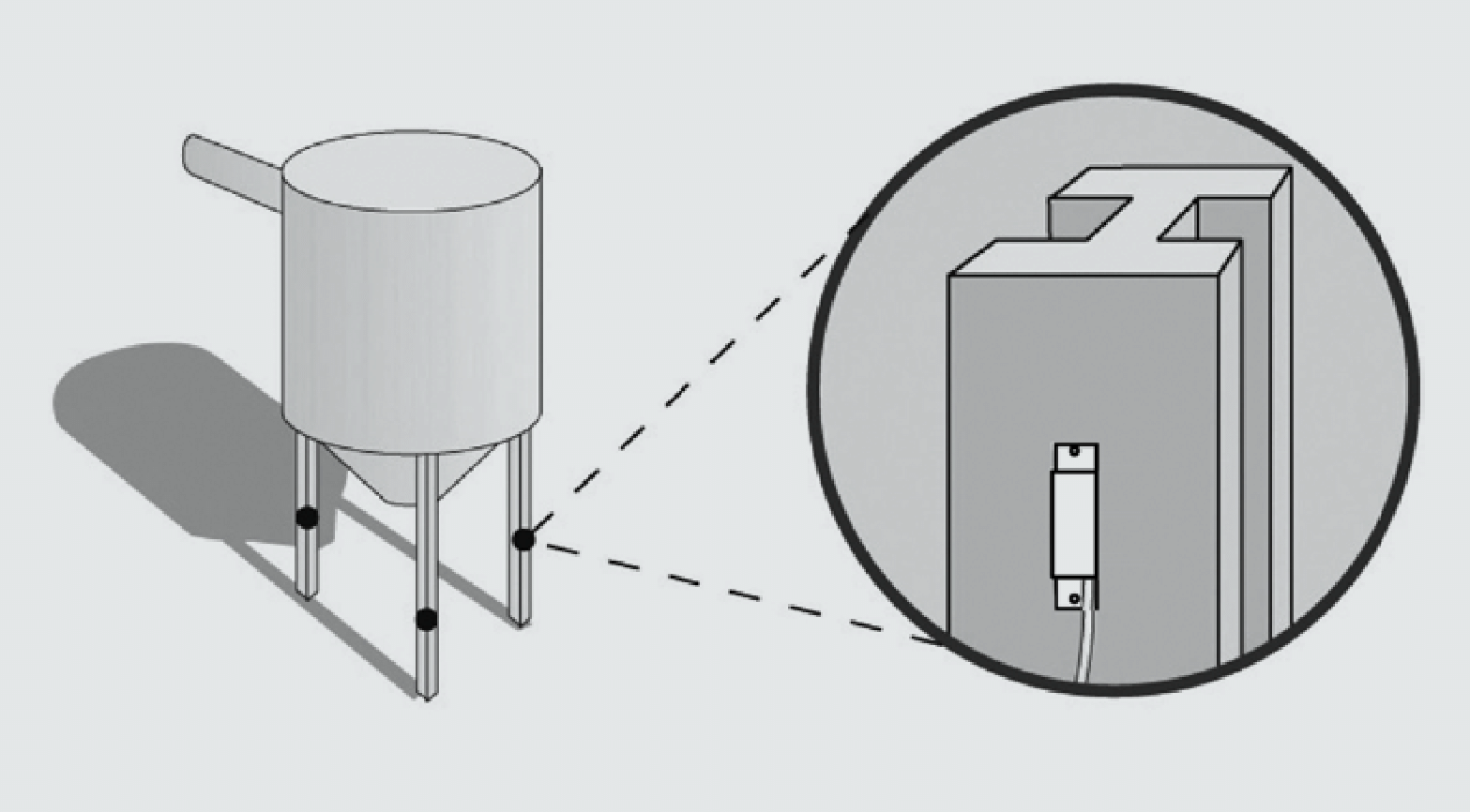
Strain sensors are mounted on the tank’s supporting sections: one or two per support, without interfering with the structure.
InterProcess online shop
Load cells and weighing electronics available online
Load cells, weigh modules, weighing terminals, junction boxes and accessories for fitting yourself or for upgrading an existing scale. Order directly from our shop.
Weighing vs level measurement
Which measuring method to choose?
Level probes, whether radar, ultrasonic or capacitive, measure the height of the material and convert it into a volume. The result depends on the bulk density, the geometry of the tank and the behaviour of the medium. A tank scale measures mass directly, and mass is the quantity that really counts in production and in settlement.
| Parameter | Tank scale gravimetric | Level measurement radar · ultrasonic · probes |
|---|---|---|
| Quantity measured | Mass, directly in kg or tonnes | Level → converted into volume and mass |
| Dependence on the properties of the medium | ✓ None: powder, granulate, liquid or gas | ✗ Needs the density, dielectric constant or speed of sound |
| Dust, foaming, bridging | ✓ No effect on the measurement | ✗ Disturb the probe reading |
| Angle of repose and caking | ✓ No effect, mass is mass | ✗ Falsify the level reading |
| Interference with the tank | Mounted in the supports, no openings in the shell; strain sensors as an option | A mounting socket in the roof or wall of the tank |
| Batching and stock balance | ✓ Weighing out batches, recording of receipts and issues | ✗ Only an approximate degree of filling |
| Investment cost | Higher: load cells, modules and a terminal | Lower: a single probe |
| When to choose it? | Stock balance, batching, recipes, settlement, difficult materials | Approximate level control of uniform, “easy” media |
Functions and operating modes
From stock control to automatic batching
The range of functions depends on the controller used and on the configuration of the system: from a simple mass reading to fully automatic batching.
Continuous mass measurement
A constant reading of how full the tank is, the basis of raw material stock control.
- the mass displayed on the terminal and in the supervisory system
- minimum and maximum level alarms
- orders generated automatically when stock reaches its minimum
Balancing receipts and issues
Material is received and issued with the quantities recorded at the same time, giving full control of the raw material flowing through the tank.
- the quantities of material received and issued are recorded
- data on changes in mass is archived
- production and settlement reports
Weighing out and batch dosing
Automatic weighing out and dosing of set batches of material. The tank becomes part of the dosing system.
- set batches measured out in batch mode
- valves, feeders, slide gates and pumps controlled from the terminal
- multi-ingredient recipes supported
Integration with the control system
The scale as part of the plant’s process automation
Communication with supervisory control systems, PLC and SCADA, makes the silo scale an integral part of the process automation: it allows data on changes in mass to be archived, production reports to be generated and the state of the tanks to be monitored remotely. Modern weighing terminals control the actuators, valves, feeders, slide gates and pumps, directly, without an additional controller in between.
Modbus RTU / TCP
Profibus
Profinet
EtherNet/IP
analogue and relay outputs
If your application calls for precise dosing with active flow control, take a look at our gravimetric screw feeders and belt weighfeeders.
System selection
Which tanks do we design scales for?
Practically every type of industrial vessel. The type of tank determines the choice of load cells, the mounting kits and the way side forces are compensated.
| Type of tank | Typical medium | Decisive in the selection |
|---|---|---|
| Storage tanks and silos | bulk solids, granulates, powders, from a few hundred kilograms to over 100 tonnes | load cell capacity, tie rods and bumpers on outdoor silos (wind) |
| Process vessels and mixers | recipe ingredients, blends | compensation of dynamic forces from agitators and vibrators |
| Chemical reactors | reagents, aggressive media | flexible connections for pipework and heat exchangers |
| Liquid tanks | milk, chemical liquids, fuels | corrosion-resistant materials, hygienic construction |
| Feed hoppers and feeders | part of gravimetric feeding systems | high resolution and dynamic response, for example in loss-in-weight feeders |
Industries and applications
Industrial applications of tank scales
Food and animal feed industry
Raw material stock control in silos, flour, grain, sugar and feed, and the dosing of recipe ingredients in mixers.
Chemical and pharmaceutical industry
Precise balancing of reagents, monitoring of reactor contents and quality control of the production process.
Construction and cement industry
Weighing kits under silos for stock control of cement, lime and aggregates.
Logistics and storage
Automatic stock monitoring and order generation once the material reaches its minimum level.
FAQ
Frequently asked questions
Why InterProcess
Why our solutions are worth choosing
Individual design
We design every silo scale for the customer’s particular tank.
Complete delivery
From load cell selection through to installation, calibration and service.
Proven components
Load cells from well-established manufacturers.
Experience across many industries
Food, chemical, pharmaceutical and construction.
Safety and hygiene
Systems compliant with ATEX, HACCP and GMP.
Technical support and service
With a fast response, 24/7 where required.