InterProcess Sp. z o.o. | Solutions for industry

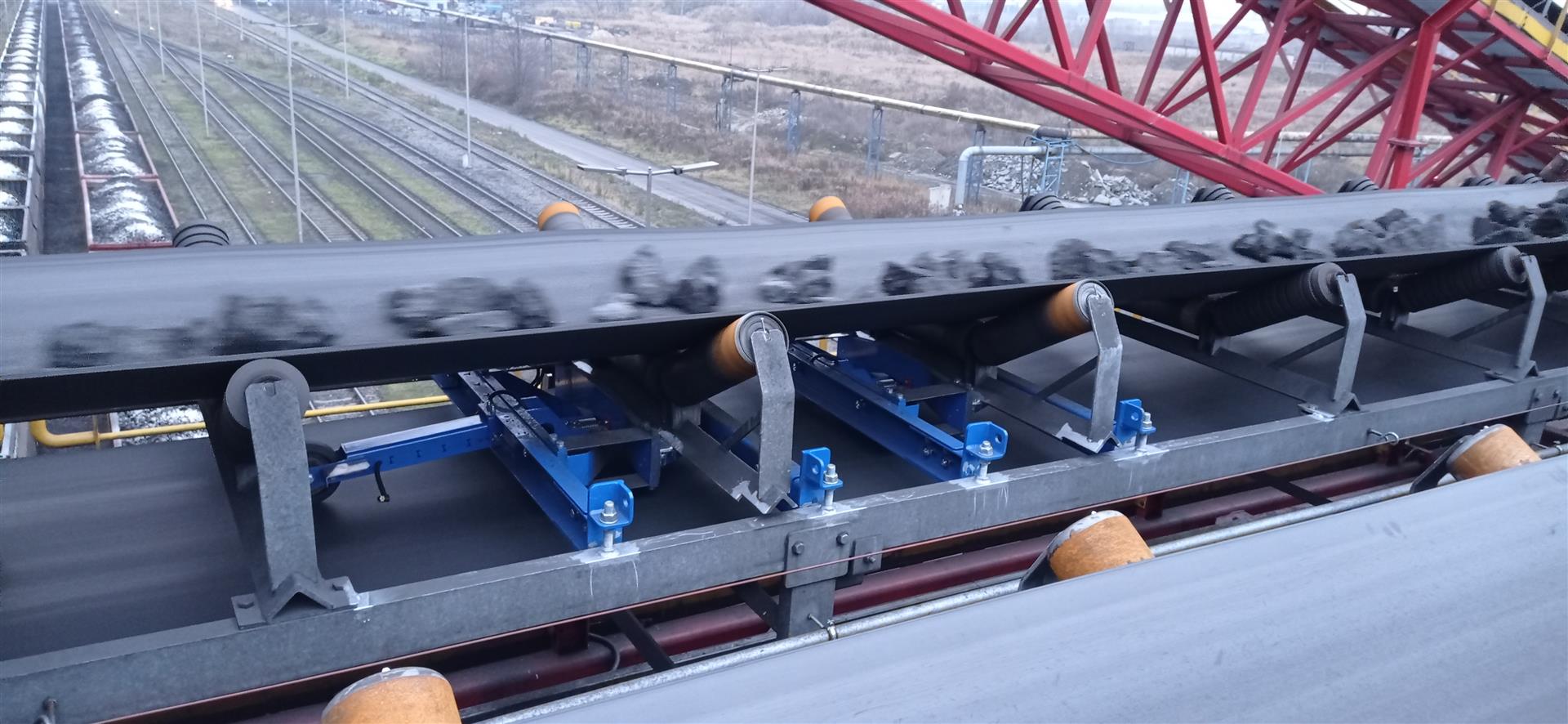
What a belt scale is
Flow measurement without interrupting conveying
Belt scales, also known as belt weighers or conveyor belt scales, continuously measure the stream of bulk material travelling along a conveyor. They let you control raw material consumption, supervise blend ratios, monitor loading and discharge, and control the process itself.
The InterProcess range comprises three models designed for different load ranges and accuracy requirements. We manufacture proven designs ready for installation on customers’ conveyors, and for unusual arrangements we supply units designed specifically for the existing installation conditions.
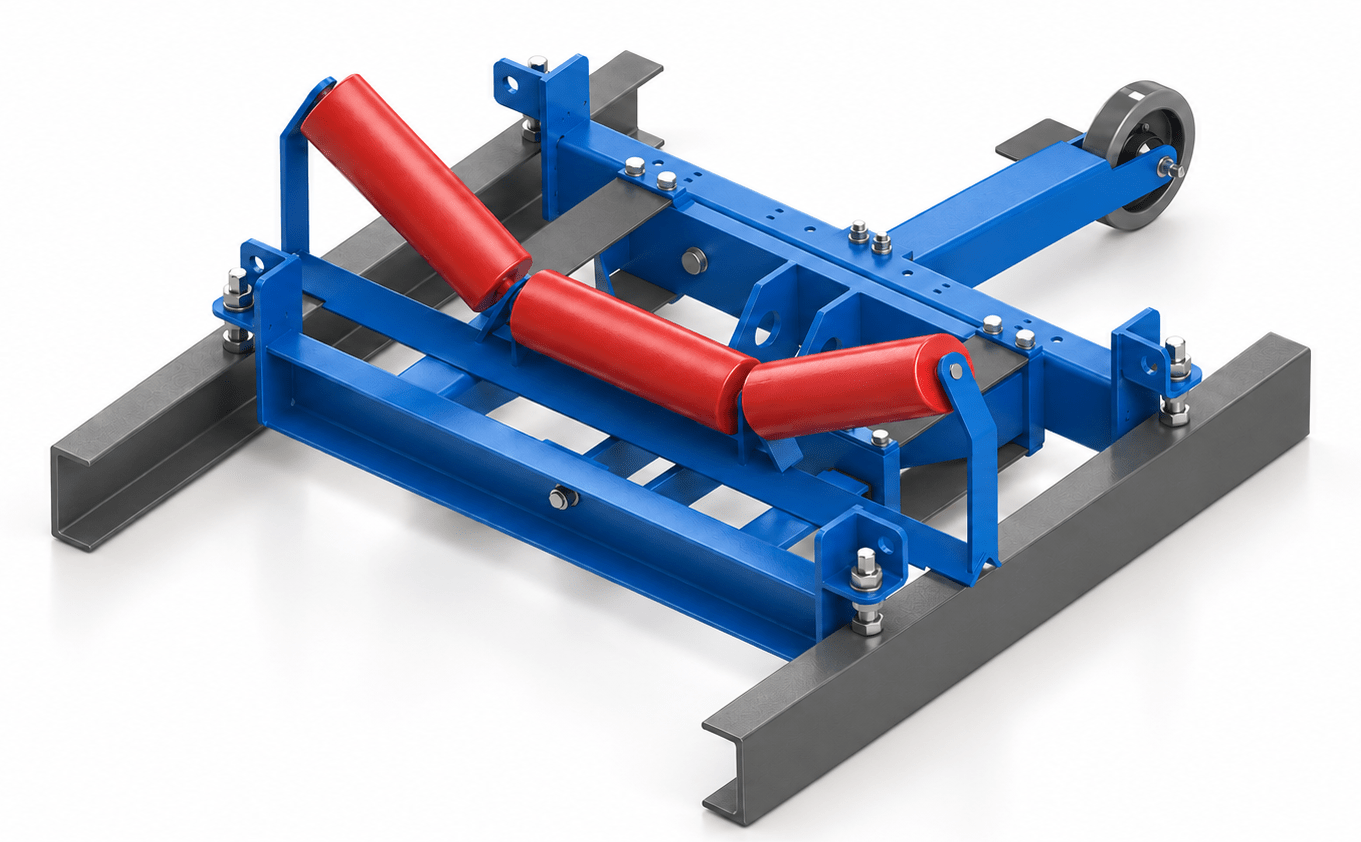
Compact size and price
WPL belt scale
The WPL is the smallest and most affordable conveyor belt scale in our range. Its small dimensions suit installations where mounting space is limited: mobile crushers or short conveyors.
Despite the compact dimensions the structure is very rigid even under high loads, and the shielded load cells are protected against mechanical damage. As in the other models, the whole scale is levelled with adjusting screws.
Key WPL specifications
- Accuracy
- ±1–2%
- Belt width
- up to 1200 mm
- Maximum throughput
- up to 4,000 t/h
- Load cells
- 1 or 2 load cells (aluminium), IP67 — depending on belt width
- Adjustment
- the whole scale levelled with adjusting screws
Downloads
The versatile model
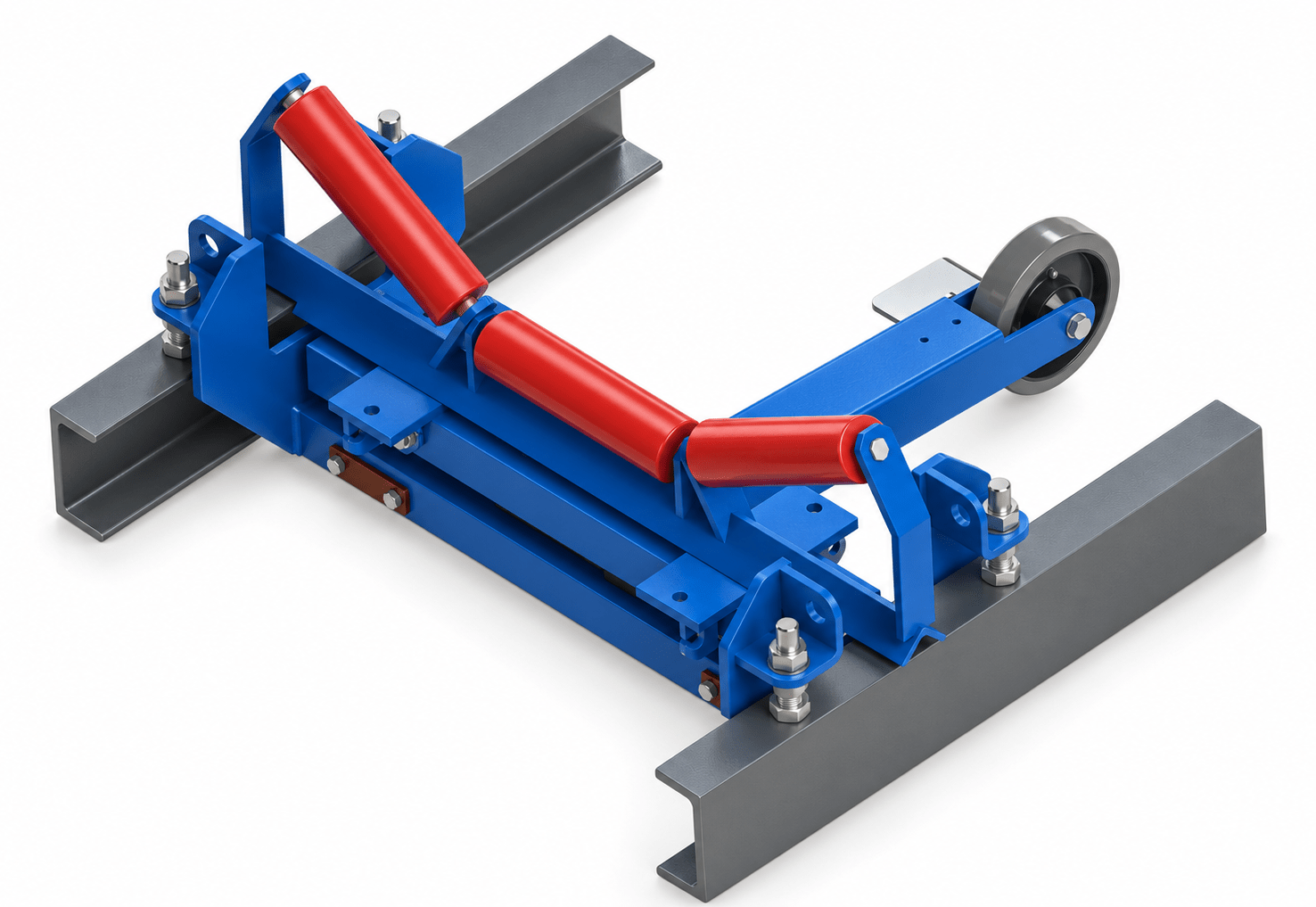
WPC1 belt scale
The WPC1 is the belt scale we most often propose to our customers. Its design, built on a parallelogram frame of flat springs with no levers or pivots, answers the dynamic demands placed on weighing systems working under very high loads.
A single stainless steel load cell rated IP68/IP69K minimises the risk of failure, while telescopic arms let the scale match the spacing of the conveyor structure. The whole scale is levelled with adjusting screws, which simplifies installation and any later correction of its setting.
Key WPC1 specifications
- Accuracy
- measurement error below ±0.5%
- Belt width
- from 500 to 2000 mm
- Maximum throughput
- up to 12,000 t/h
- Load cell
- strain gauge type, stainless steel, IP68
- Construction
- parallelogram frame of flat springs, no pivots
- Adjustment
- the whole scale levelled with adjusting screws
Downloads
Highest accuracy
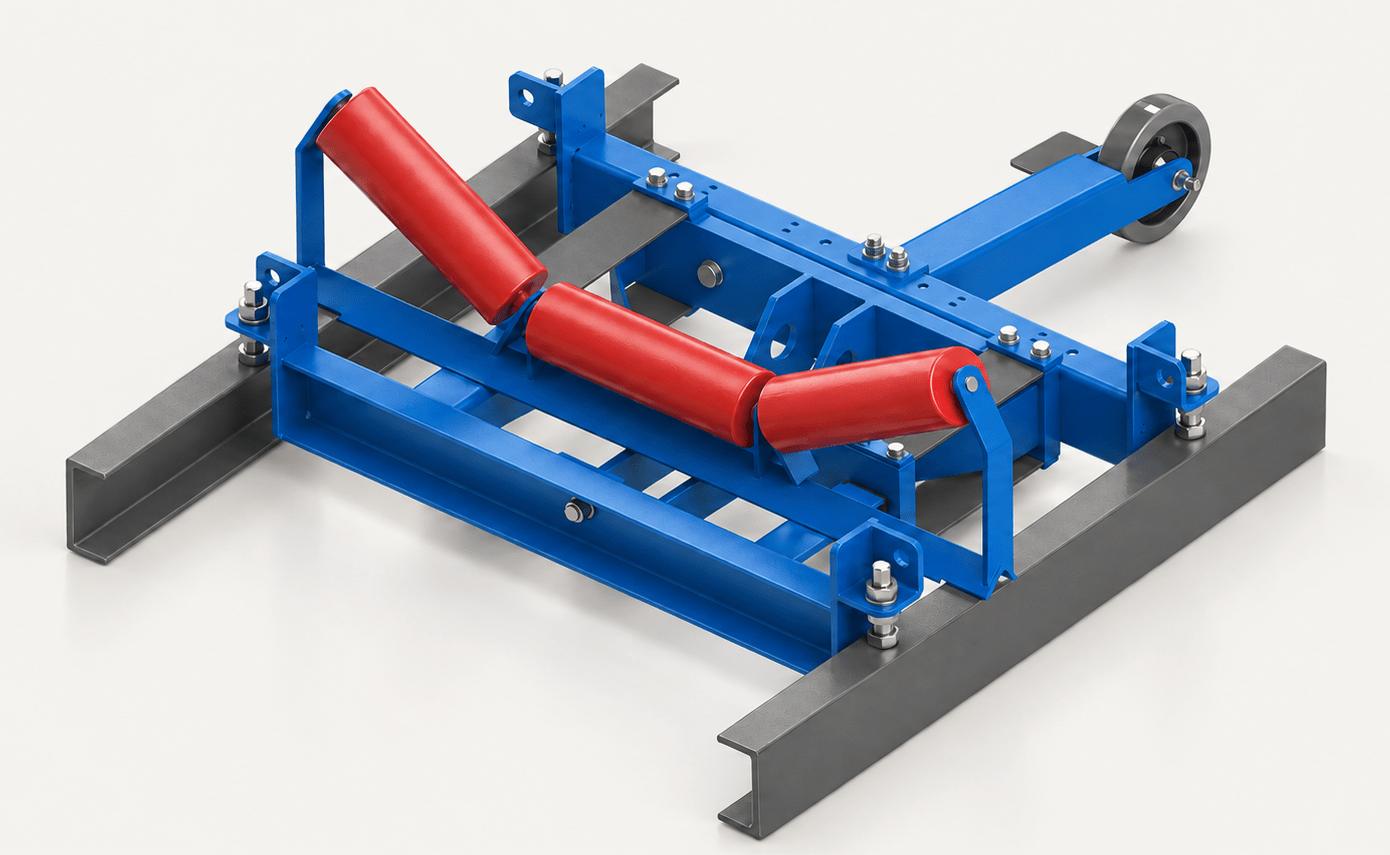
WPC2 belt scale
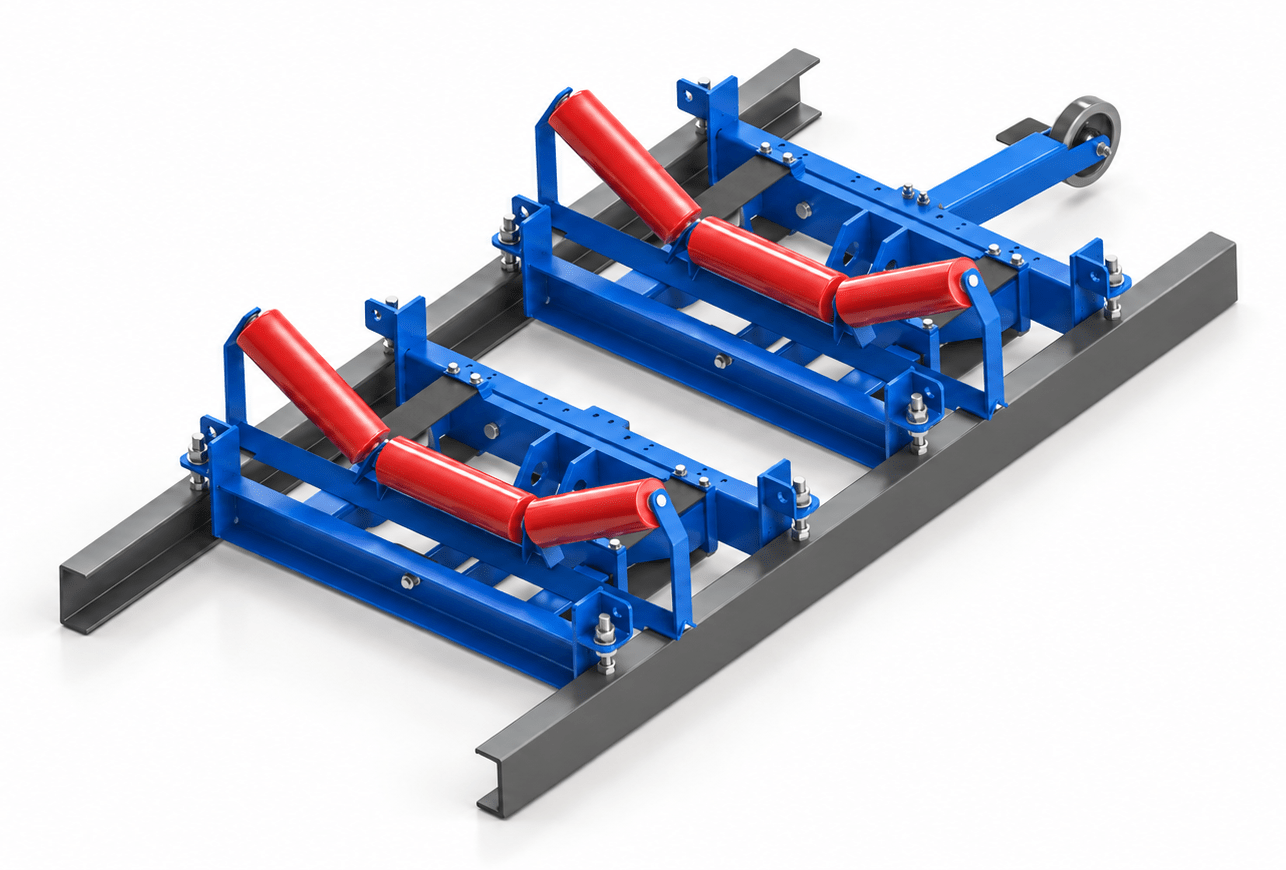
The WPC2 consists of two or more WPC1 scales placed in series on a single conveyor. Extending the weighing zone averages the belt load more accurately, which translates into even higher measurement precision.
All the advantages of the WPC1 design (parallelogram frame, IP68 load cell, no pivots) apply here as well. This is the solution chosen wherever the most accurate material balance matters.
Key WPC2 specifications
- Accuracy
- measurement error below ±0.25%
- Configuration
- two or more WPC1 frames in series
- Belt width
- from 500 to 2000 mm
- Maximum throughput
- up to 12,000 t/h
- Load cells
- strain gauge type, stainless steel, IP68
- Adjustment
- the whole scale levelled with adjusting screws
Downloads
Model comparison
Which scale model should you choose?
The choice depends on the required accuracy, the belt width and the installation conditions. The WPL suits applications where simplicity and restricted mounting space matter, the WPC1 answers most applications, and the WPC2 is chosen wherever the highest precision of the material balance is required.
| Parameter | WPC1 | WPC2 most accurate | WPL |
|---|---|---|---|
| Accuracy | <±0.5% | <±0.25% | ±1–2% |
| Belt width | 500–2000 mm | 500–2000 mm | up to 1200 mm |
| Max. throughput | 12,000 t/h | 12,000 t/h | 4,000 t/h |
| Load cells | 1× stainless steel IP68 | 2× stainless steel IP68 | 2× aluminium IP67 |
| Frame design | Parallelogram (flat springs) | Multi-point (WPC1 in series) | Compact, rigid |
| Levelling | Whole scale, adjusting screws | Whole scale, adjusting screws | Whole scale, adjusting screws |
| Typical application | Versatile, most applications | Highest precision, accurate material balance | Restricted space, mobile crushers |
Do you need not only measurement but also active flow control? Take a look at our DTU and DTC belt weighfeeders, which combine weighing with closed-loop control of belt speed.
Installations
Belt scales in customer installations
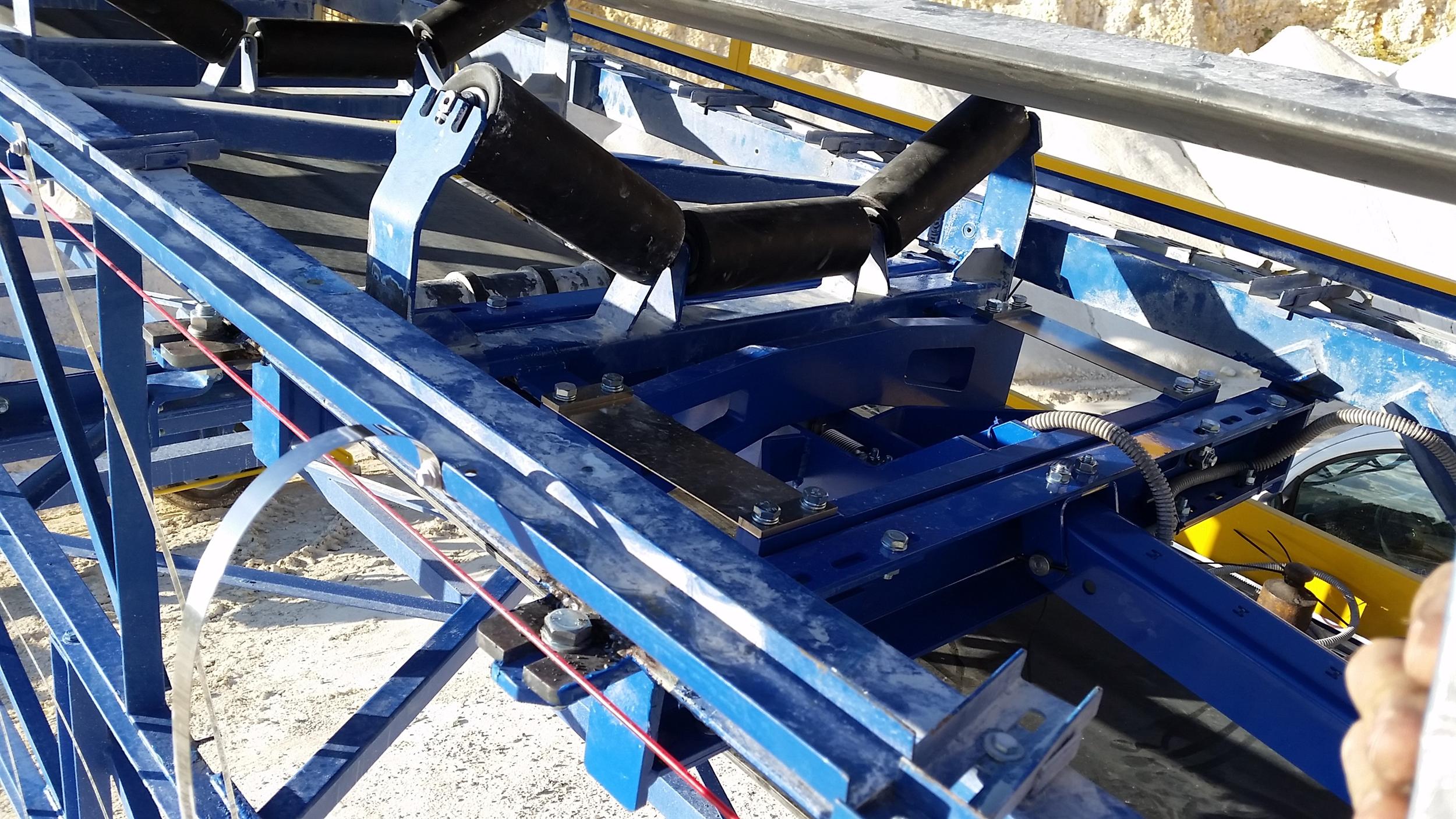
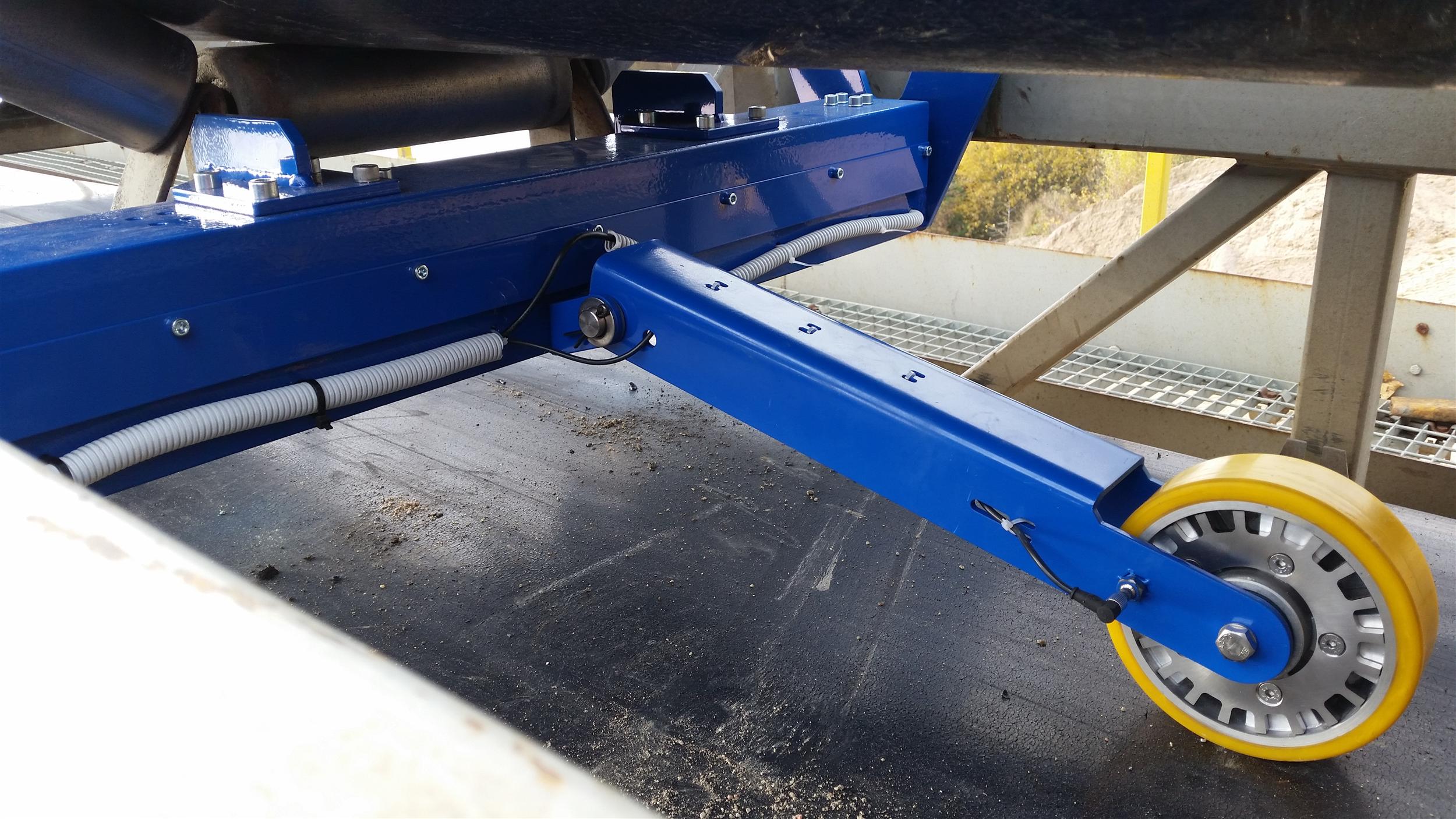
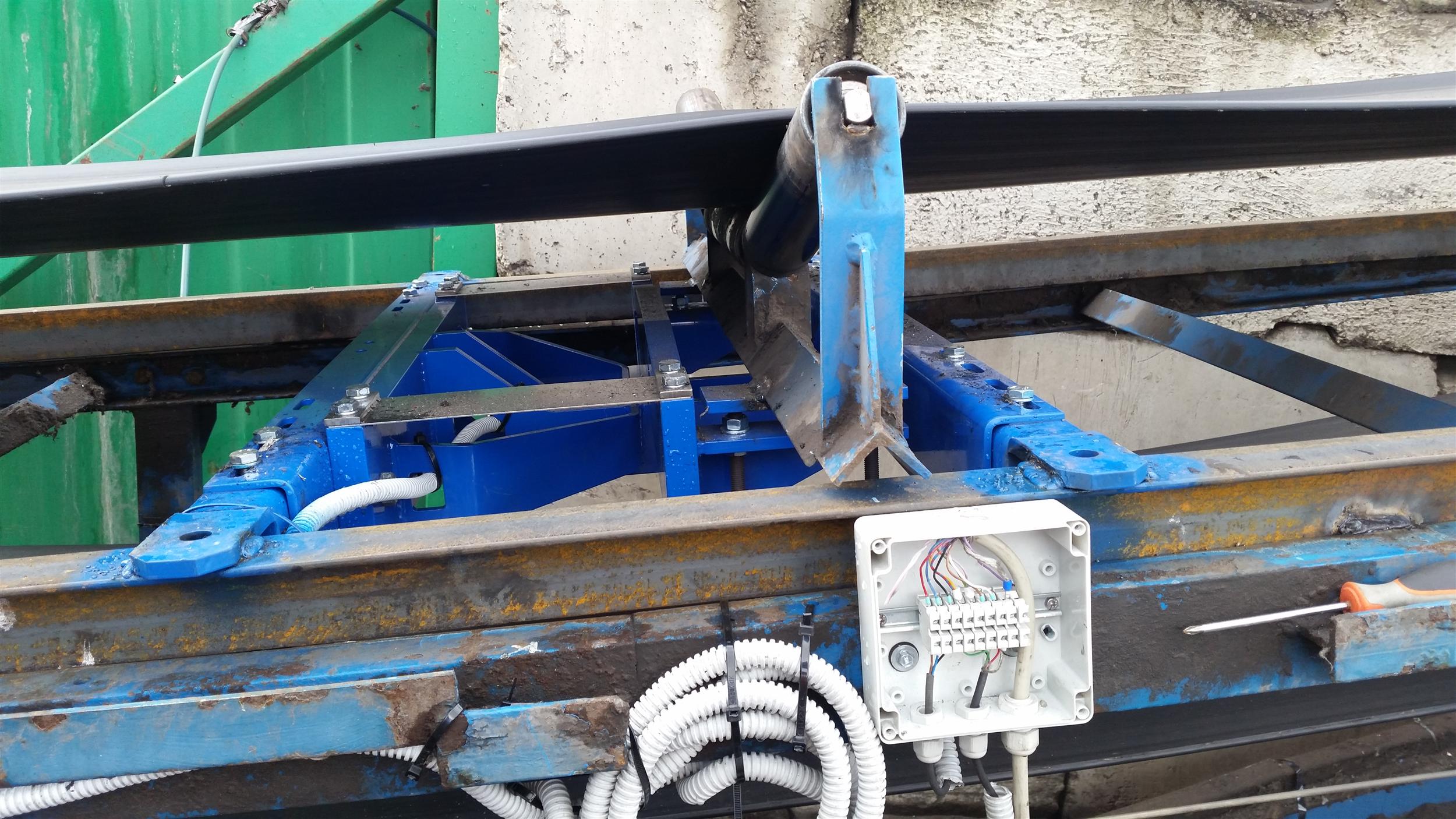
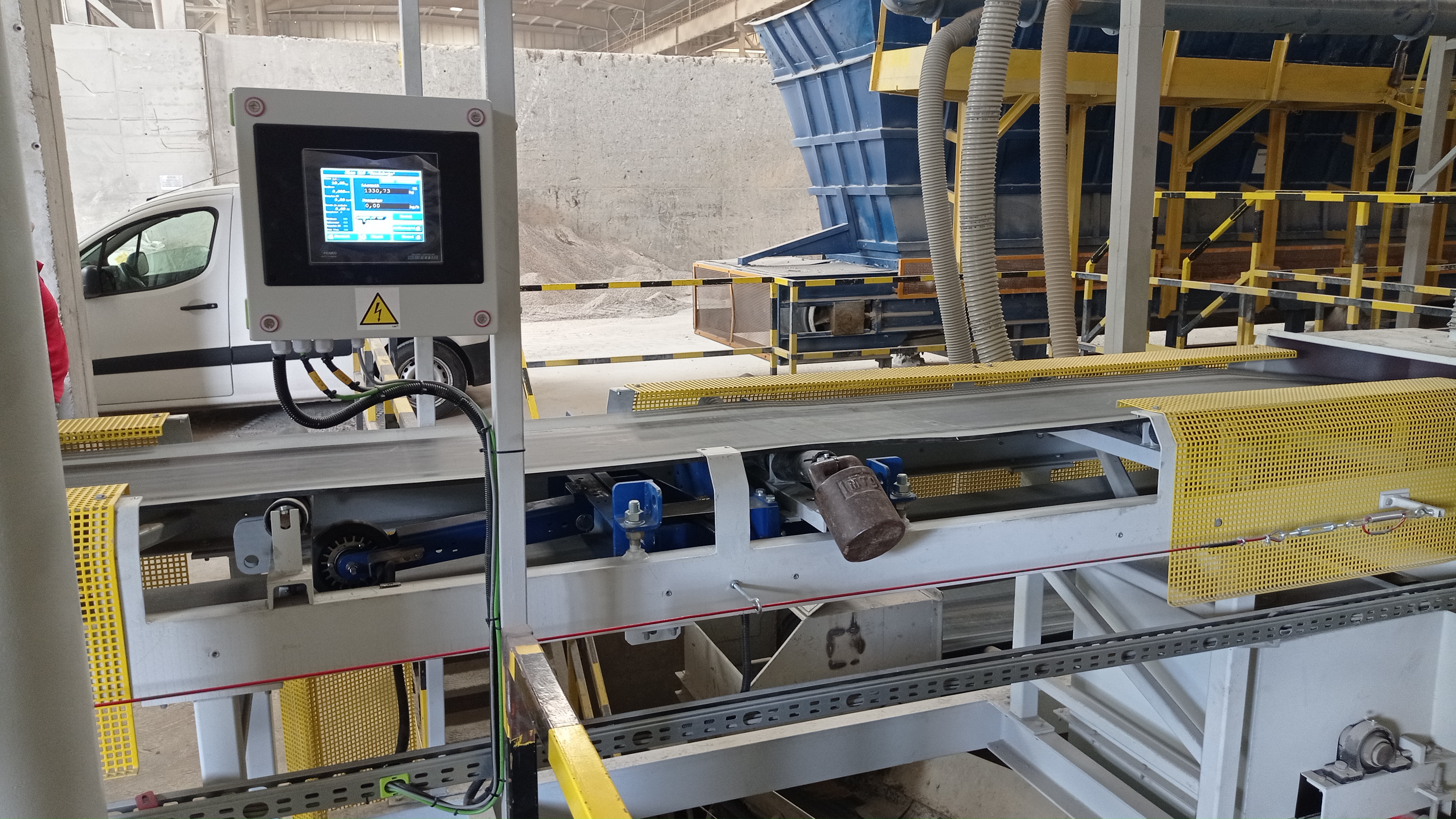
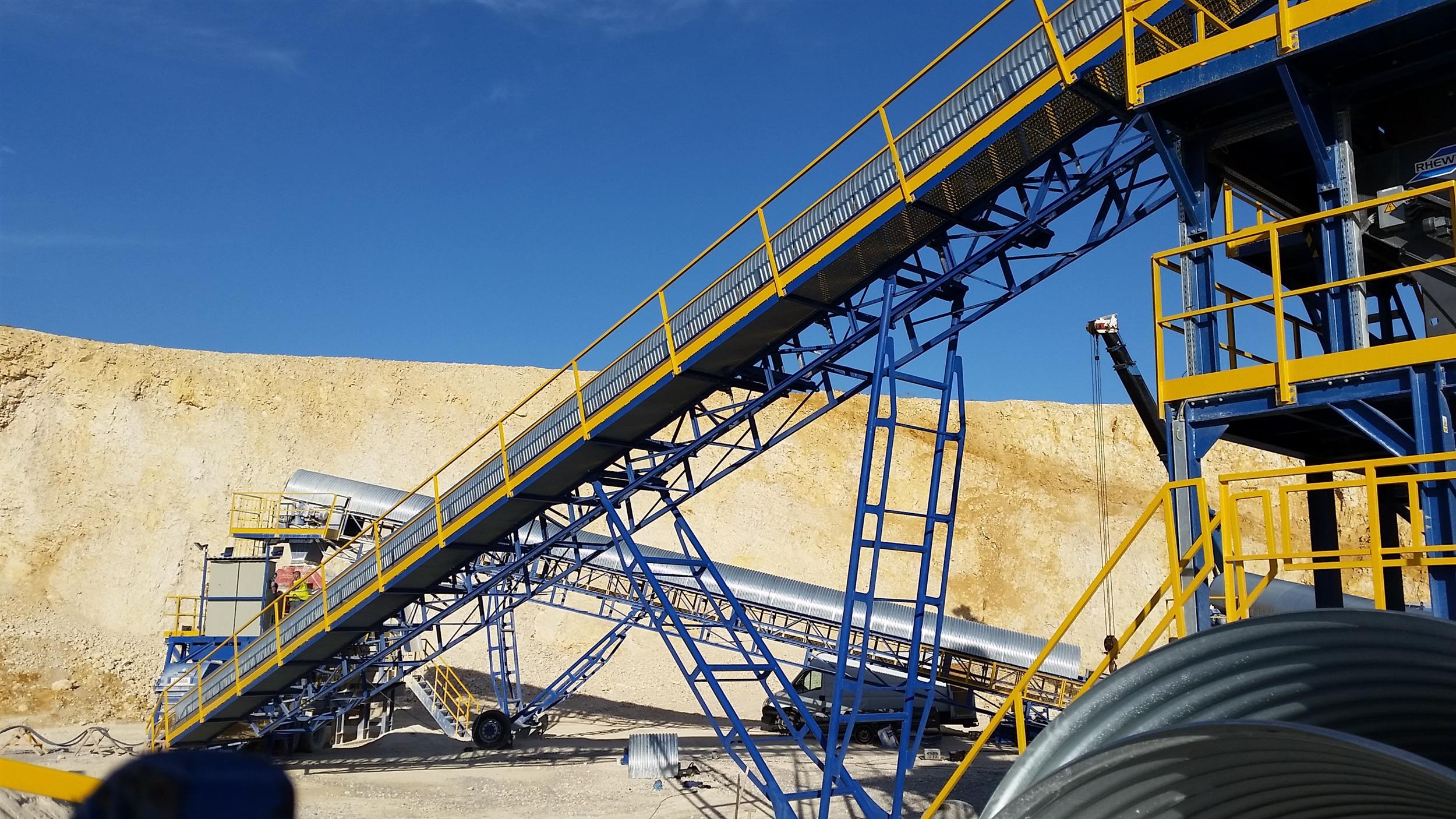
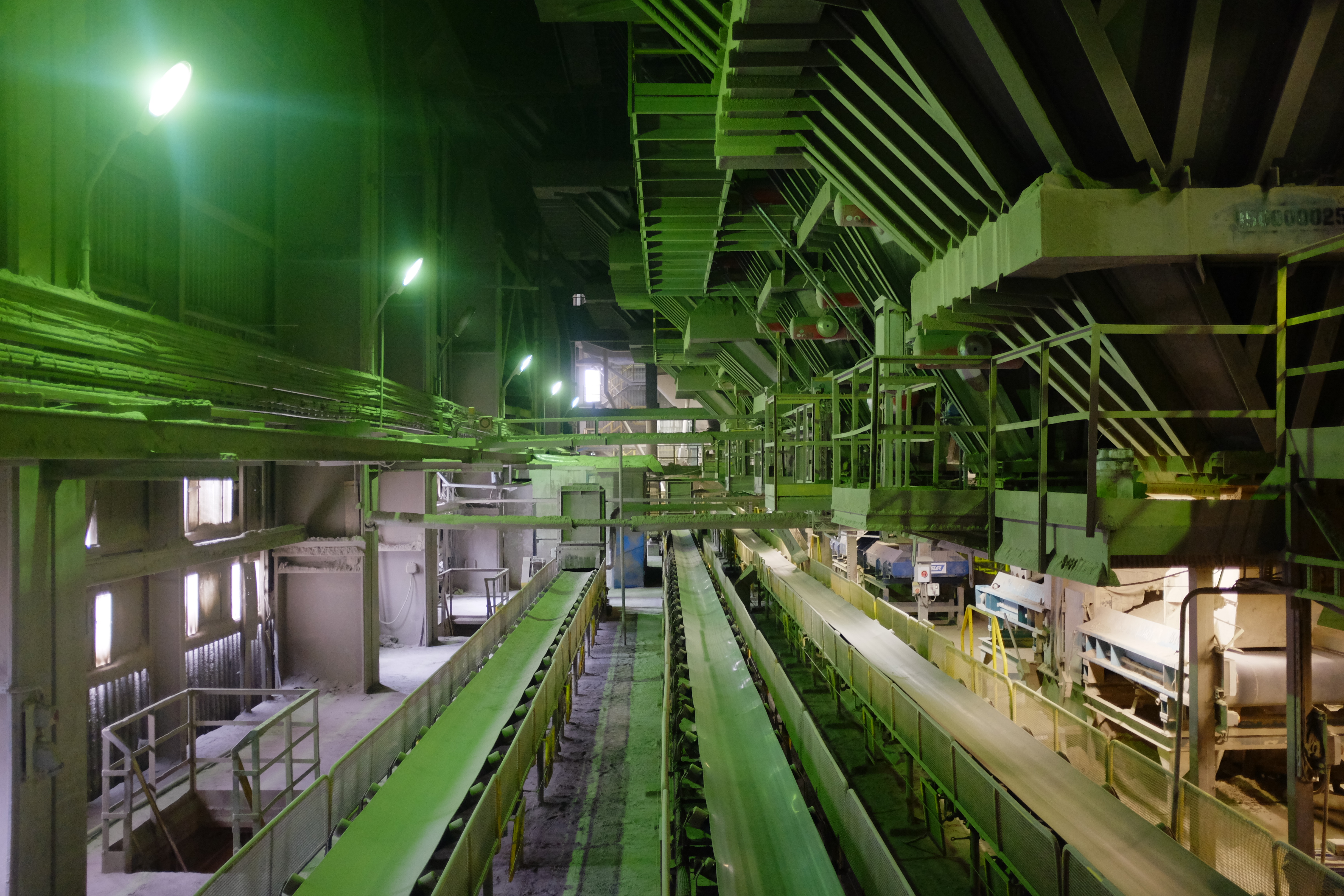
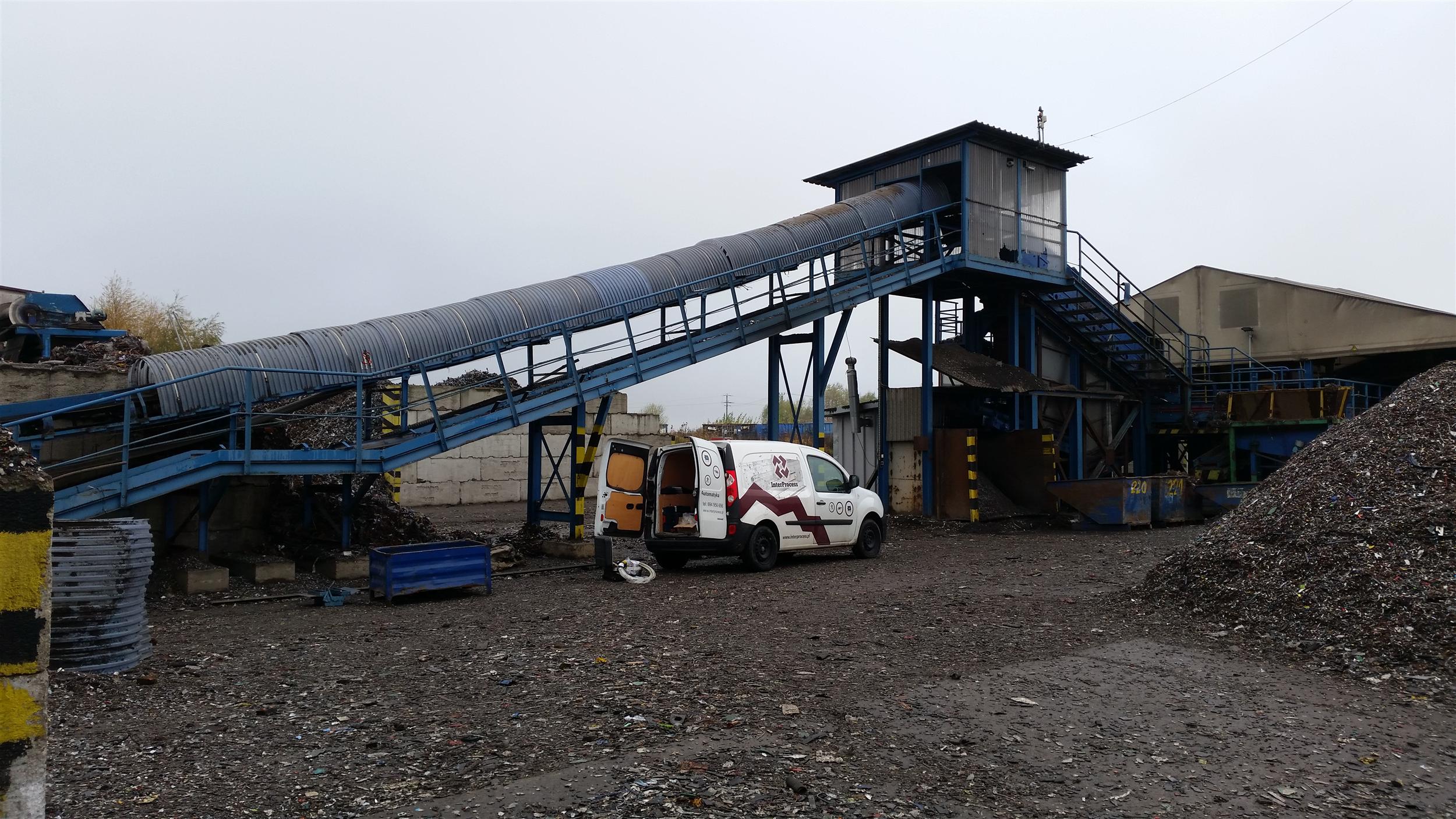
WPC and WPL scales working in aggregate quarries, waste processing plants and sanitaryware production. Click an image to enlarge.
Principle of operation
Belt load × belt speed
A typical belt scale consists of a weighbridge (the carrying frame) mounted on load cells, an integrator and a belt speed sensor. The load cells measure the belt load within the weighing zone, generating a signal proportional to the mass of material, while the speed sensor, fitted to the return belt as close to the scale as possible to keep cable runs short, supplies the current belt speed as a pulse train.
From these two signals the integrator calculates the mass flow (kg/s, t/h) and the increment of the totaliser (kg, t). Modern integrators communicate with higher-level systems (PLC, SCADA) over Modbus, Profibus, Profinet or EtherNet/IP, which makes the belt scale an integral part of the plant’s process automation.
Electronics and integration
Integrator, HMI and communication with the control system
Every InterProcess belt scale works with our own measuring electronics, which do considerably more than weigh the passing material. Depending on the demands of the application we equip the system with flow control, batching, communication with PLC and SCADA, and production data logging.
For every scale we can issue a calibration certificate with the calculated measurement uncertainty. Our engineering team carries out installation, commissioning and on-site calibration: by the static method, using test weights, and by the material method, comparing against a reference scale.
Protocols
Modbus RTU/TCP, Profibus DP, Profinet, EtherNet/IP, 4–20 mA analogue and pulse outputs.
HMI panel
Monitoring of flow and totaliser, parameter changes, review of measurement history and alarms.
Calibration and service
Calibration certificate, zero and span calibration, on-site commissioning, 24/7 service.
Industries and applications
Wherever material travels on a belt
Continuous mass flow measurement makes it possible to optimise processes, reduce material losses and keep a reliable production balance, whatever the industry.

Unusual application
For non-standard conveyors we design the scale individually to suit the installation conditions.
Describe your conveyor →FAQ
Frequently asked questions
Why InterProcess
Why choose our solutions?
In-house manufacture
We design and build our belt scales in our own works.
Individual approach
We match the scale to the customer’s existing conveyor.
Complete delivery
From design through installation, calibration and service.
Calibration certificate
For every scale, with the calculated measurement uncertainty.
Experience across many industries
Mining, cement, power, recycling, food.
Technical support and service
With a fast response, 24/7 if required.