InterProcess Sp. z o.o. | Solutions for industry

Solutions · Products
Big bag systems: filling and emptying stations
Stations for the dust-free filling and emptying of big bags (FIBCs). Every station is engineered from the ground up around your material, your building and the way material is delivered, then integrated with pneumatic conveying, feeding and weighing.
up to 2000 kgweight of the bags handled
BSA · BSBfilling and emptying stations
AISI 304 / 316Lstainless steel variants
ATEX · HACCP · GMPstation compliance with standards
Where to start
Are you filling or emptying?
This is the first question when specifying a big bag station. Is the bag the packaging for your product at the end of the line, or the source of raw material for the process? Everything else in the selection — the head, the weighing, the flow-aid systems — follows from that answer.
End of line · packing
Bag filling: BSA stations
The station fills the bag through a head with an inflatable seal that clamps the spout tight, with no dust and no loss of material. An integrated weighing system monitors the fill level and shuts the flow off automatically. Material can be delivered by gravity, by a feeder, by a screw conveyor or by pneumatic conveying.
Fill controlIntegrated weighing system
ContainmentHead with an inflatable seal
Choose this if
+you pack a bulk product at the end of the production line
+you need a repeatable, weighed mass in every bag
+the material is dusty and needs dust-tight docking
+the bags have to be stable for storage and transport
Start of process · raw material
Bag emptying: BSB stations
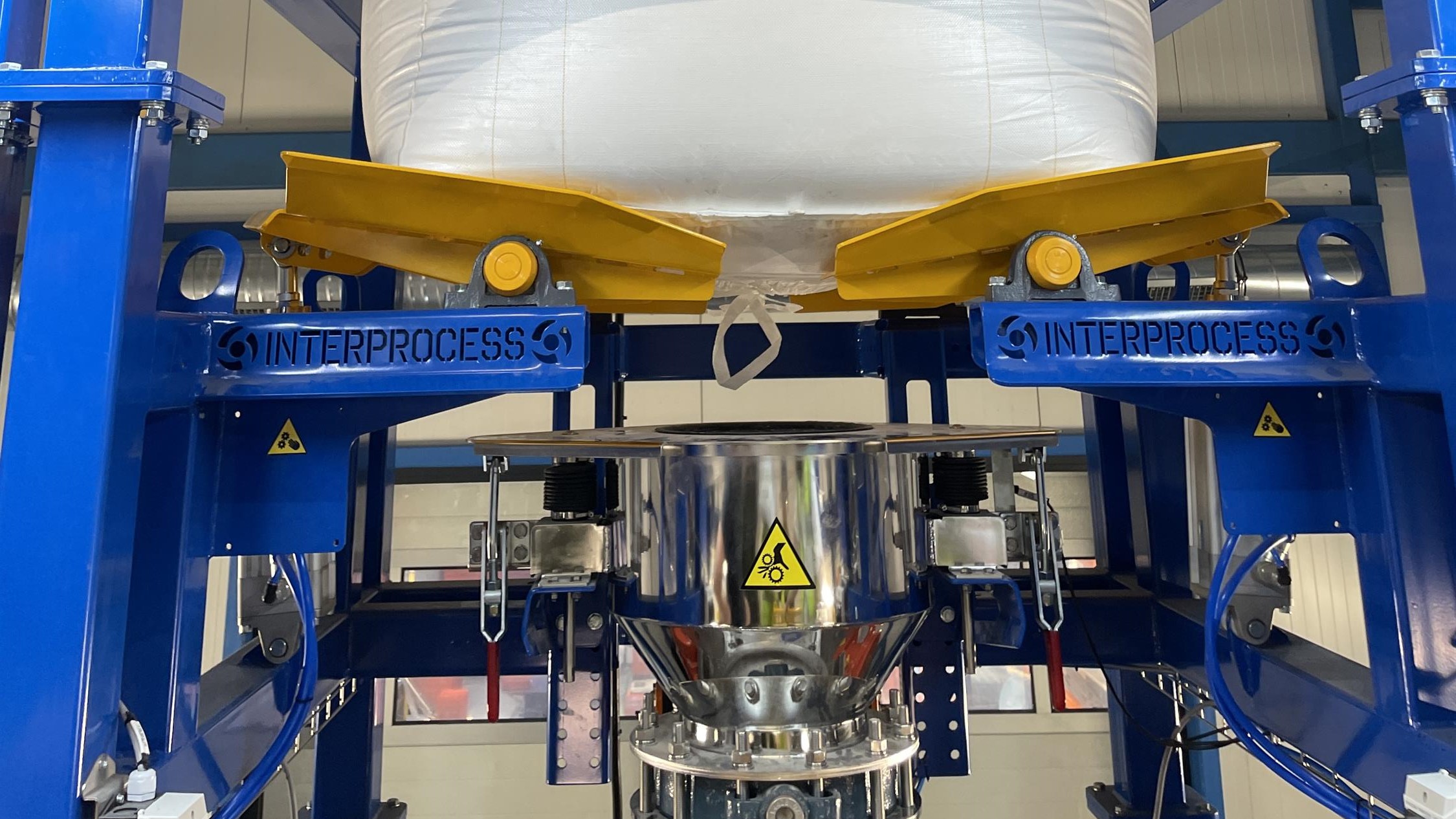
The station empties the bag in a controlled, dust-free way. A docking unit clamps the bag spout, while massagers or vibrators keep caked and difficult-flowing materials moving. The bag is delivered either by forklift or by a chain hoist on the station’s own gantry.
Flow aidsMassagers and vibrators
Onward transportFeeder · screw · pneumatic conveying
Choose this if
+your raw material is bought and delivered in big bags
+the material has to flow into the process without dust or loss
+the raw material cakes or flows poorly
+emptying has to supply a feeder or a pneumatic conveying system
Background
What are big bags (FIBCs)?
A big bag, formally an FIBC (Flexible Intermediate Bulk Container), is a flexible container made of woven polypropylene with a capacity of up to 2000 kg. It comes in versions with filling and discharge spouts, with a closed or open top, and with a polyethylene liner to keep moisture out.
The bag itself, though, is only half the solution. What decides whether the process is clean, quick and safe is the station: its docking head, its flow-aid systems and how it integrates with the rest of the installation. That is why every station is engineered from the ground up, and every part in contact with the material is always made of stainless steel. We integrate our stations with pneumatic conveying, feeders and size reduction and screening.
What we assess when specifying a station
Material properties and dustiness
Bag weight and dimensions
Building height and layout
How the bag is delivered
Explosion hazard zones (ATEX)
Hygiene requirements (HACCP, GMP)
Our range
Two families of big bag station
Every station is designed and manufactured at our own works. The frame is made of powder-coated carbon steel or of AISI 304/316L stainless steel; parts in contact with the material are always stainless steel.
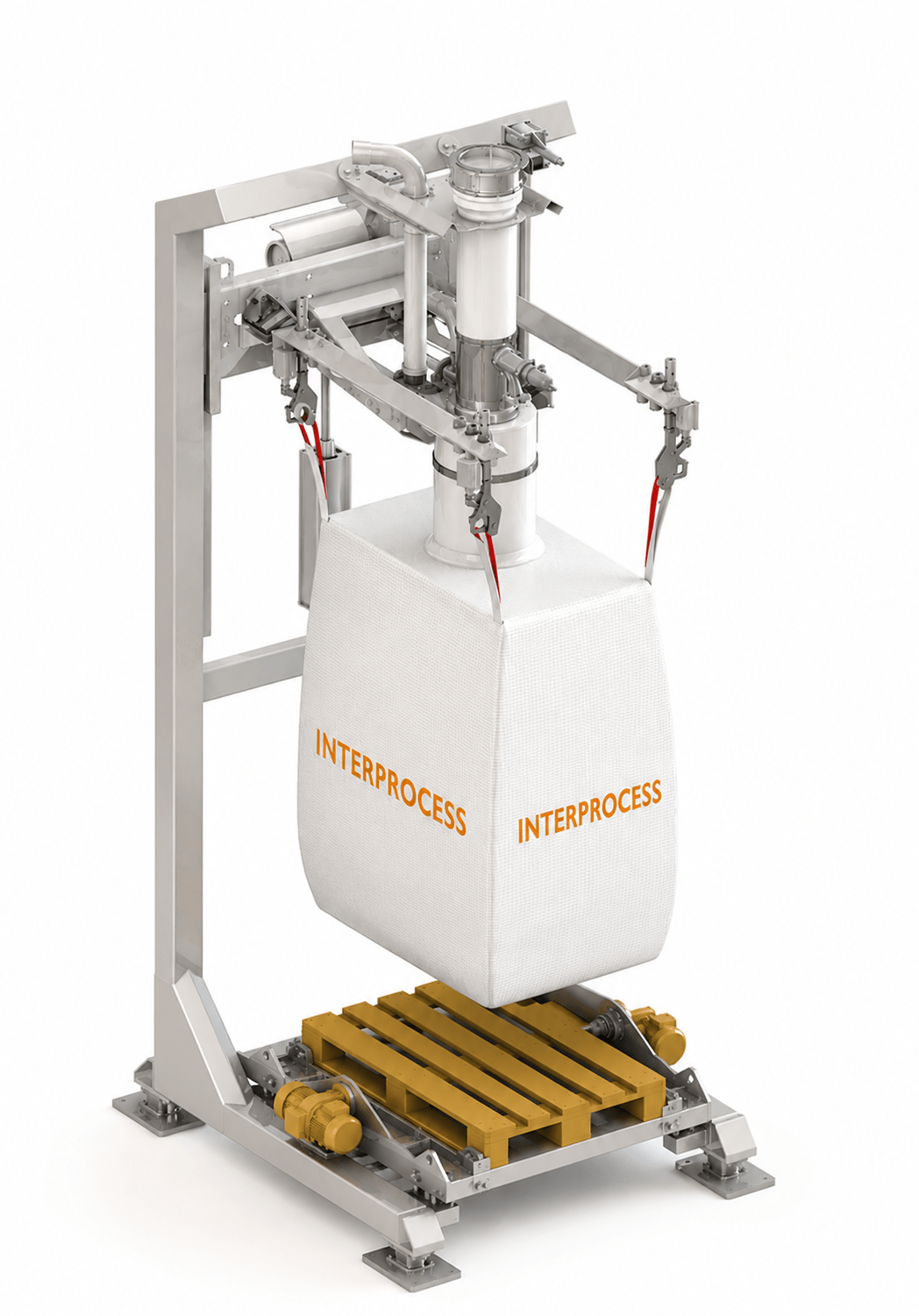
BSA stations
Big bag filling stations
Dust-free filling with integrated weighing, a docking head and automatic flow shut-off. A vibrating compactor, bag pre-inflation and bag tensioning are available as options.
Bags up to 2000 kgView →
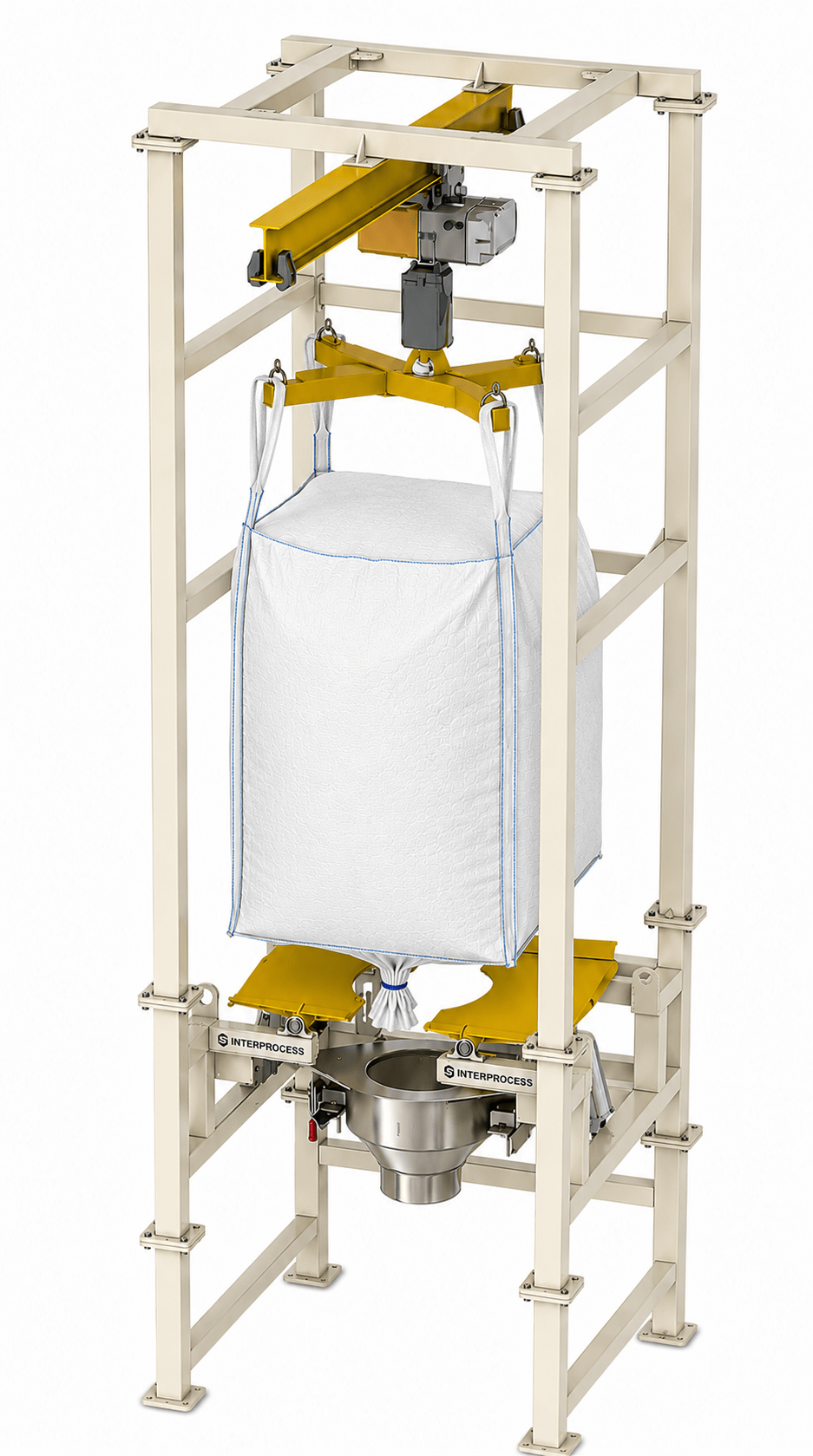
BSB stations
Big bag emptying stations
Dust-free emptying with a docking unit, a bag massage system and dust extraction. Integration with a feeder, a screw conveyor or pneumatic conveying.
Forklift or hoistView →
Equipment on BSA filling stations
- Height-adjustable support frame
- suits bags and pallets of differing dimensions
- Filling head with a seal
- an inflatable seal clamps the bag spout tight
- Integrated weighing system
- fill control and automatic flow shut-off
- Vibrating compactor
- densifies the material and gives a bag that is stable in transit
- Bag pre-inflation and tensioning
- inflation before filling, for an evenly shaped bag
Equipment on BSB emptying stations
- Support frame with bag lifting
- forklift or a chain hoist on the station gantry
- Docking unit
- a tight clamp on the spout, with no dust and no contact with the surroundings
- Massage system
- massagers and vibrators keep difficult materials moving
- Dust extraction system
- a clean workstation when connecting and changing bags
- Process connection
- feeder, screw conveyor or pneumatic conveying
Quick selection
What does your process look like?
Pick the situation closest to your own process and we will suggest the station configuration we would normally start the selection from.
Recommendation
BSA filling station
Weighing · head with an inflatable seal
Go to BSA filling stations
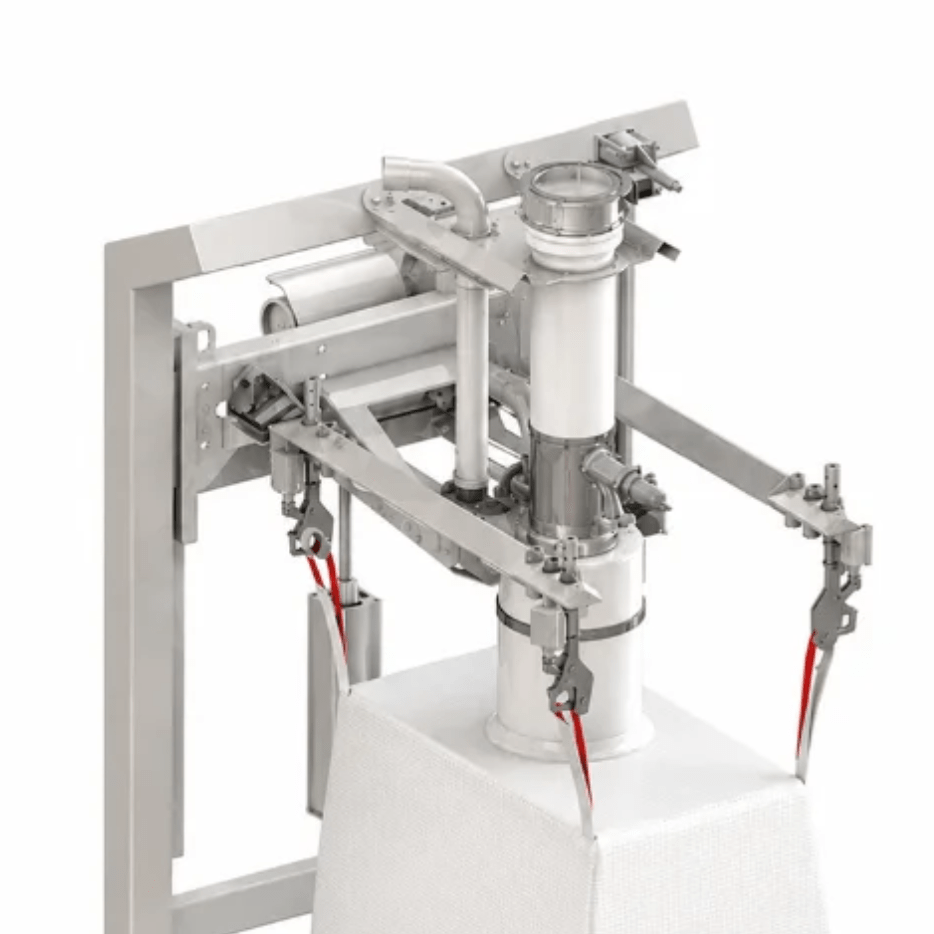
The filling head clamps the bag spout tight, so even dusty powders stay inside. The integrated weighing system shuts the flow off once the target mass is reached, and the optional vibrating compactor densifies the material so the bag is stable for storage and transport.
Key equipmentWeighing and automatic shut-off
Bag handlingHeight-adjustable frame
IntegrationInfeed: gravity, feeder, pneumatic conveying
ConstructionCarbon steel or AISI 304/316L
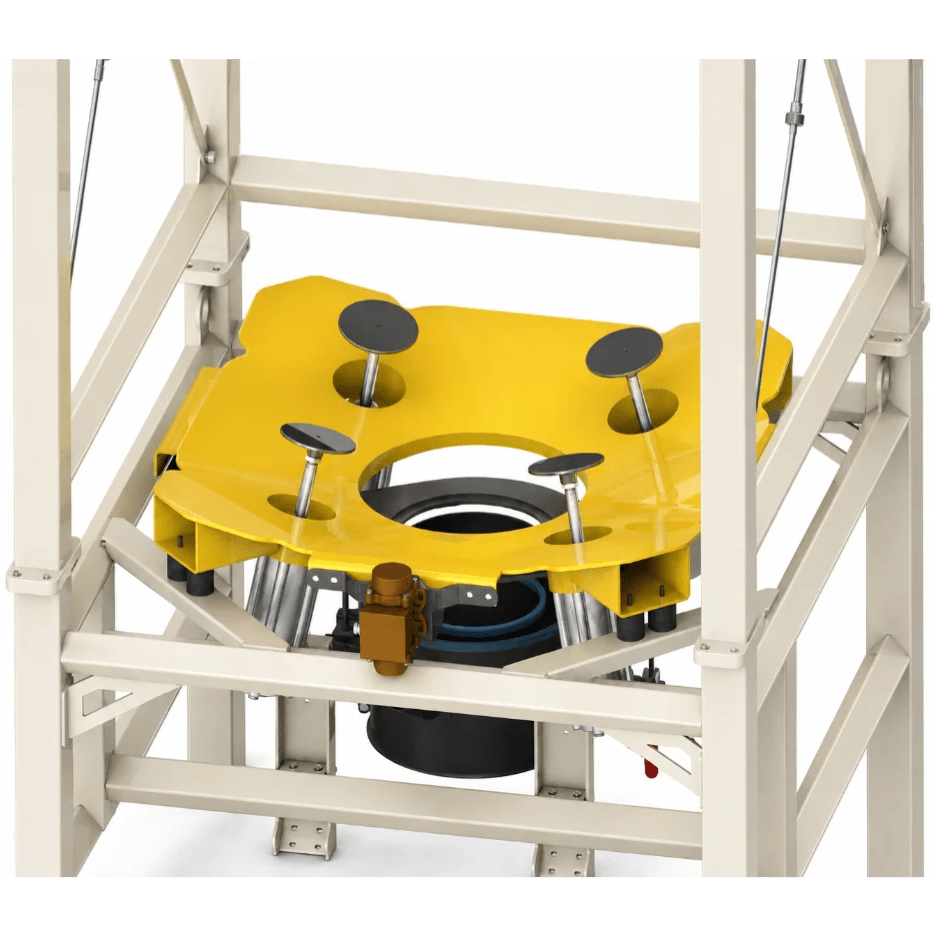
Granulates and free-flowing powders leave the bag under gravity. The docking unit clamps the spout and contains the dust, while the process connection takes the material straight into a feeder, a screw conveyor or a pneumatic conveying system.
Key equipmentSpout docking unit
Bag handlingForklift or hoist
IntegrationFeeder · screw · pneumatic conveying
ConstructionCarbon steel or AISI 304/316L
Recommendation
BSB emptying station with a massage system
Massagers · vibrators · dust extraction
Go to BSB emptying stations
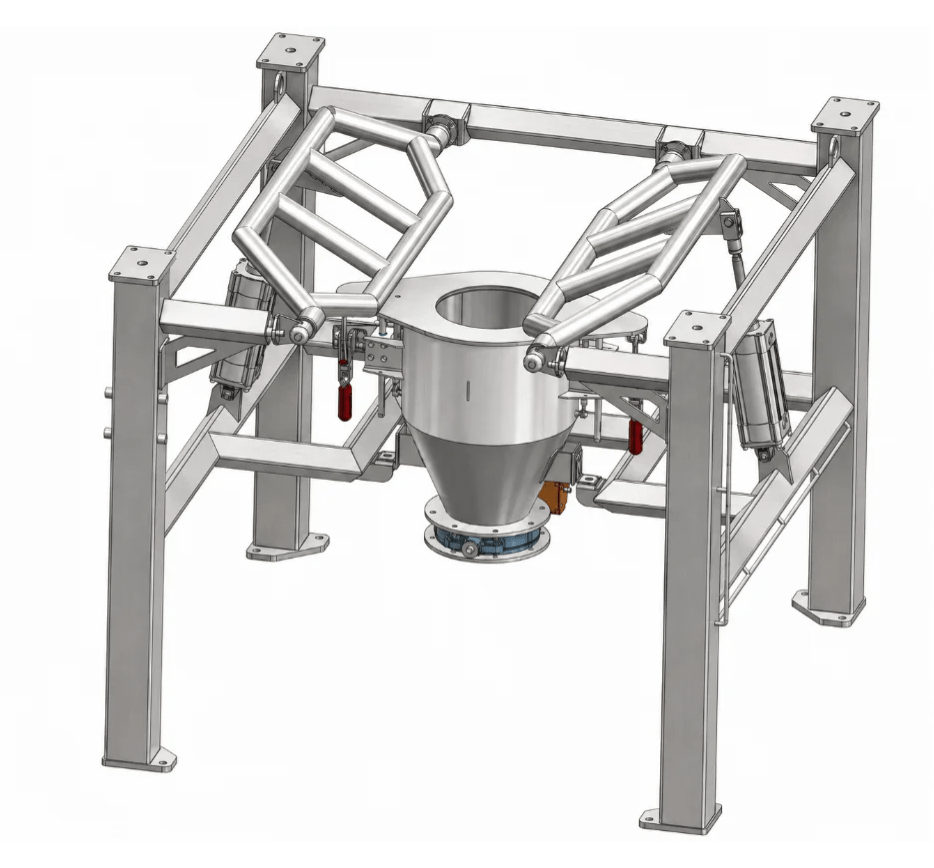
Hygroscopic and caking materials hang up inside the bag, forming arches over the outlet. Massagers knead the sides of the bag and vibrators keep the material moving. The raw material flows steadily, with no prodding by hand and no cutting the bags open. The dust extraction system keeps the workstation clean.
Key equipmentMassagers and vibrators
Bag handlingChain hoist on the station gantry
IntegrationLump breaking, feeding, conveying
ConstructionChosen to suit the material, AISI 316L included
An indicative guide only. We confirm the final configuration once we have looked at the material, the building and the way the bags are delivered.
Special build · ATEX
Explosion hazard zones
Every station, BSA filling and BSB emptying alike, can be built for dust and gas zones: tight docking, earthing, and drives and electrical components chosen to match the zone classification.
Ask about an ATEX build →Special build · hygienic
Food and pharmaceutical industries
Both families are available in AISI 304/316L stainless steel, built to strip down quickly for washing, in line with HACCP and GMP requirements.
See our filling and packing lines too →Industries
Where our stations work
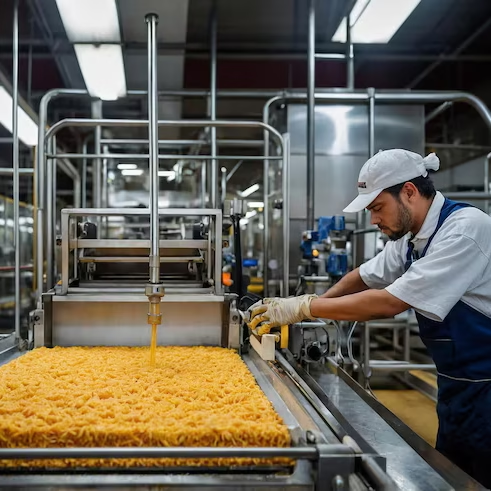
Food and pharmaceutical
Filling and emptying bags of flour, sugar, milk powders, starch and additives. Stainless steel variants compliant with HACCP and GMP, built to strip down quickly for cleaning.

Chemicals and plastics
Pigments, fertilisers, detergents and plastic granulates, including dusty materials and those forming an explosive atmosphere. Variants for ATEX zones with full earthing are available.
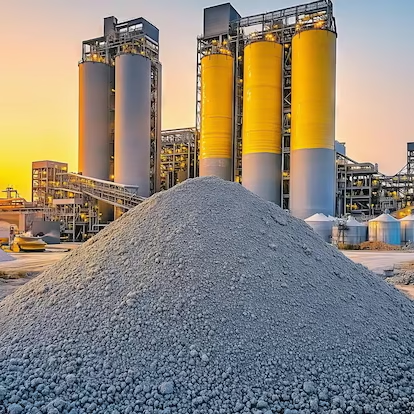
Construction and minerals
Cement, lime, gypsum, aggregates and salts: heavy, abrasive materials that tend to cake. Reinforced frames, massage systems and integration with lump breaking and conveying.
FAQ
Frequently asked questions
What is the difference between a BSA filling station and a BSB emptying station?+
A BSA filling station fills empty bags with product; at its heart are a sealed filling head and an integrated weighing system that shuts the flow off once the target mass is reached. A BSB emptying station empties full bags of raw material; here the key elements are the spout docking unit, the massage systems that keep the material moving and the connection for onward conveying or feeding.
How do you empty a big bag of material that cakes?+
We fit the emptying station with massagers that knead the sides of the bag and vibrators that keep the material moving. With heavily caked materials, a lump breaker can be installed downstream of the station. The configuration is matched to the specific material, so please include a short description of it with your enquiry.
Can the station weigh the bag while it fills?+
Yes. The integrated weighing system monitors the mass of the bag in real time and shuts the material flow off automatically once the target value is reached. That rules out overfilling and gives a repeatable mass in every bag, suitable for invoicing purposes as well.
Can big bag stations operate in ATEX zones?+
Yes. We design stations for zones with a dust and gas explosion hazard. The scope of the build — the choice of drives, earthing, electrical components and the tightness of the docking — is agreed on the basis of the zone classification and the properties of the material.
How is the bag delivered to an emptying station?+
In one of two ways: by forklift, using a lifting frame that is set down on the station frame, or by a chain hoist travelling along the station’s own gantry. The choice depends on the equipment available, the height of the building and how often bags are changed; we discuss both options during the selection stage.
Can a station be integrated with an existing installation?+
Yes. As standard we connect our stations to pneumatic conveying, screw conveyors, feeders and weighing systems. The station controls can be tied into the plant’s higher-level system, including reporting of raw material consumption.
Need a big bag station?
Tell us the material, the bag size and the space available, and our engineers will design a station to suit your process and prepare a quotation.
Custom-engineered design: every station is designed from the ground up around the customer’s needs
Dust-free operation: dust-tight docking connections and extraction systems
Full process integration: pneumatic conveying, feeding and weighing
Cross-industry experience: food, chemical, pharmaceutical and construction
Safety and hygiene: compliance with ATEX, HACCP and GMP
Technical support and service: rapid response, including 24/7 cover