- InterProcess Sp. z o.o.

DSL G Gravimetric Screw Feeders
Gravimetric screw feeders, operating in loss-in-weight mode, are among the most versatile solutions for the precise feeding of bulk solids. They perform equally well in processes requiring a constant mass flow (continuous feeding) and in applications where an exact, predetermined portion of material must be dispensed (batch feeding). In continuous mode, typical feeding accuracy is below ±0.5% of the setpoint, with a throughput range from 0.5 to 25,000 kg/h.
Every model in the DSL G gravimetric screw feeder family is equipped with one or two agitators that ensure stable material flow and prevent bridging inside the hopper. Precision is further guaranteed by a weighing system comprising a rigid support structure and two or three C3-class strain gauge load cells made of stainless steel with an IP68/IP69K ingress protection rating. All product-contact parts are manufactured from grade 1.4301 (AISI 304) or 1.4404 (AISI 316L) stainless steel. For food, cosmetics and pharmaceutical applications, we offer EHEDG-compliant hygienic versions, whilst for explosive atmospheres an ATEX Directive-compliant design is available.
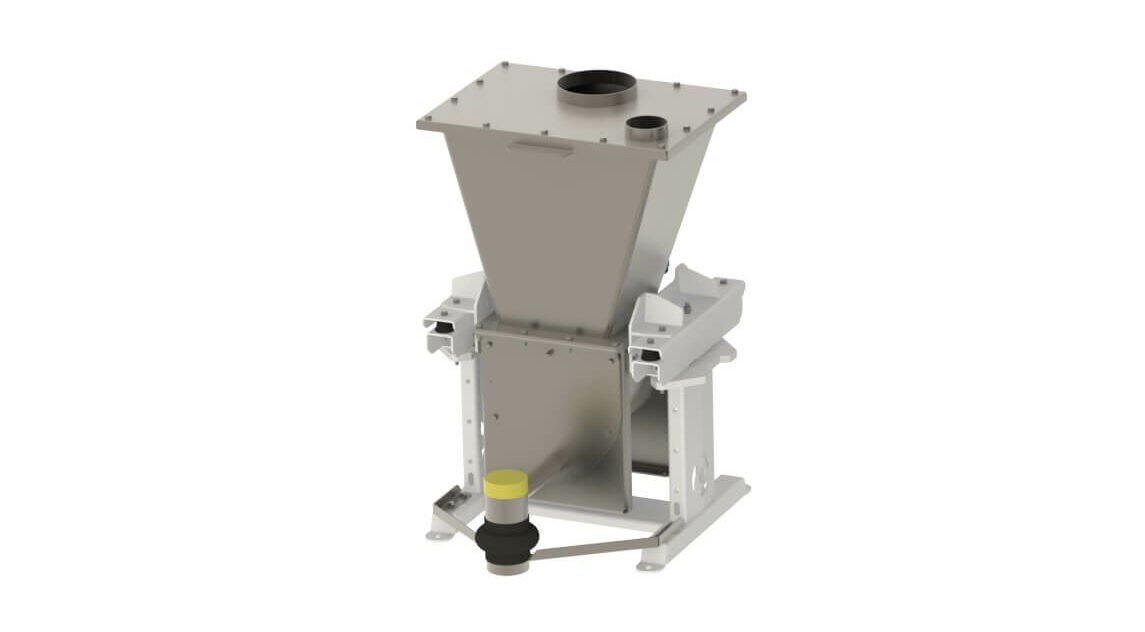
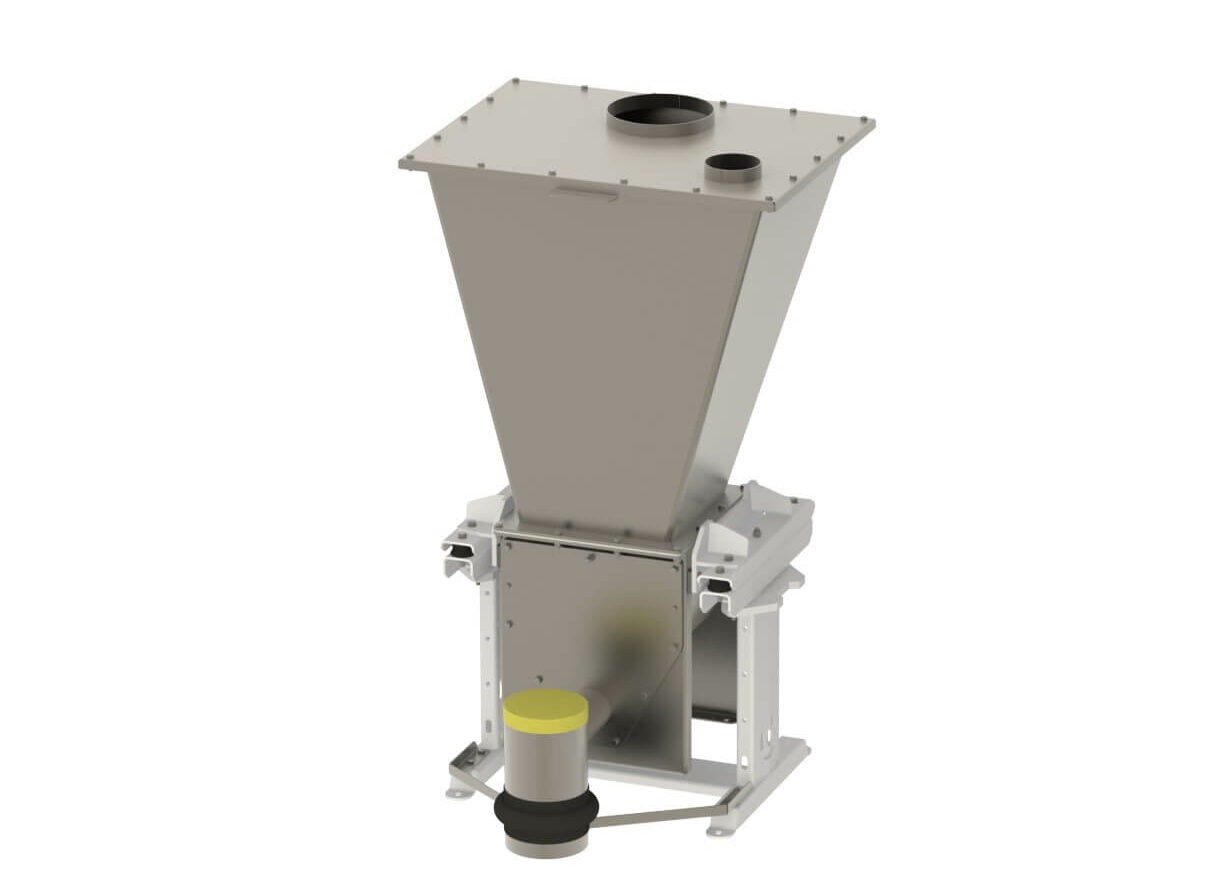
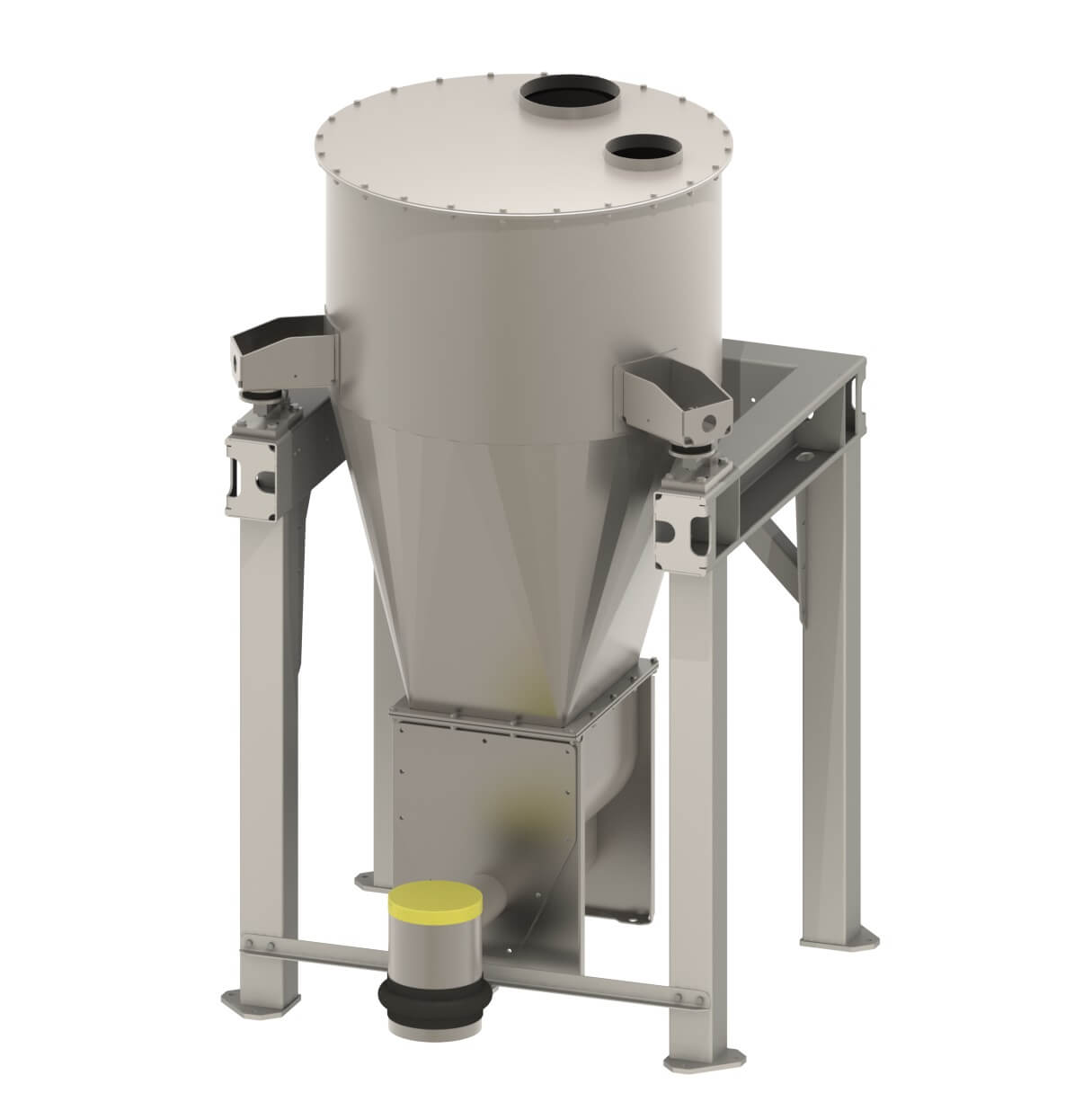
The DSL G gravimetric screw feeder family comprises universal machines for the precise feeding of bulk solids with widely varying characteristics – from fine powders with a particle size of just a few micrometres to coarse granules and pellets. Each feeder consists of a main chamber, a horizontal agitator, a precision strain gauge weighing system, and a hopper. Material flow is generated by a rotating screw, whilst the agitator ensures complete screw filling and simultaneously prevents the material from bridging. This makes the feeders equally suited to continuous and batch operation.
Key specifications:
- Accuracy (continuous): feeding error typically <0.5% of setpoint
- Accuracy (batch): dependent on load cell range and batch size; typically ±0.1–0.5% of setpoint for batches above 1 kg
- Throughput: from 0.5 to 25,000 kg/h (turndown ratio min/max = 1:10)
- Feeding elements: screws and spirals with diameters from 18 to 150 mm
- Load cells: C3-class strain gauge, stainless steel, IP68/IP69K
- Materials: grade 1.4301 (AISI 304) or 1.4404 (AISI 316L) stainless steel
- Agitator: prevents bridging and ratholing of bulk material
- Surface finish: glass-bead blasting or electropolishing
- Options: EHEDG hygienic design, ATEX-compliant version
Intended use: dry bulk solids of virtually any type – free-flowing and cohesive, easily aerated, with a tendency to flood or compact.
Downloads:
Feeding Element Selection
Correct selection of the screw or spiral has a decisive impact on feeding precision and process stability. Each type of feeding element is therefore optimally matched to the specific properties of the bulk material.
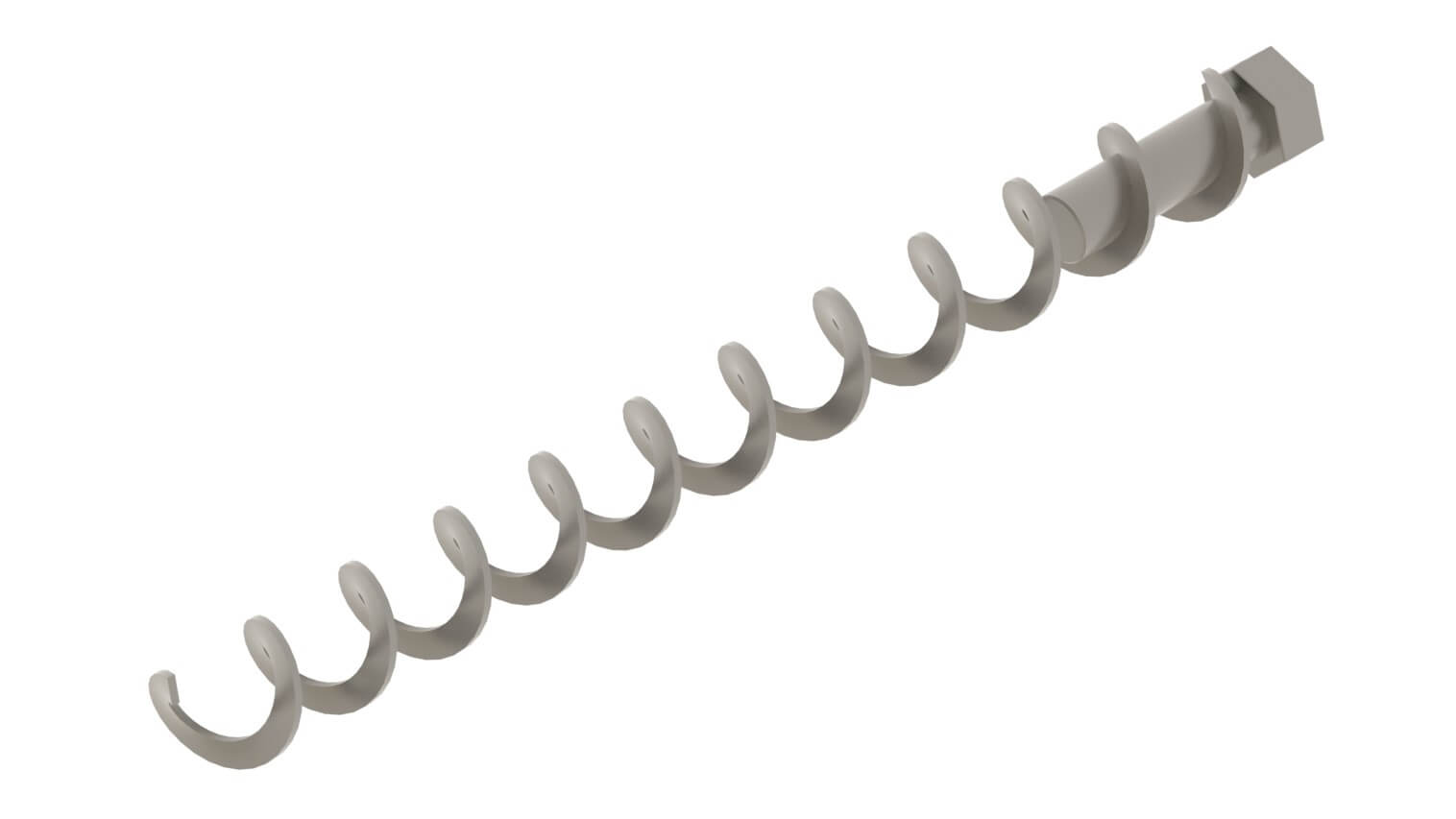
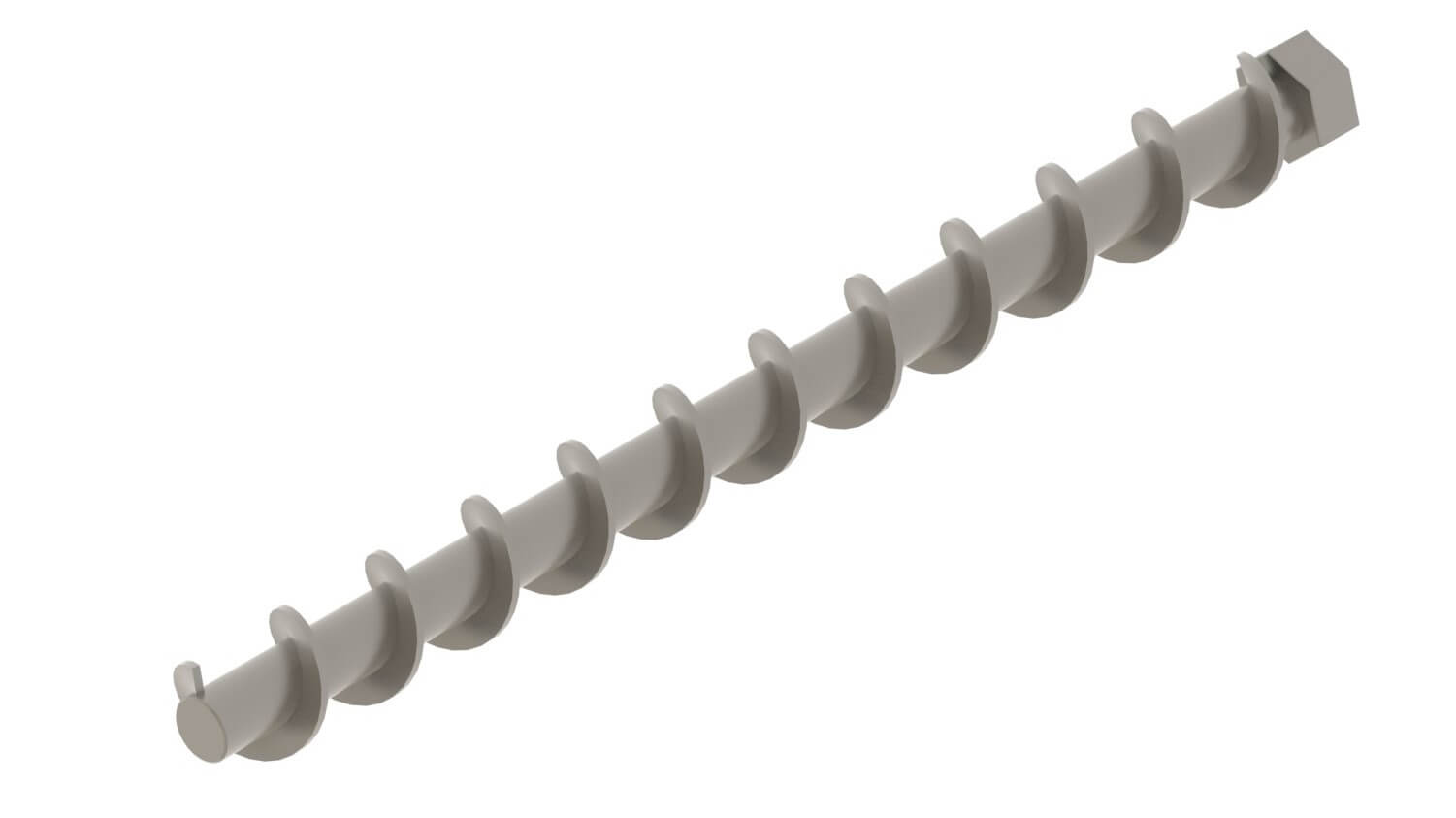
Spiral (Helix)
Recommended for materials that are:
- cohesive or difficult to flow (e.g. flour, soda, granules)
- fine and sticky, tending to build up on the shaft (e.g. cocoa, titanium dioxide)
- coarse-grained, causing friction between the shaft and the discharge tube
- processed under stringent hygiene requirements (e.g. food industry)
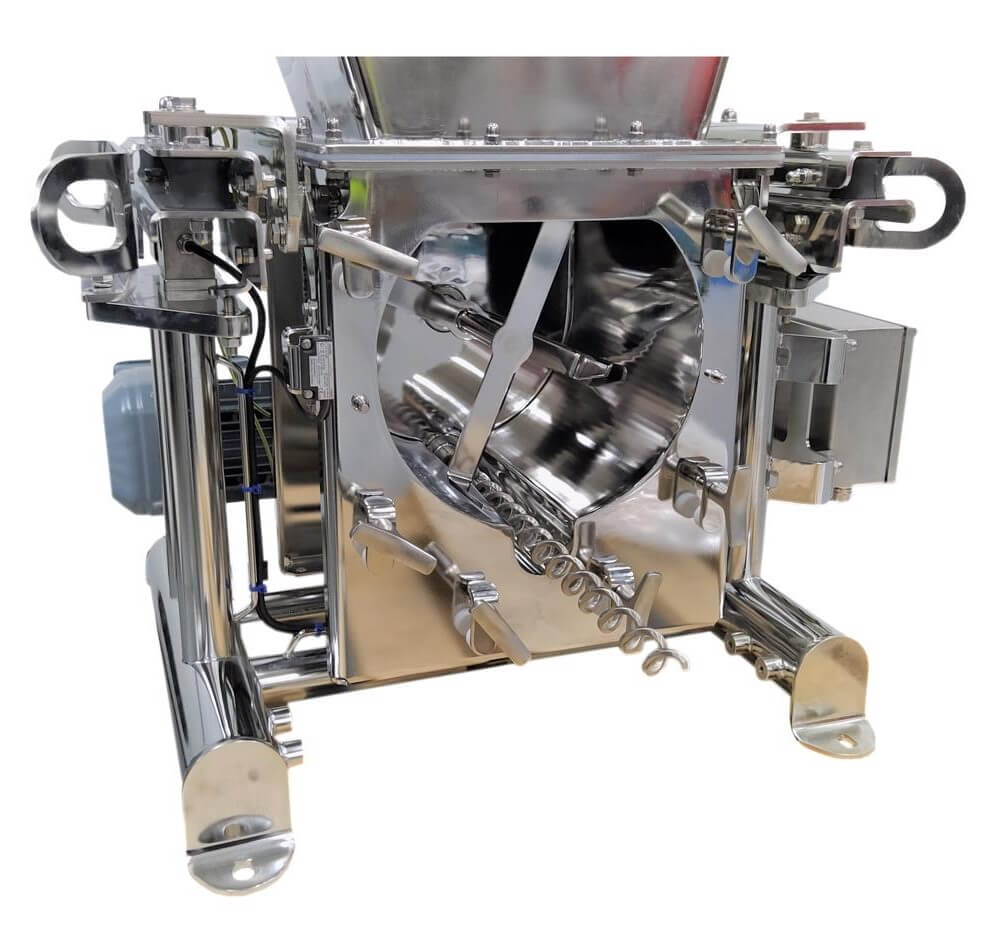
Solid Screw
Recommended for materials that are:
- free-flowing and highly flowable (e.g. salt, sugar)
- easily aerated and prone to flooding (e.g. carbonates, gypsum)
- highly abrasive (e.g. quartz sand)
- friable and damage-sensitive (e.g. flakes, instant coffee)
Even in their standard configuration, our feeders are suitable for the food industry – all product-contact materials are either FDA-approved or made of stainless/acid-resistant steel.
For more demanding applications, we offer a design compliant with EHEDG recommendations. In this version, both the feeder chamber and the support frame have been redesigned for maximum cleanability. Moreover, the feeding element and agitator can be quickly removed without tools. Grade 316L acid-resistant steel, ground interior surfaces and welds to Ra<0.8 µm, and aseptic motors (without fins or fan) ensure the highest level of production safety.
Additionally, the hygienic version uses only food-grade lubricants and oils (NSF H1 class), and the electrical enclosures can be supplied in the Rittal HD (Hygienic Design) standard – manufactured from stainless steel, with sloped surfaces that prevent the accumulation of contaminants, and resistant to high-pressure washdown. As a result, this combination guarantees full compliance with hygiene requirements even in the most demanding production environments.
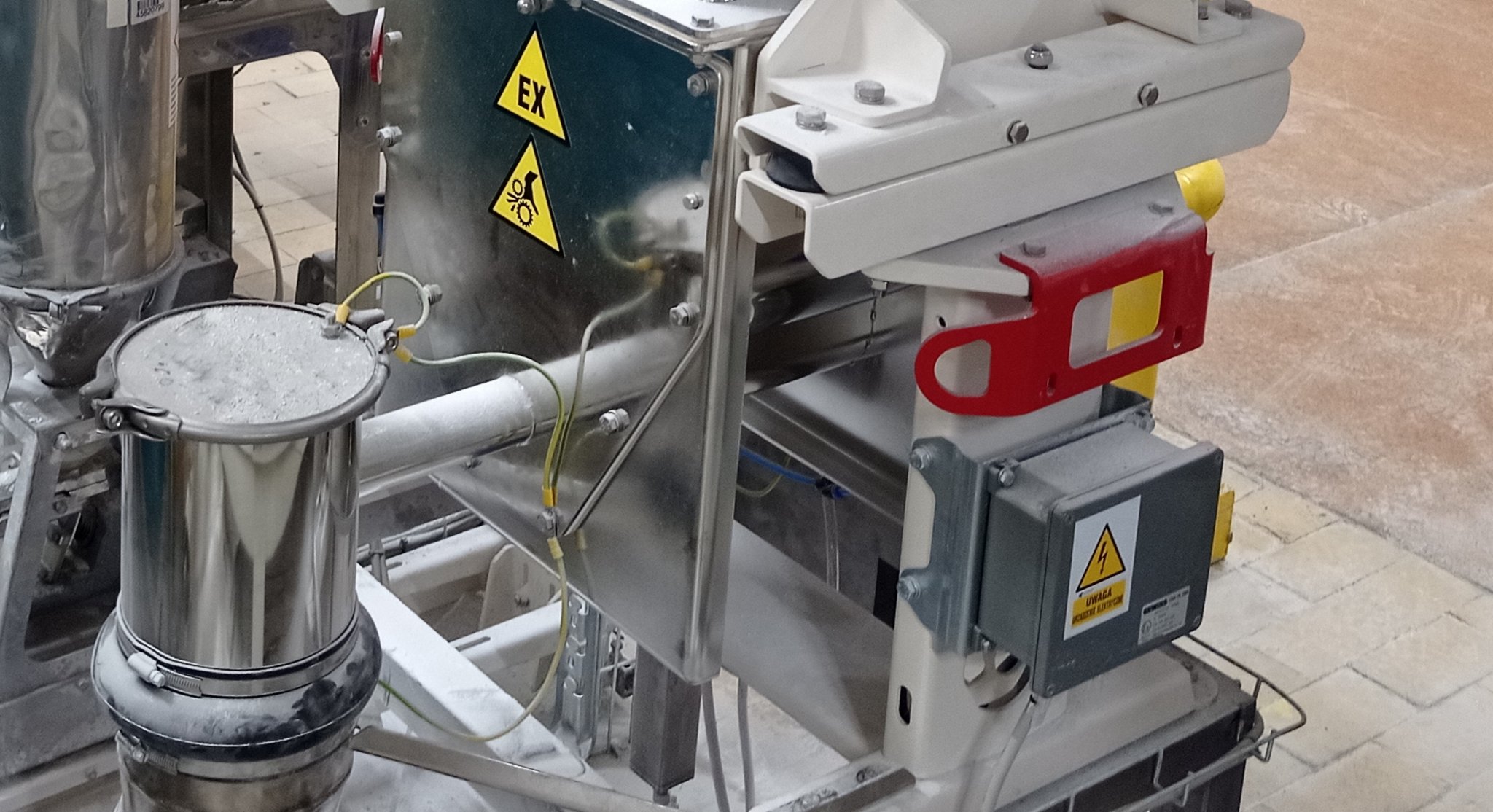
Many production facilities designate explosion hazard zones. For this reason, we also offer feeders in an intrinsically safe design compliant with the ATEX Directive. In these machines, all electrical components are certified, and the construction additionally ensures the continuity of equipotential bonding for proper dissipation of electrostatic charges.
Gravimetric vs Volumetric Feeding
In volumetric feeding, material is discharged at a constant screw speed – on the assumption that the bulk density remains unchanged. This method has no feedback loop, so any change in material properties directly translates into a feeding error (typically ±1–5%).
A gravimetric (loss-in-weight) feeder, by contrast, measures the actual weight loss in the hopper and adjusts the screw speed via a closed-loop PID controller. This ensures consistent accuracy below ±0.5% even when raw material properties vary – which is critical for multi-ingredient recipes and high-value raw materials.
| Parameter | Gravimetric (LIW) | Volumetric |
|---|---|---|
| Measurement principle | Continuous weight loss measurement | Constant volume per unit time |
| Typical accuracy (continuous) | <±0.5% of setpoint | ±1–5% of setpoint after range linearisation |
| Typical accuracy (batch) | ±0.1–0.5% (dependent on load cell range and batch size) | No direct mass control of the batch |
| Bulk density compensation | ✓ Automatic, closed-loop | ✗ None – requires recalibration |
| Real-time control | ✓ PID controller | ✗ Open-loop control |
| Flow documentation | ✓ Recording of actual mass flow rate | ✗ Speed monitoring only |
| GMP / HACCP compliance | ✓ Full validation and traceability | Limited |
| Investment cost | Higher (weighing system + controller) | Lower – simpler construction |
| When to choose? | Multi-ingredient recipes, high-value raw materials, quality audits | Homogeneous materials with constant bulk density |
It is worth noting that InterProcess DSL G feeders are designed as gravimetric machines but can also operate in volumetric mode – for example, as a more affordable starting option with the possibility of a later upgrade.
Continuous vs Batch Feeding
DSL G family machines operate in both modes. In practice, the choice depends on the nature of the production process, the required recipe flexibility, and the expected throughput.
Continuous Feeding
In continuous mode, bulk material is discharged uninterruptedly at a controlled mass flow rate. The system constantly monitors the weight loss and adjusts the screw speed accordingly to maintain the desired setpoint.
- Steady, precisely controlled material stream
- Optimal solution for feeding continuous mixers, extruders and reactors
- Automatic switchover to volumetric mode during hopper refill
- Capability to integrate multiple feeders in a master/slave configuration
- Significant reduction in material waste
Batch Feeding
In batch mode, a precise, predetermined mass of material is dispensed. Once the target weight is reached, the feeder stops automatically and waits for the next cycle. It is important to note that accuracy in this mode depends on the load cell range and batch size – typically ±0.1–0.5% for batches above 1 kg. For smaller batches, selecting load cells with the appropriate resolution becomes critical.
- Precise dispensing of a target mass with end-point control
- Full traceability for every batch
- Multi-ingredient recipe management
- Simplified validation for pharmaceutical applications (GMP)
- Proven solution for frequent product changeovers
The entire feeding assembly – hopper with material, chamber with the feeding element, and agitator – is mounted on strain gauge load cells. The weighed assembly is flexibly connected to the infeed equipment and the discharge line, eliminating the influence of external forces on the measurement.
During feeding (continuous or batch), the system measures the weight loss and uses it to determine the actual mass flow rate. A PID controller compares the measured value with the setpoint and adjusts the screw speed accordingly.
When the material level in the hopper drops below a set minimum, an automatic refill is triggered – without interrupting the feeding process. During this time, the feeder briefly switches to volumetric mode, running at the last recorded speed. Once refilling is complete, it returns to full gravimetric mode.
Key Industry Applications
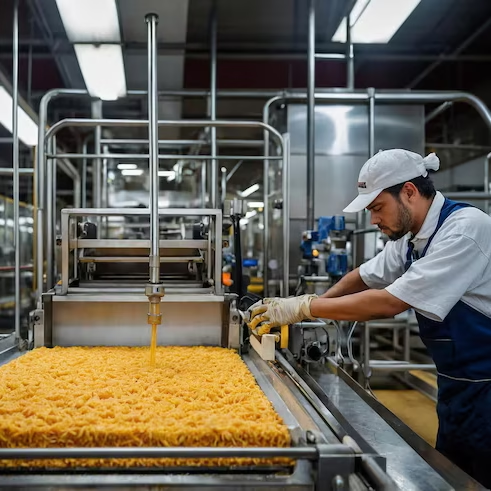
🍞 Food Industry
Applications include the feeding of spices, flour blends, milk powders, dietary supplements, instant preparations and premixes. All systems are HACCP-compliant, and product-contact materials carry FDA approval. EHEDG-compliant hygienic design is also available as an option.

💊 Pharmaceutical Industry
Enables the precise feeding of active pharmaceutical ingredients (APIs), excipients and premixes. The machines ensure full GMP compliance, process validation and batch traceability. The hygienic version is particularly suited to cleanroom environments.

⚗️ Chemical Industry
Applications include the feeding of pigments, fillers, crop protection agents, fertilisers and speciality chemicals. Corrosion-resistant designs are available, as well as ATEX-compliant variants for dust explosion hazard zones.
Frequently Asked Questions (FAQ)
In volumetric feeding, material is discharged at a constant screw speed on the assumption that the bulk density remains constant – with no feedback loop. A gravimetric (loss-in-weight) feeder, by contrast, measures the actual weight loss in real time and adjusts the screw speed via a PID controller. This delivers accuracy of <±0.5% even when material properties vary, whereas volumetric methods typically achieve only ±1–5%.
Virtually all dry bulk solids – from fine powders (a few µm) to granules and pellets. This includes free-flowing products (salt, sugar), cohesive materials (flour, soda), easily aerated powders (carbonates, gypsum), abrasive materials (quartz sand), and friable products (flakes, instant coffee). The key factor, however, is the correct selection of the feeding element – a solid screw with a guide shaft or a spiral (helix).
At the moment of refill, the feeder automatically switches to volumetric mode – discharging material at the speed recorded just before the refill began. Once the hopper has been replenished, the system returns to gravimetric mode. Crucially, the entire process takes place without interrupting the feed.
Yes – even in the standard configuration, all product-contact parts are made of stainless steel with FDA approval. For more demanding applications, we offer the EHEDG hygienic version – with ground welds (Ra<0.8 µm), 316L stainless steel, aseptic motors, and a design that allows rapid tool-free disassembly for cleaning. As a result, the machines meet both GMP and HACCP requirements.
Feeder selection starts by defining the material parameters: particle size, bulk density, moisture content, angle of repose, and tendency to bridge or aerate. Next, we establish the process requirements: feed rate (continuous or batch), required accuracy, batch size and environmental conditions. Based on this data, we select the feeder size (DSL35, DSL75 or DSL150 G) and the type of feeding element – a solid screw with a guide shaft or a spiral (helix) without one. Correct selection is based on the characteristics of the bulk material, laboratory testing and our engineers’ many years of experience. We encourage you to complete our selection questionnaire or get in touch – we also offer trials with your actual material.
An agitator is a horizontal mixing device positioned above the feeding element. Its primary function is to prevent bridging and ratholing of material inside the hopper. At the same time, it ensures complete and uniform filling of the feeding screw. This is particularly important for cohesive, fine and difficult-to-flow materials. Depending on the configuration, DSL G feeders are equipped with one or two agitators.
Need a Gravimetric Screw Feeder?
Get in touch and our engineers will select the optimal solution tailored to your process. We offer feeding trials with your actual material.
Why Choose Our Solutions?
In-house manufacturing – we design and build DSL G feeders at our own facility
Tailored approach – every system is engineered to suit the customer’s requirements
Turnkey delivery – from design through commissioning to after-sales service
Multi-industry experience – food, chemical, pharmaceutical and cosmetics sectors
Safety and hygiene – systems compliant with ATEX, HACCP, GMP and EHEDG standards
Technical support and service – with rapid response, also available 24/7