InterProcess Sp. z o.o. | Solutions for industry

Principle of operation
How vacuum conveying works: three components, one closed cycle
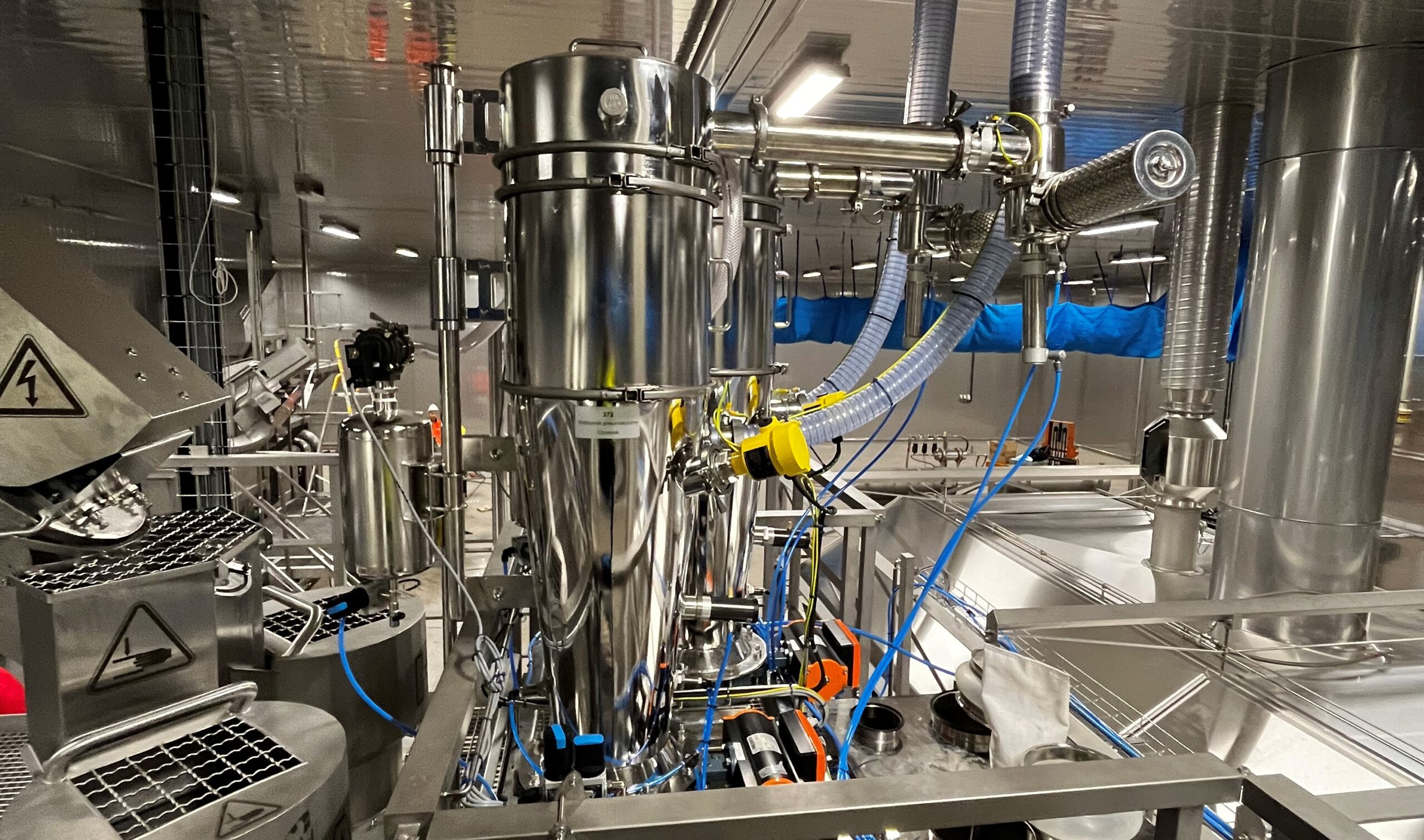
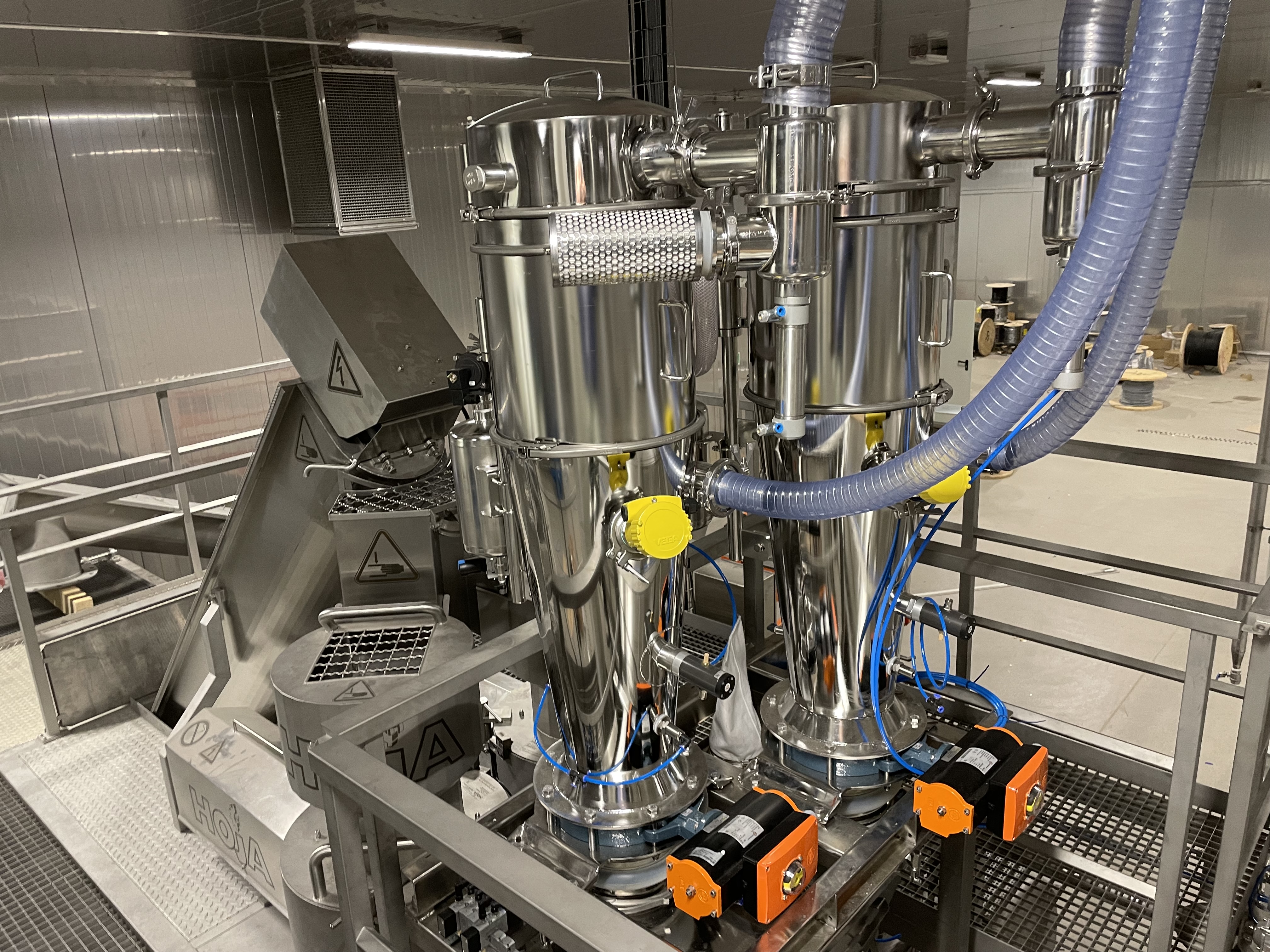
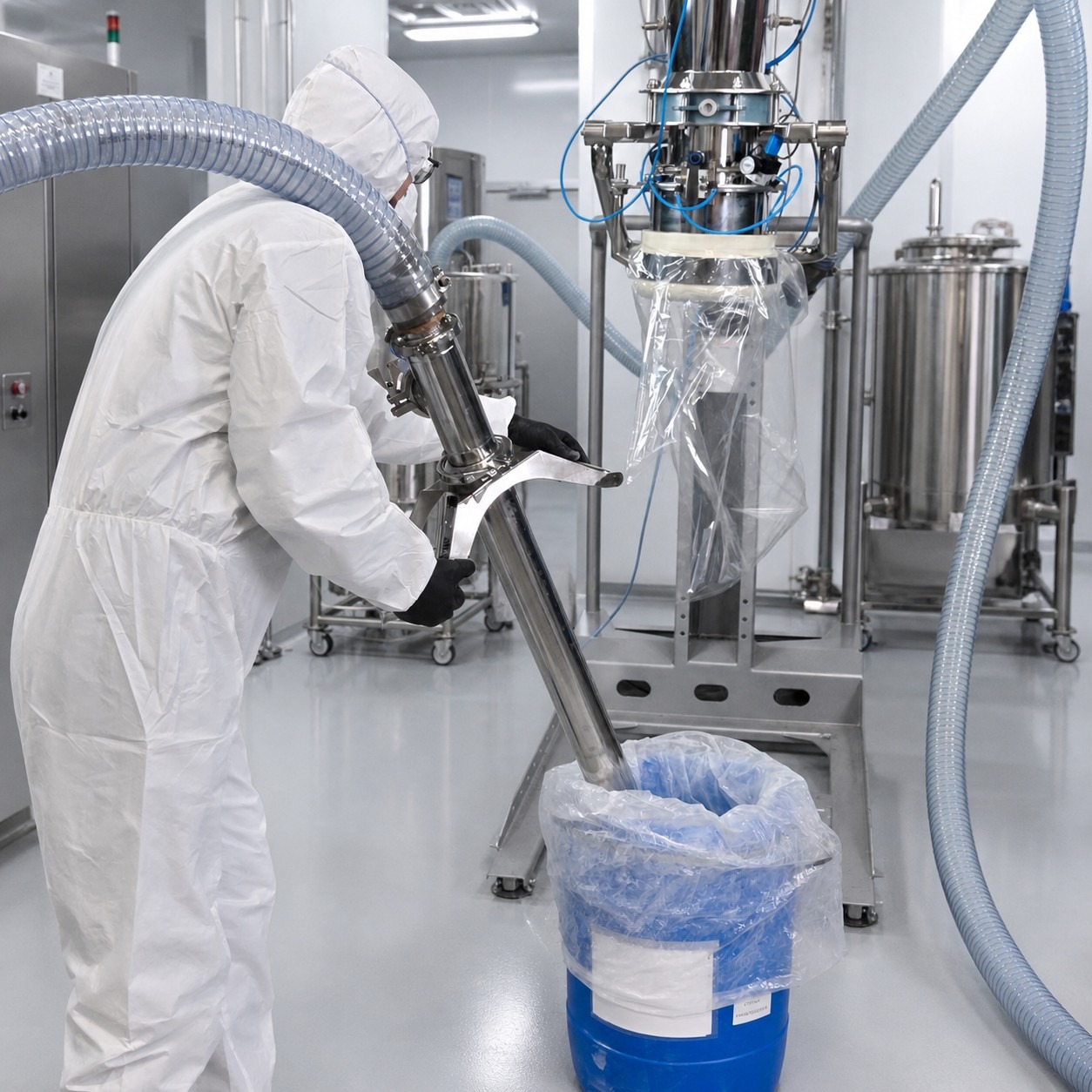
Material is drawn in from the pick-up point, separated from the air in the receiver and discharged by gravity into the process. The suction–discharge cycle repeats automatically, and the product stays inside a closed, sealed system throughout.
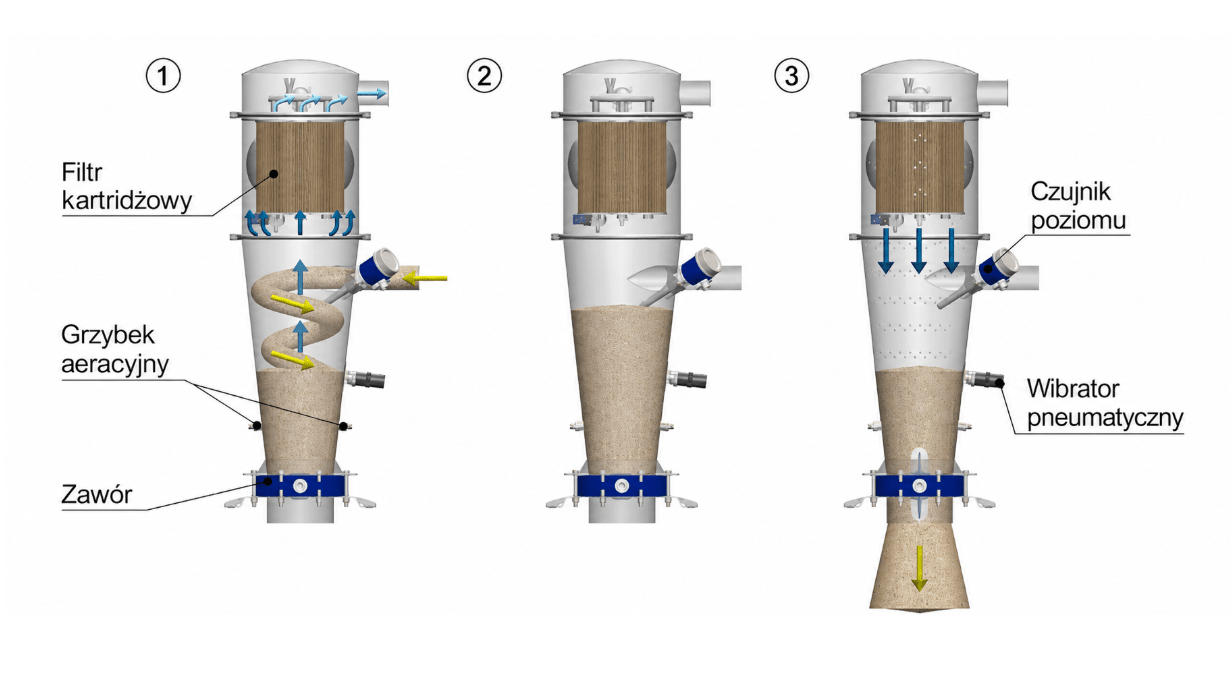
The vacuum receiver’s working cycle, in three phases
The standard is cyclic operation with a discharge valve, a butterfly valve, as described below: the receiver draws material in, cuts off the vacuum and discharges a batch into the process, and the cycle repeats automatically under the supervision of a level sensor. In selected applications we fit a rotary valve instead of a butterfly valve, so that material is taken away continuously. The receiver then works without pauses for discharge, with the vacuum maintained in the chamber.
1
Suction and filling
The generator creates the vacuum, material flows into the body of the receiver and settles to the bottom of the chamber. The air leaves through the top, through cartridge or bag filters whose number is matched to the rate, and these hold the dust back. The discharge valve stays closed, while aeration nozzles keep the material moving.
2
Vacuum cut-off and settling
Once the chamber is full, as signalled by the level sensor, the suction is cut off. The airflow stops, the material settles and the pressure in the receiver equalises with the surroundings, which allows the valve to be opened safely.
3
Discharge and filter cleaning
The valve opens and the batch of material falls by gravity into the process. At the same time a pulse of compressed air cleans the filters, while a pneumatic vibrator helps empty the cone. The receiver is ready for the next cycle.
VSU receivers
VSU vacuum receivers: types S, M and L
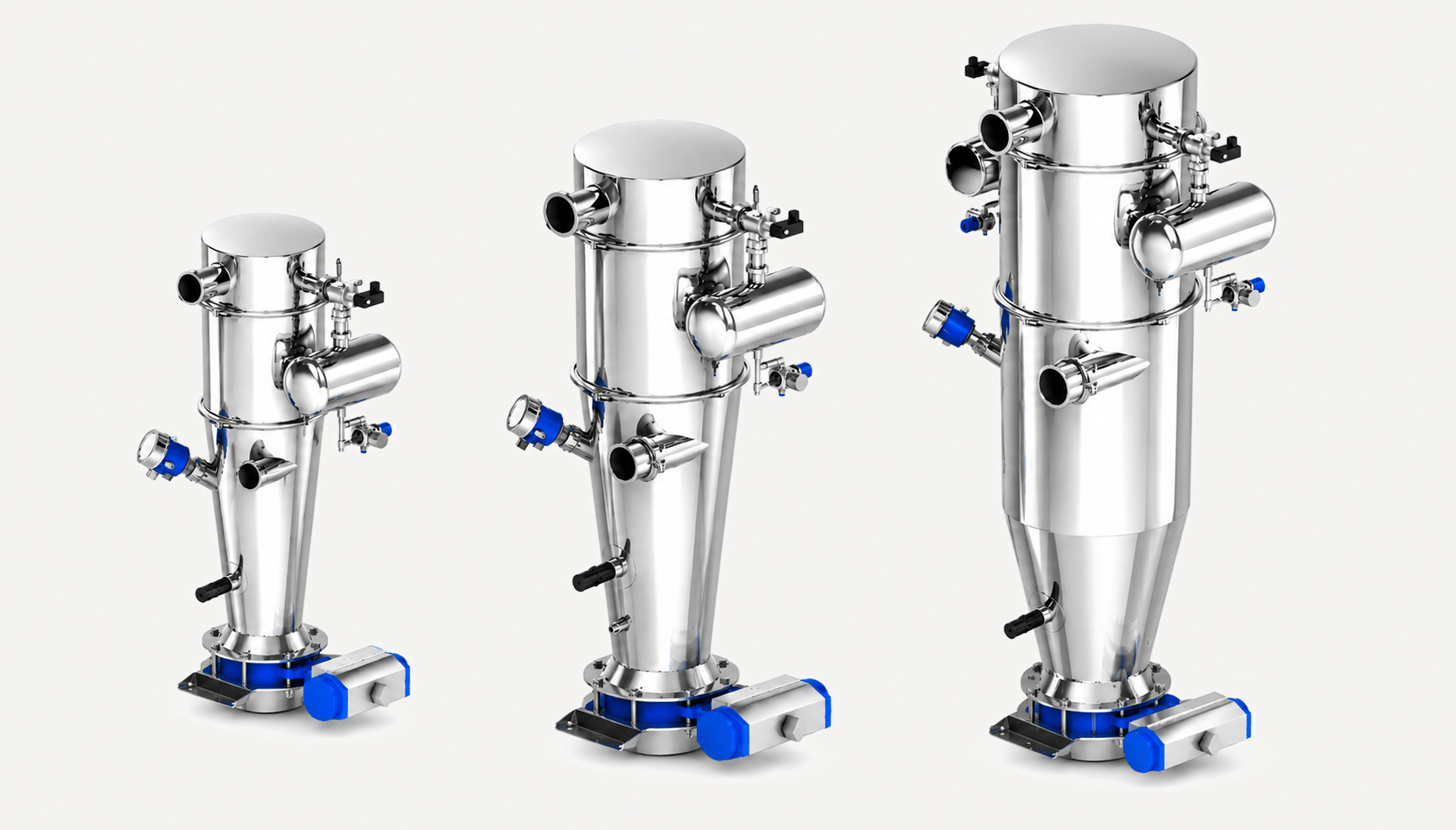
VSU receivers are built in stainless steel, in sizes matched to the rate and the working cycle, and in non-standard capacities where the process calls for them. Dismantling without tools makes cleaning and validation easier.
Type S
5 l
Type M
25 l
Type L
110 l
Key features
- Filtrationcartridge or bag filters with automatic pulse-jet cleaning
- Discharge valvebutterfly valve or rotary valve
- Discharge aidsvibrator, aeration nozzles, level sensor
- Materialssteel 1.4301 (AISI 304) as standard, 1.4404 (AISI 316L) optionally
- Weighing versionmounted on load cells, with a weighing function for batch dosing
- Surface finishstandard, or to EHEDG requirements: product-contact surfaces electropolished to a roughness of Ra < 0.8 µm
- Hygieneopening on clamp rings, without tools (FDA, GMP, ATEX)
Type S · Type M · Type L
non-standard capacities
ATEX
Conveying modes
Dilute phase or dense phase conveying?
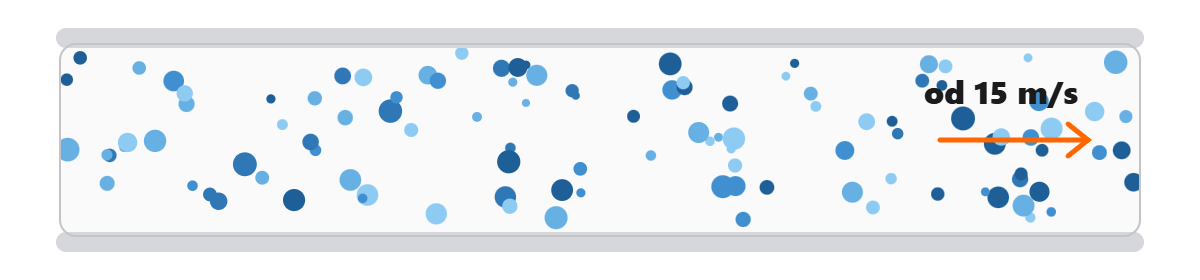
Dilute phase is the standard: the material is carried in an air stream at roughly 15 m/s and above, depending on the material and the route. For friable or abrasive products, and for pre-blended ones, we use dense phase: conveying in plugs at 3–15 m/s, which keeps degradation and segregation of the material to a minimum.

| Parametr | Dilute phase lean phase | Dense phase strand / plug flow |
|---|---|---|
| Air velocity | above 15 m/s | 3–15 m/s |
| Product degradation | moderate | minimal |
| Risk of blend segregation | possible | very low |
| Wear on pipes and bends | higher | considerably lower |
| Typical materials | flour, sugar, chemical powders, cement | flakes, granules, premixes, crystals, tablets |
Vacuum generators
Vacuum generators. We are not wedded to one technology
The type of vacuum generator decides the rate, the reach and the energy cost of the whole system. We work with all four types and choose the one that suits the material and the way the system runs — not the one we happen to stock.
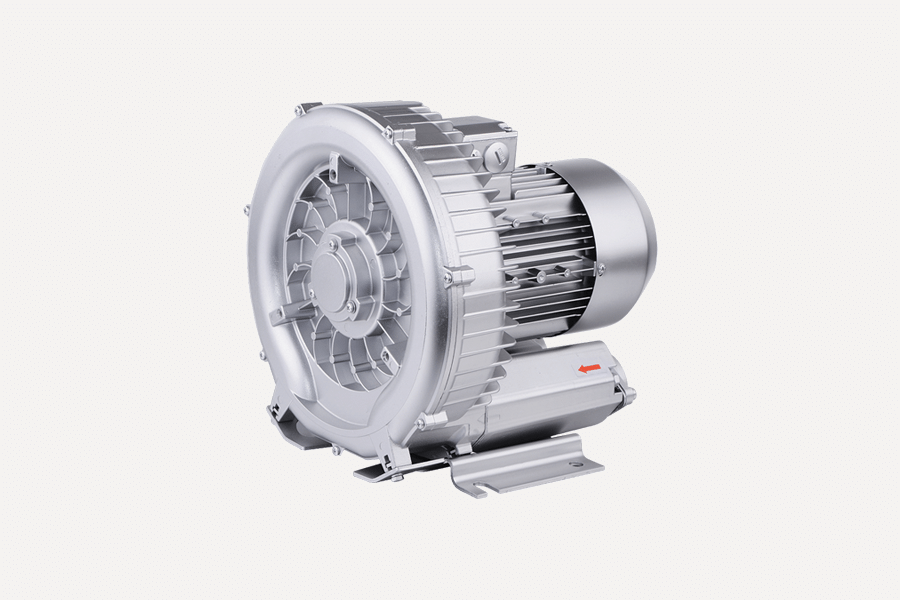
01Side channel blower
Simple, quiet and cheap to run. For compact systems and short routes: feeding feeders, mixers and packing machines.
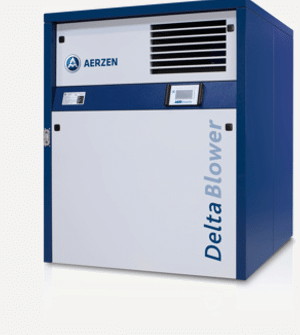
02Roots blower
The answer for high rates and continuous operation. One generator serves several conveying lines in the plant in sequence.
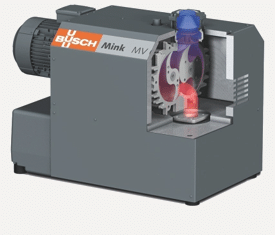
03Vane / claw pump
High vacuum at low energy consumption. For long routes, dense phase conveying and sensitive products.
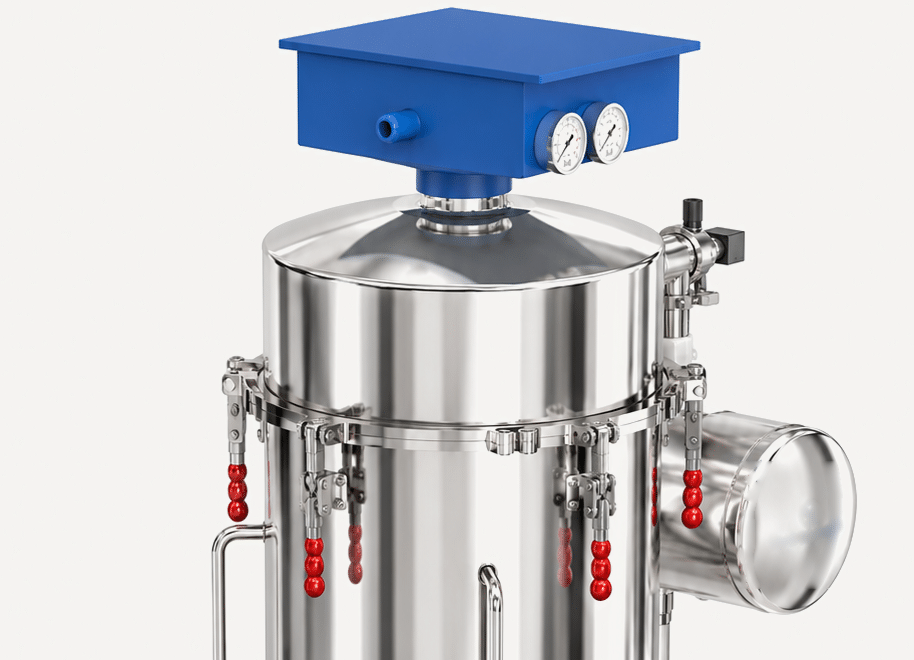
04Multi-stage ejector
No moving parts and no electrical supply. For explosive atmospheres, intermittent operation and mounting on the receiver.
System selection
Not sure which system to choose?
Fill in the selection questionnaire
The type of material, the rate required, the length of the route and the way the system will run are enough for our engineers to select the receiver, the vacuum generator and the build. We reply with a proposed configuration and a quotation.
Configurations
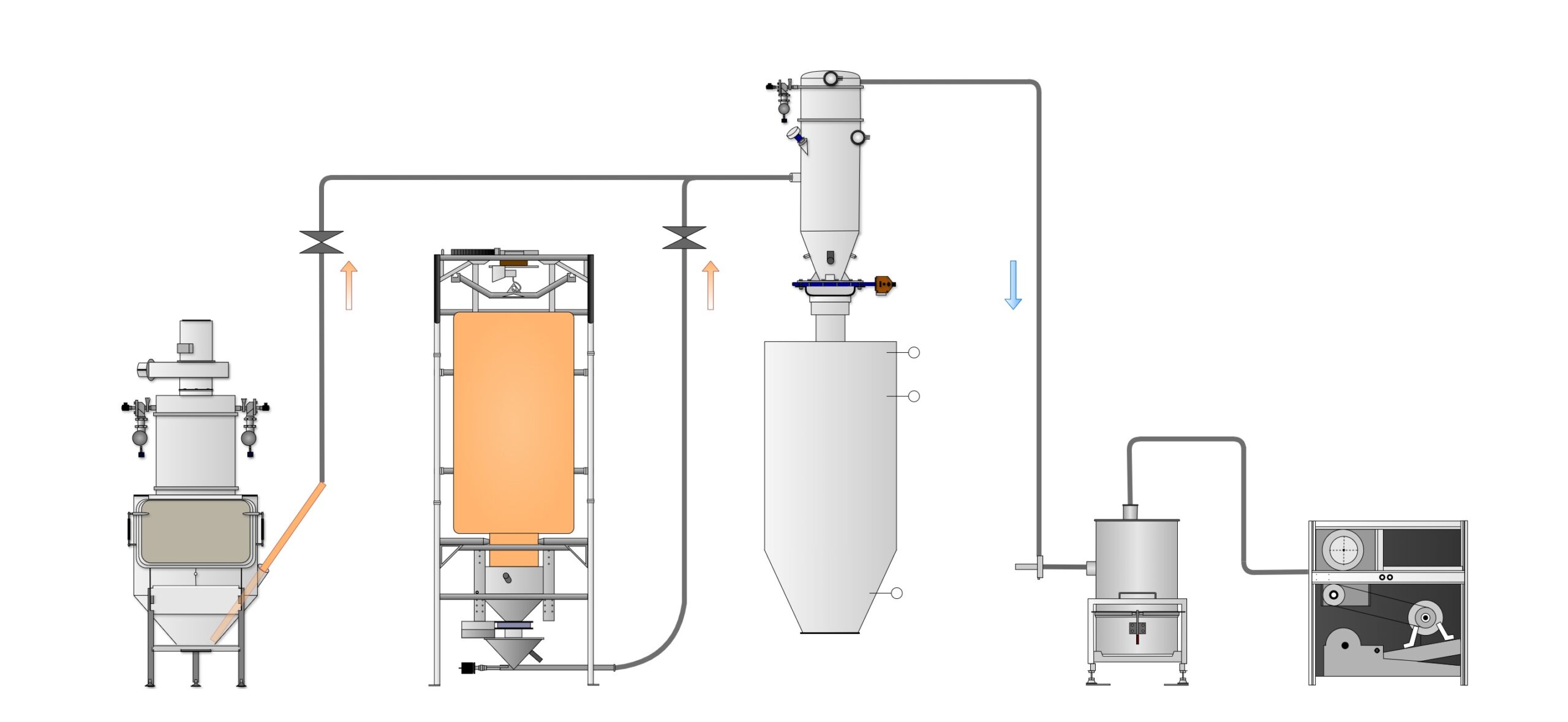
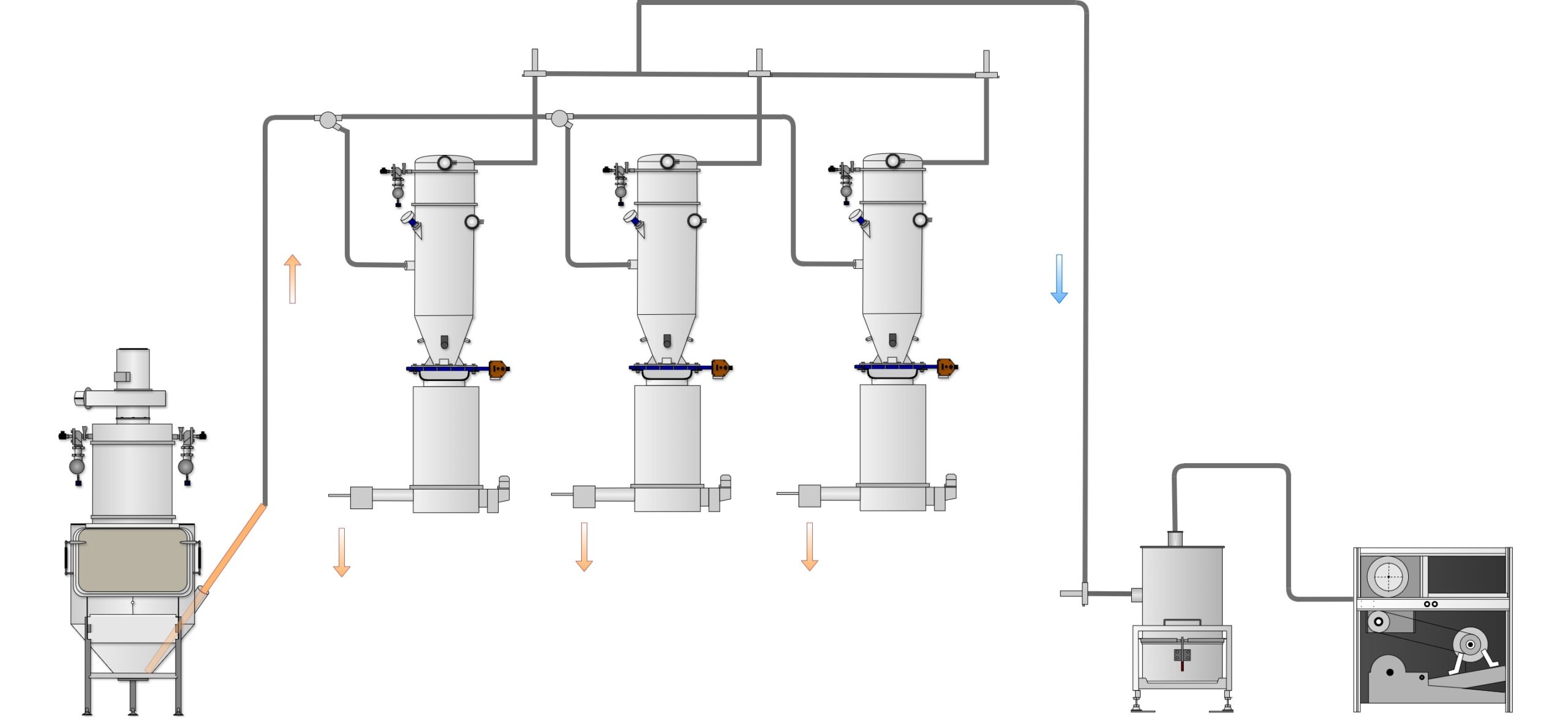
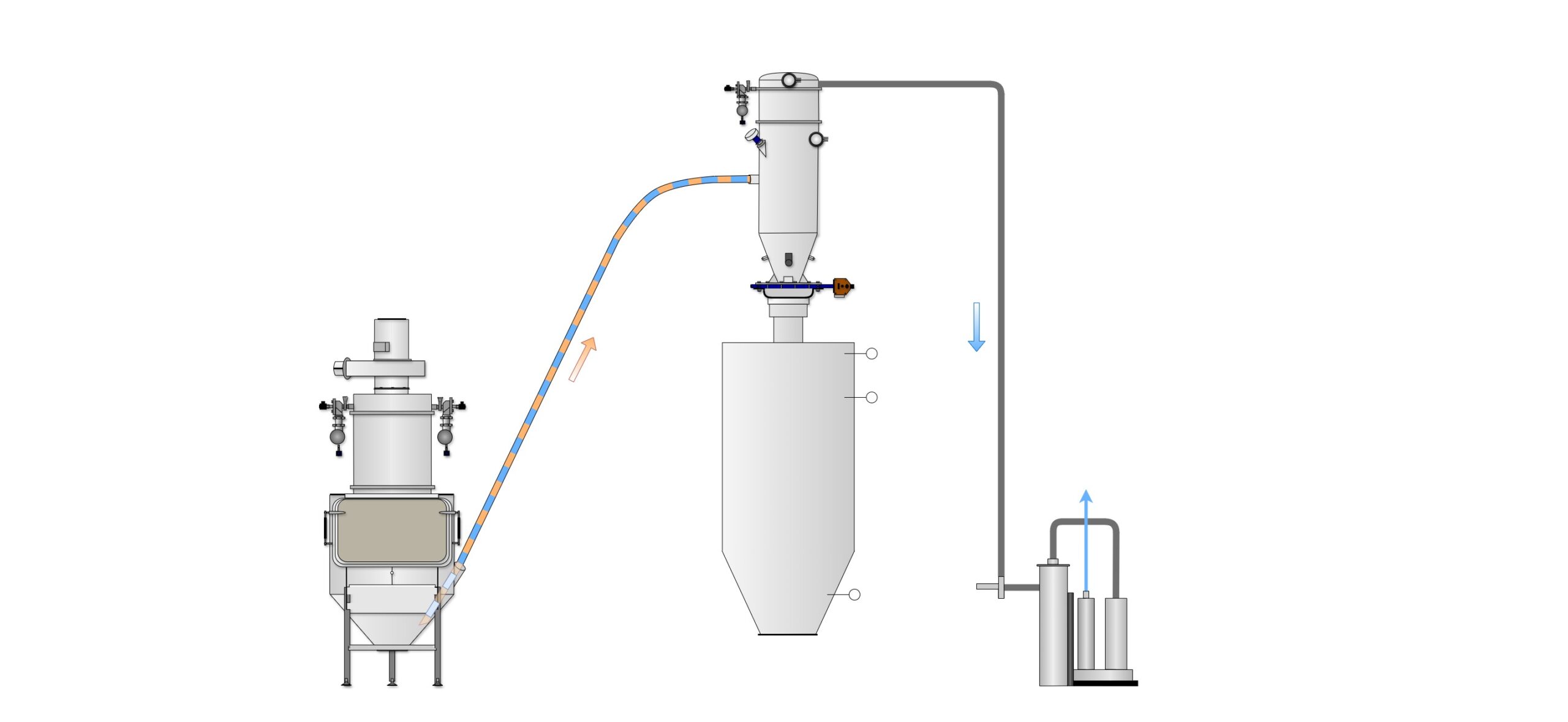
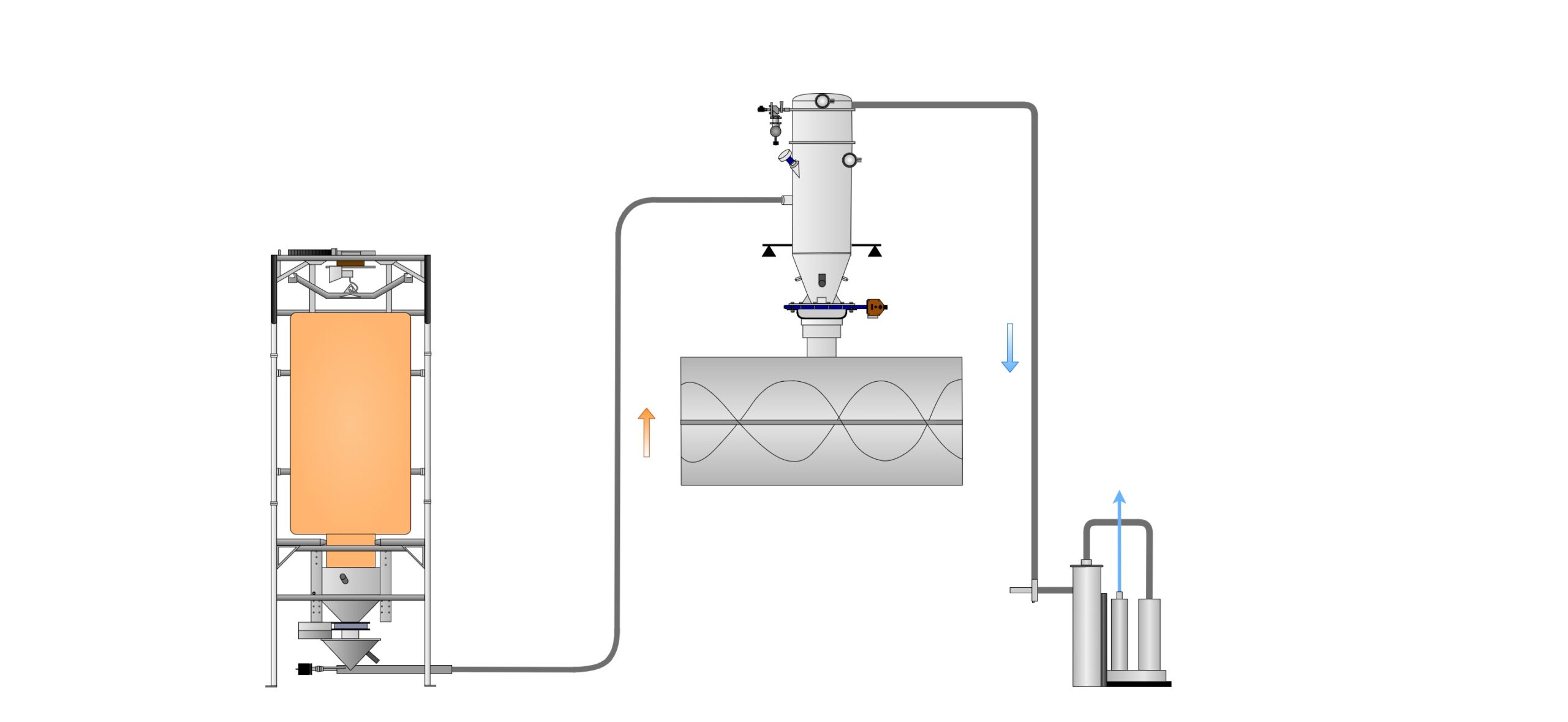
Example layouts for vacuum conveying systems
From simple single-line arrangements to systems with several pick-up and discharge points, dense phase and batch dosing. We design each one for its particular application.
Industries and applications
Conveying bulk solids in key industries
Gallery
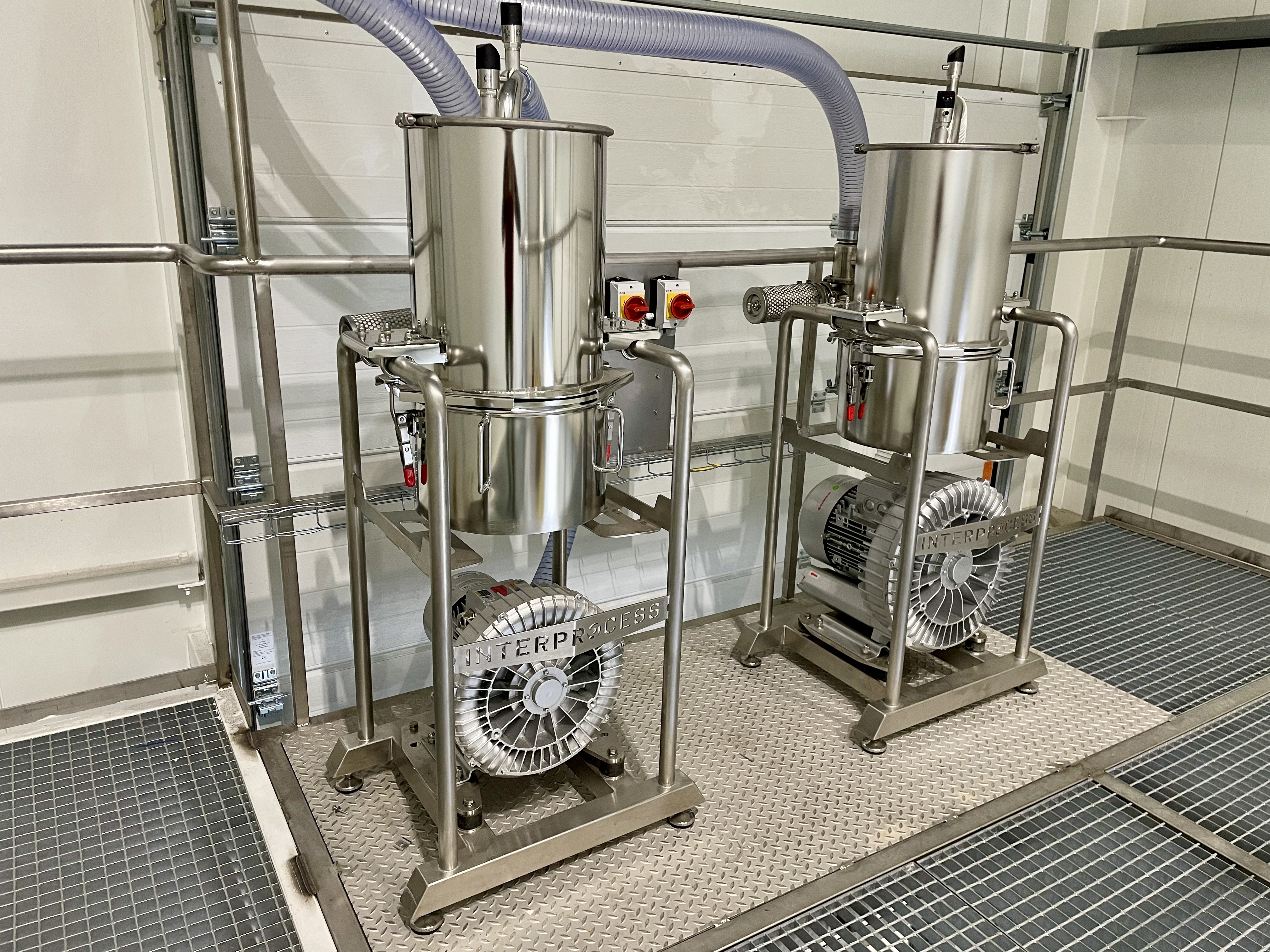
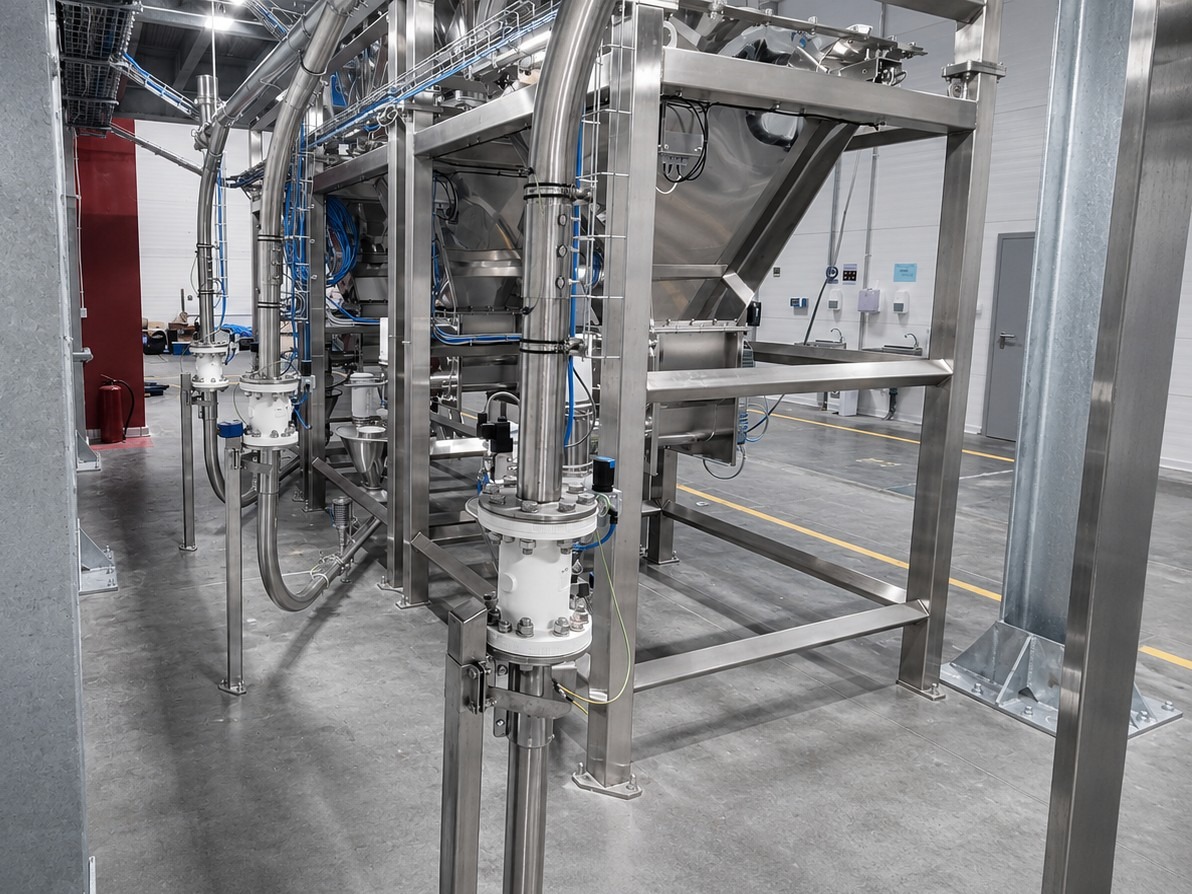
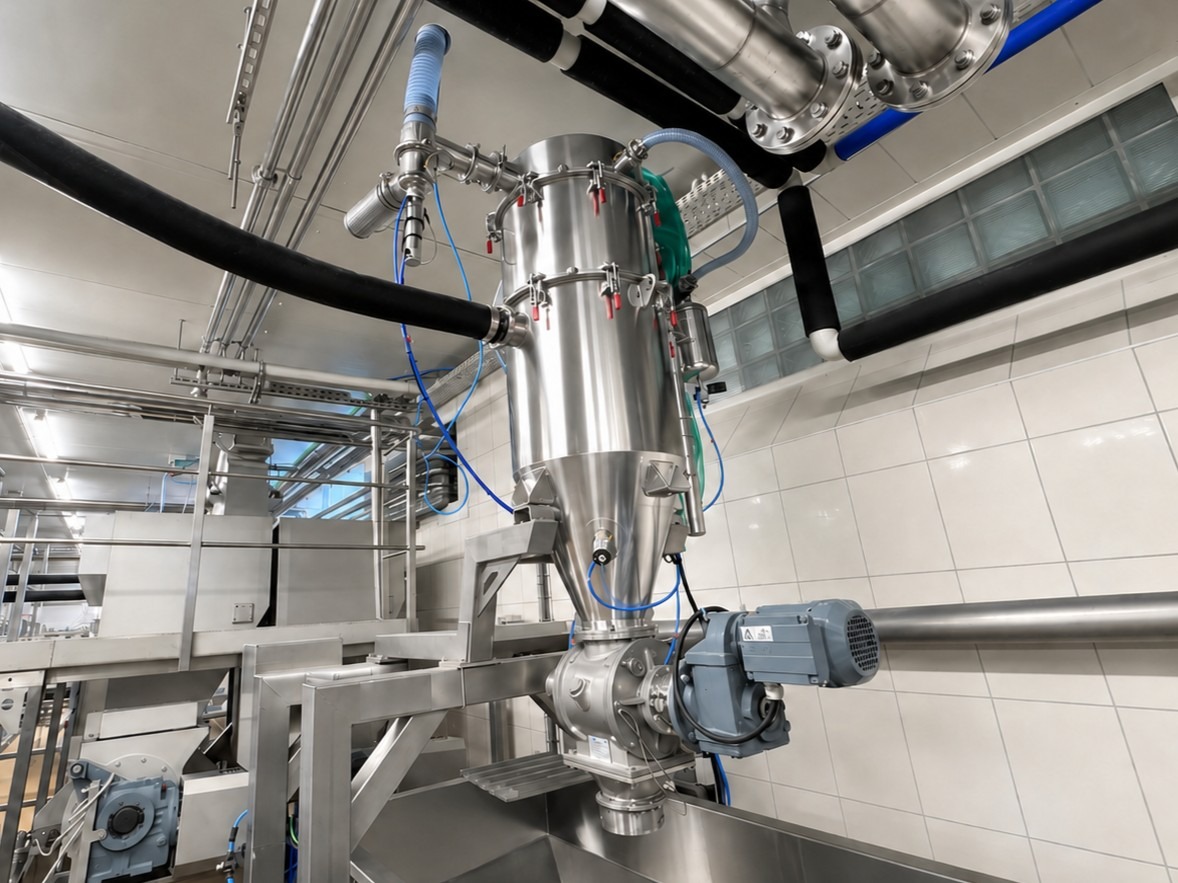
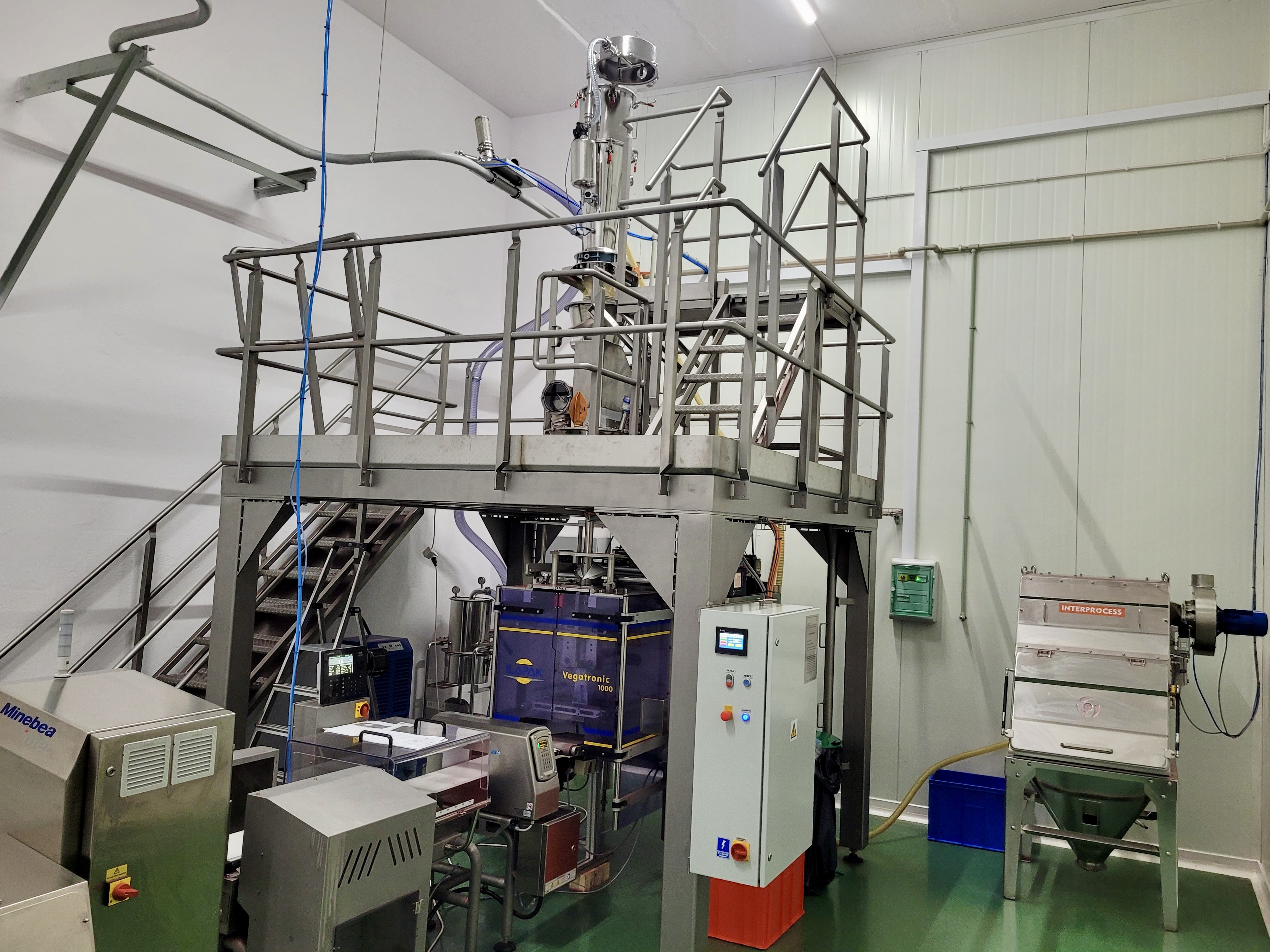
Vacuum conveying installations
Click to enlarge
Video
VSU vacuum conveying on film
Trials on your own material
Hire a VSU system before you decide
Every bulk solid behaves differently. Rather than relying on catalogue rates, we make a mobile VSU system available for trials at your own plant: on your product, along your route and in your working cycle. You can check the real rate, how the material behaves and how well the filtration works, before you decide to buy.
- •trials on your material, at your plant
- •a complete system: receiver, vacuum generator and pipework
- •support from our engineer at commissioning and in assessing the results
FAQ