InterProcess Sp. z o.o. | Solutions for industry

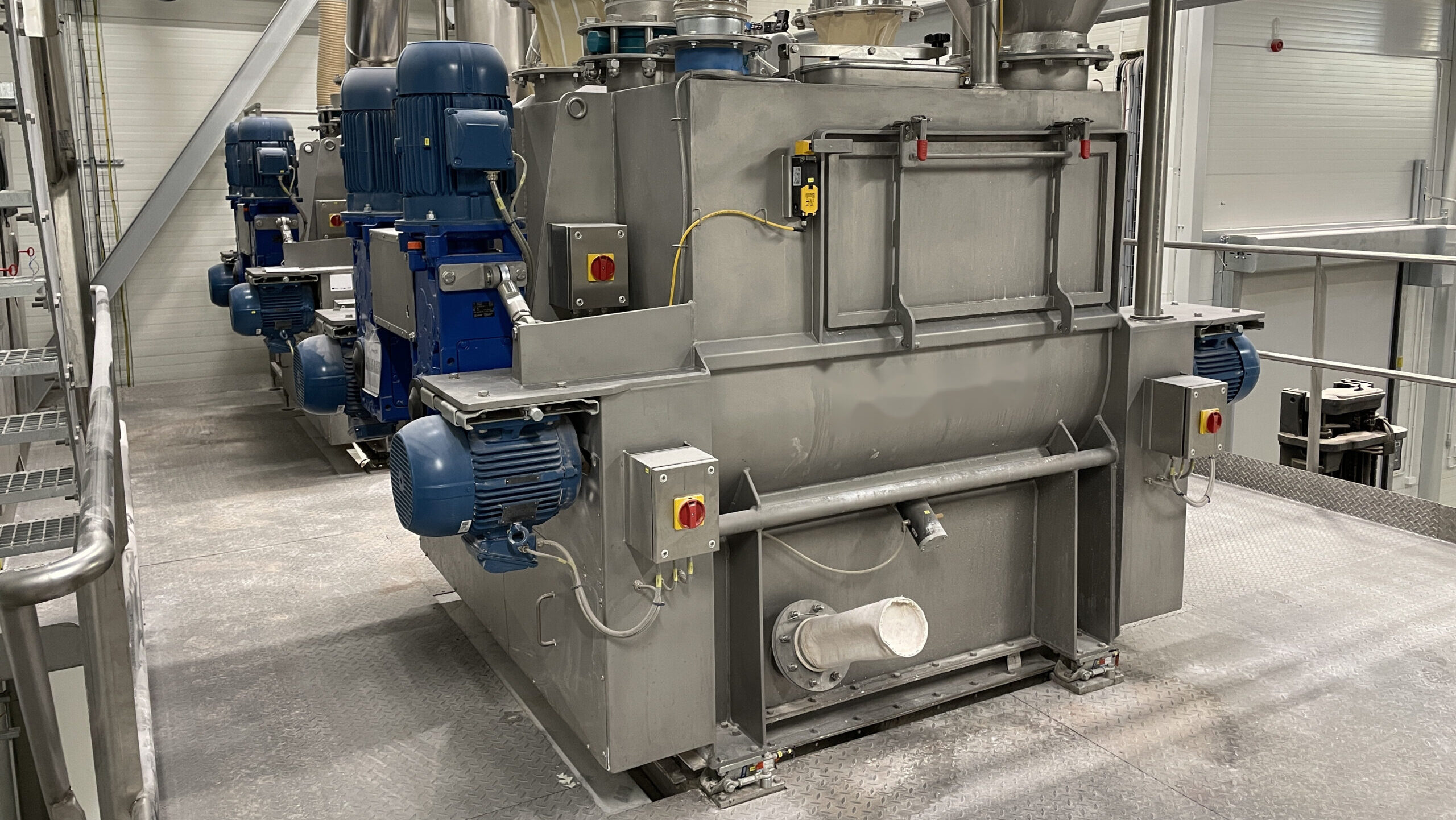
Mixing technology
Three mechanisms, one aim: a homogeneous blend
The quality of the mixing process feeds directly into the uniformity of the finished product, the repeatability of the recipes and the output of the whole line. The aim is a blend with precisely defined proportions of the ingredients, whatever the differences in their bulk density, particle size or physical properties. Modern mixers combine three mechanisms of homogenisation, working quickly while doing as little damage as possible to delicate particles.
1
Convection
Moving large portions of material around the volume of the chamber. The working elements — paddles, ribbons or a screw — force the whole batch to circulate and distribute the ingredients quickly.
2
Diffusion
The exchange of individual particles where layers of material meet. This determines the final accuracy of the mix, which matters most with micro-ingredients, active substances and premixes.
3
Shear
Breaking up agglomerates and lumps by shearing forces. This disperses clusters of ingredients and distributes liquid additives evenly through the bulk material.
Types of mixer
The mixer chosen to suit the material, not the other way round
The choice of design depends on the characteristics of the raw materials, the mixing accuracy required, the throughput of the process and the demands of the industry. We are not tied to a single manufacturer: we integrate mixers from proven, reputable European makers, guaranteeing full compatibility with the rest of the process line.
Gentle · short cycles
Paddle mixer
Paddles on one or two shafts move the material in a controlled, rolling motion, without straining the particles aggressively. The twin-shaft version creates a fluidised zone: very short cycles while remaining gentle and highly accurate.
Typical: delicate and segregation-prone products, premixes, blends with liquid
All-round · large batches
Ribbon mixer
A double helical ribbon moves the material in counter-flowing streams along the chamber. A simple, reliable design for large batches and regular production, also available in a vertical arrangement where space is tight.
Typical: flour blends, spices, milk powders, animal feed
Intensive · liquid additives
Ploughshare mixer
Ploughshares throw the material into a mechanically fluidised bed, while high-speed choppers break up agglomerates and lumps. The most intensive mixing available — for cohesive materials and for processes involving a high proportion of liquid.
Typical: wetting, coating, granulation, materials that cake
Vertical · gentle mixing
Conical screw mixer
An orbiting screw in a vertical cone lifts the material along the wall and mixes it with minimal energy input and minimal heating of the product. Complete gravity discharge and operation at varying fill levels.
Typical: friable products, active substances, pharmaceuticals
No working elements
Tumble mixer
A V-type, double-cone or drum chamber mixes the material by tumbling as it rotates, with no agitator inside. The gentlest method for free-flowing products, and the simplest to clean.
Typical: crystals, granulates, tablets, frequent product changes
Build options
Every type matched to the process
- •rotating spray nozzles for dosing liquids
- •heating and cooling jackets, vacuum builds (mixer-dryers)
- •mounted on load cells, acting as a scale
- •ATEX and hygienic builds, easy to clean
- •sizes from laboratory to full production
Mixer selection
Not sure which mixer to choose? Fill in the selection questionnaire
Material parameters, batch size or throughput and the operating mode are enough for our engineers to select the mixer type, size and build. We reply with a proposed configuration and a quotation.
Process modes
Batch mixing or continuous?
In a batch system each portion is weighed out, homogenised as a separate charge and discharged once the cycle is complete. In a continuous process the ingredients are fed without interruption in controlled proportions and mixed in flow, so the finished product leaves the mixer with no pauses for loading and discharge.
Recipe flexibility
Batch mixing
- •full quality control of every batch of product
- •easy recipe changes between successive charges
- •tracking and documenting every batch (traceability)
- •simpler validation procedures in the pharmaceutical industry
- •ideal for multi-product operations and smaller runs
Maximum output
Continuous mixing
- •high, steady production output
- •smaller machines for the same throughput
- •usually lower power requirement
- •less downtime and lower material losses
- •straightforward integration with continuous gravimetric feeding
| Parameter | Batch charge-by-charge | Continuous in flow |
|---|---|---|
| Recipe changes | easy, between charges | requires the feeding system to be reset |
| Output | limited by the batch cycle | high and steady |
| Batch control | full, batch by batch | statistical, in flow |
| Validation (GMP) | simpler | more demanding |
| Typical applications | multi-product operations, smaller runs, pharmaceuticals | mass production of uniform products |
The complete system
Not just the mixer. A whole line that works together
As a company specialising in the complete handling of bulk materials, we provide not just the mixer but the whole system, from raw material intake through to automatic process control. Every element of the installation therefore works optimally with the rest.
1
Raw material intake
Big bag emptying stations, sack tip stations, feed hoppers and silo discharge — contained and dust-free.
2
Ingredient feeding
Precise gravimetric and volumetric feeding of the recipe ingredients, micro-ingredients included, before they enter the mixer.
3
Pneumatic conveying
Loading the mixer and taking material away by VSU vacuum conveying — in dense phase, where the finished blend must not segregate.
4
Control and recipes
Automatic process control: PLC, multi-ingredient recipe management, logging of parameters and batch traceability.
Industries and applications
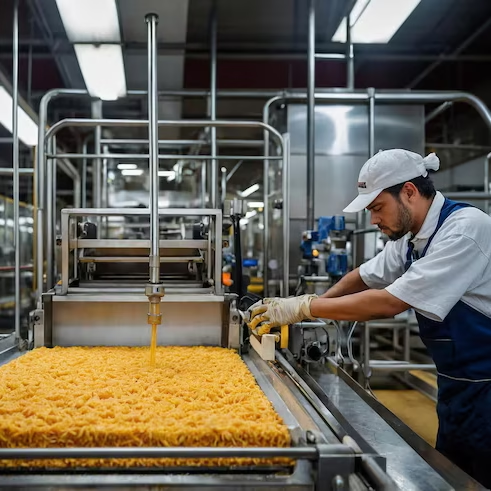
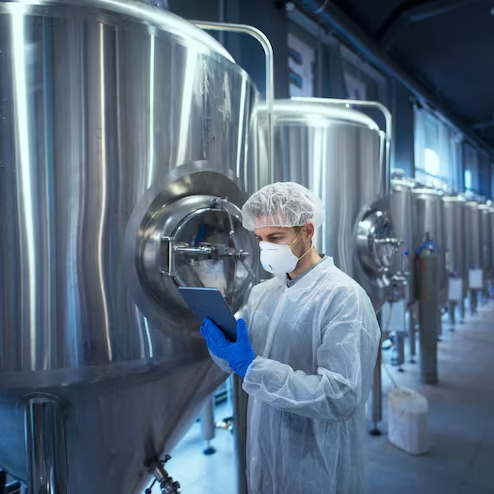
Mixing systems for key industries

FAQ