Belt weighfeeder DTU

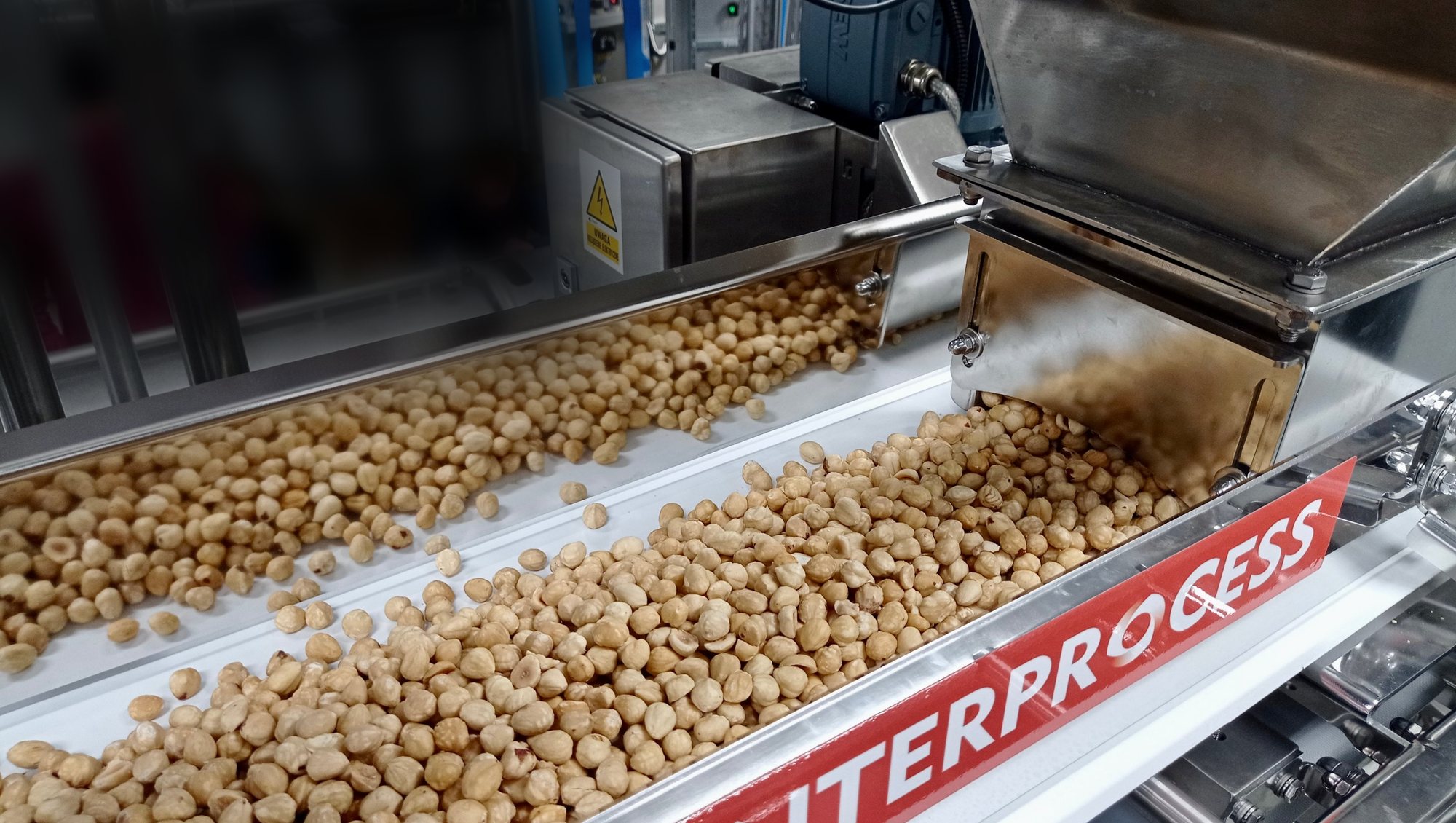
InterProcess gravimetric belt weighfeeder DTU feeding hazelnuts in a food plant

Gravimetric belt weighfeeder DTU

Gravimetric belt weighfeeder DTU

Continuous, precise feeding of bulk solids of low and medium bulk density. Built entirely of stainless steel, with an FDA approved belt, in the open version or in a dust-tight enclosure.

<0.5% feeding accuracy 100–40,000 kg/h throughput range FDA · ATEX · HACCP compliance of the build

DTU belt weighfeeder

Precise feeding of light and delicate materials

The DTU belt weighfeeder is a compact unit for the continuous delivery of bulk solids of low and medium bulk density, with measurement of the mass flow. The material travels on a belt, so it is neither sheared nor abraded: this is the answer for friable products, for coarse particles and for materials sensitive to mechanical action. Built entirely of stainless steel, with an FDA approved belt, the DTU can be used wherever process hygiene matters.

Hygienic construction

Steel 1.4301 (AISI 304) or 1.4404 (AISI 316L) and a PU/PVC belt, FDA approved. Compliant with HACCP and GMP requirements.

Open or dust-tight version

The same feeding accuracy in the open build and in the enclosure that limits dust emission in the plant.

Gentle delivery

No shearing or abrasion of the particles: flakes, pellets, dried fruit and granules reach the process undamaged.

DTU belt weighfeeder

A compact stainless steel belt weighfeeder
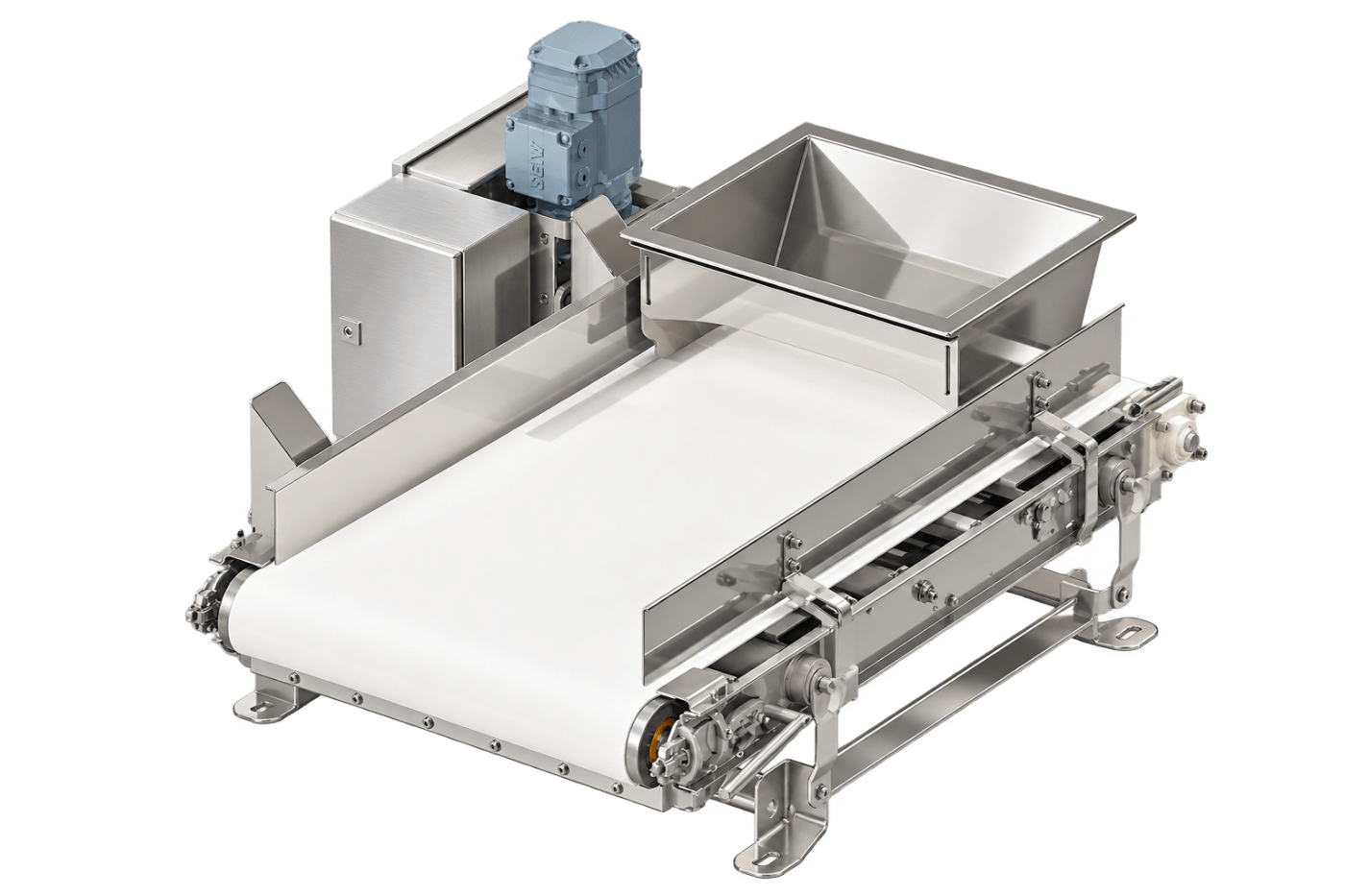
DTU600 belt weighfeeder in the open version
DTU600 in the open version
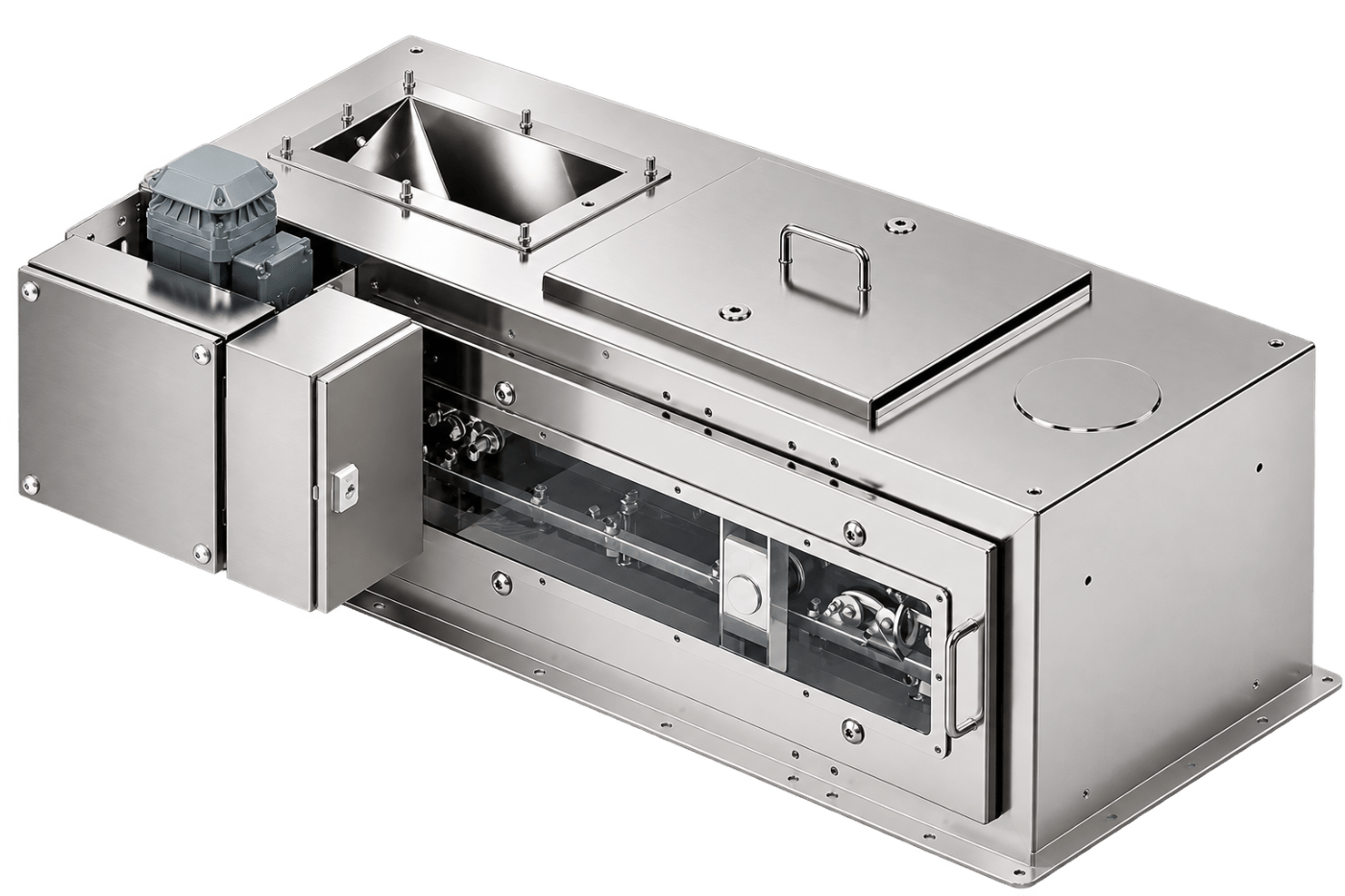
DTU600 belt weighfeeder in the dust-tight enclosure
DTU600 in the dust-tight enclosure

DTU installations · click to enlarge
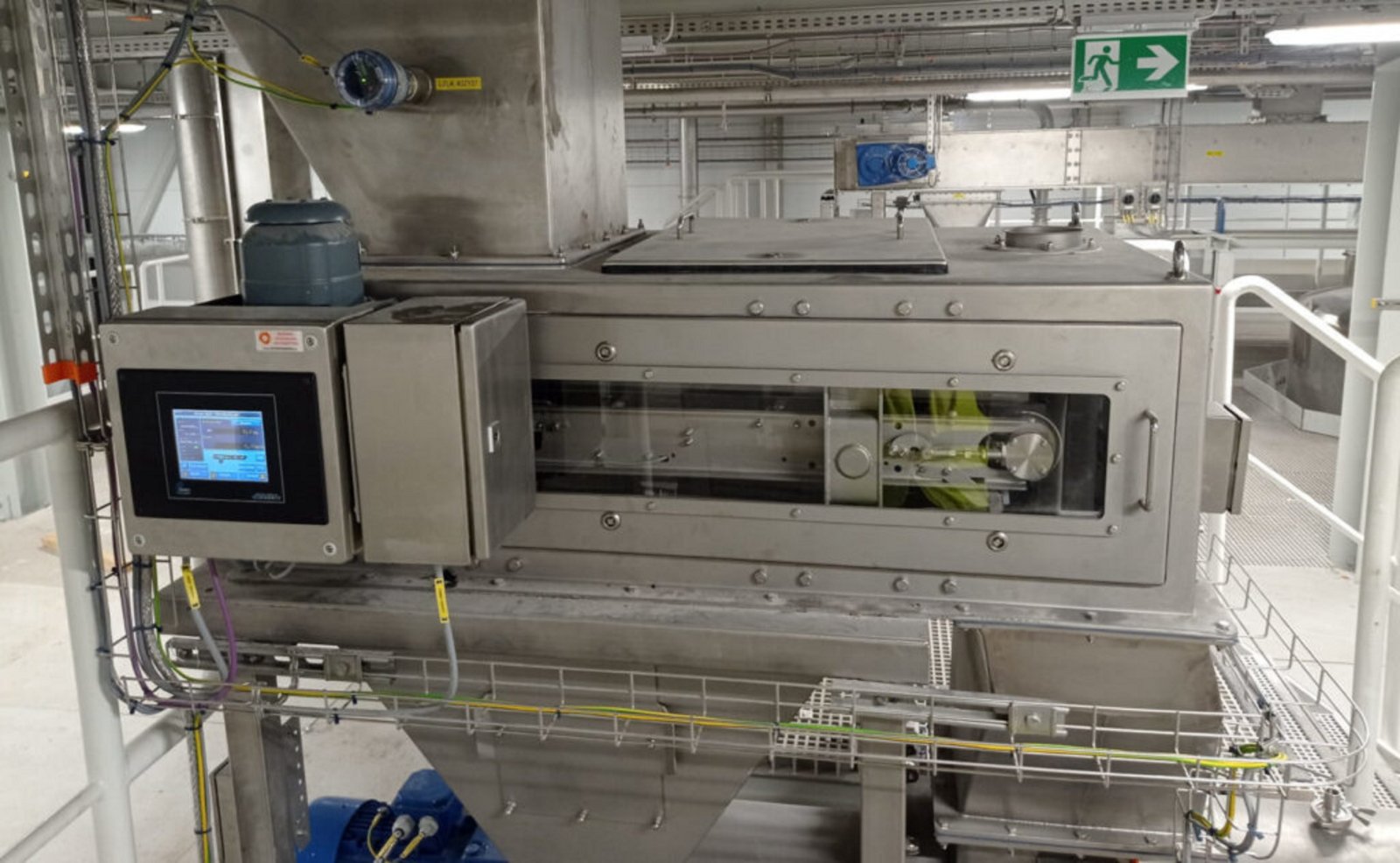
Feeding salt. Enclosed feeder.
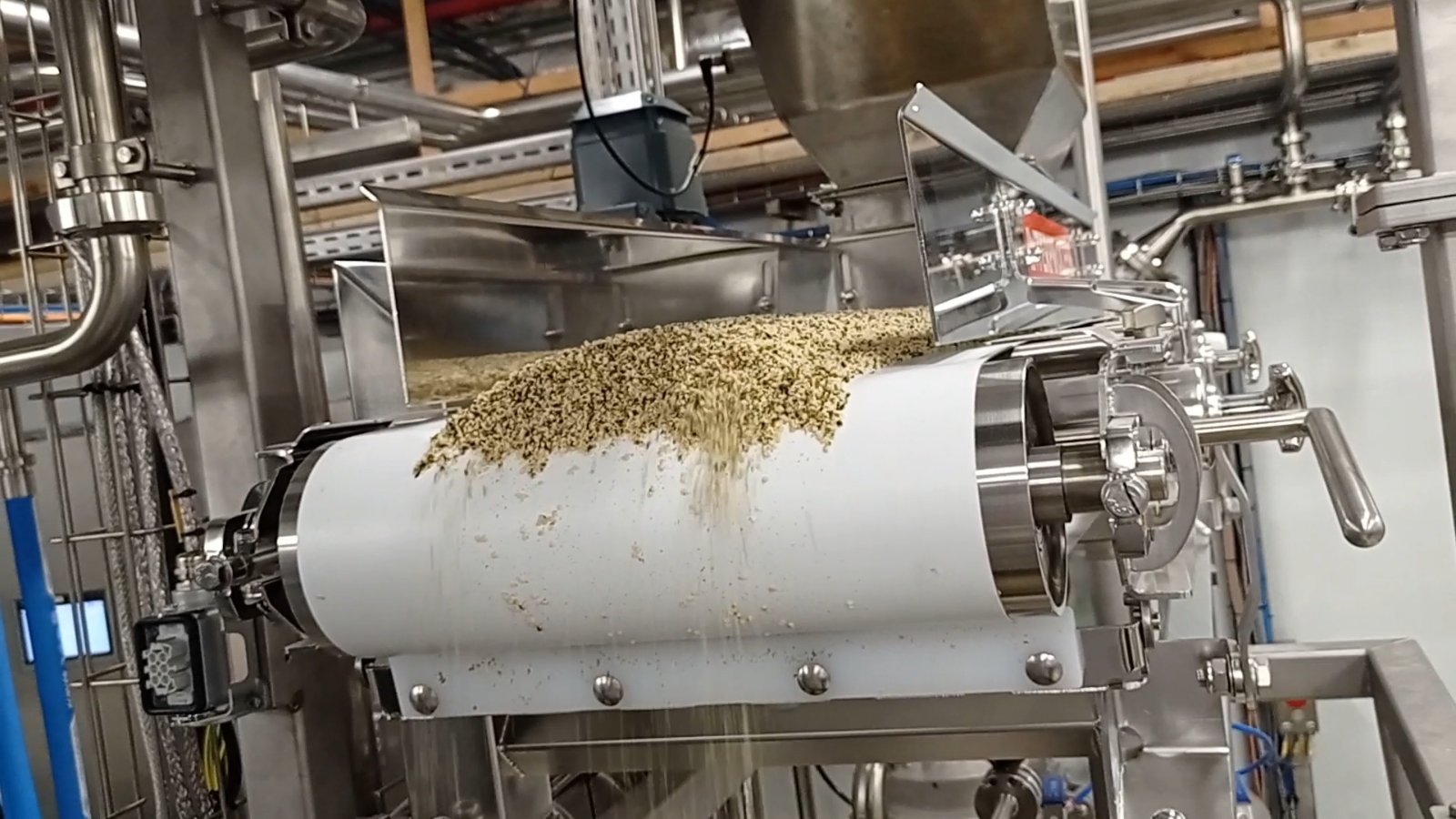
Feeding granules in the food industry.
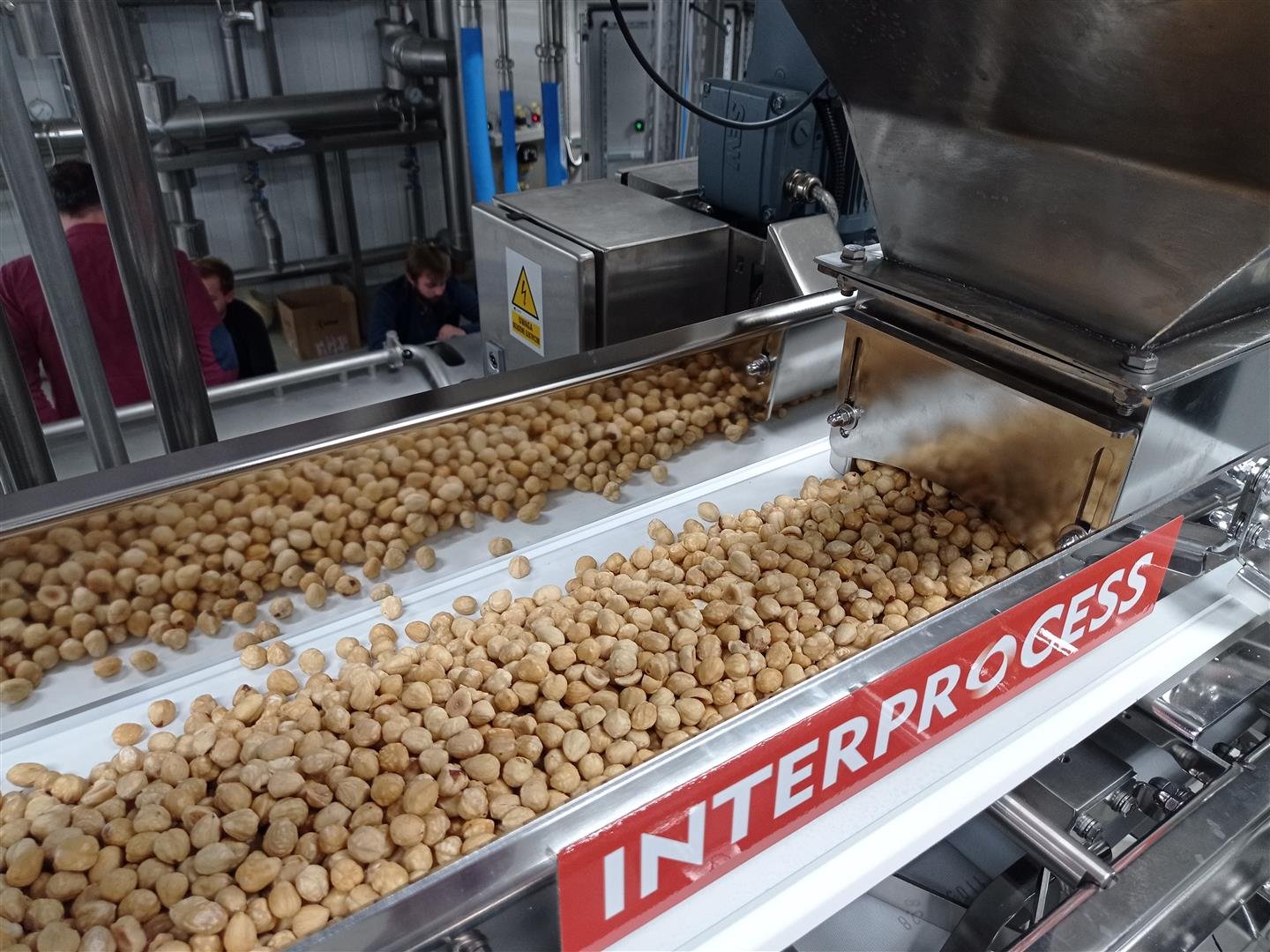
Feeding nuts in the food industry.

DTU videos

Continuous feeding of nuts
Quick, trouble-free belt changing on the DTU
Flow measurement of crisps

The DTU belt weighfeeder is a compact, precise way to deliver materials of low and medium bulk density. Built entirely of stainless steel, with an FDA approved belt, it suits the food, chemical and cosmetics industries particularly well. The DTU can work in the open version or enclosed, in a dust-tight housing.

Key DTU specifications

  • Accuracy<0.5% of setpoint (<0.25% in selected applications)
  • Throughputfrom 100 to 40,000 kg/h
  • Belt width300 or 600 mm
  • Materialssteel 1.4301 (AISI 304) or 1.4404 (AISI 316L)
  • BeltPU/PVC, FDA approved
  • Enclosureopen or dust-tight version
  • Intended forpowders, granules, pellets, friable and delicate products

Downloads

Choosing the unit

Is the DTU the right choice?

The DTU and the DTC differ above all in the density and abrasiveness of the material and in the throughput required. The list below is a quick way to check whether the DTU is the unit for your process.

The DTU is right when:

  • the material is of low or medium bulk density
  • the throughput required falls between 100 and 40,000 kg/h
  • a stainless steel construction and an FDA approved belt are needed
  • the product is friable or delicate and must not be sheared
  • a compact footprint, easy cleaning and quick belt changing matter

Consider the DTC when:

  • the material is heavy, strongly abrasive or aerates
  • the throughput required exceeds 40,000 kg/h (the DTC works up to 1000 t/h)
  • a belt wider than 600 mm is needed
  • the unit is to work in a cement works, a lime plant, a mine or a power station
DTC belt weighfeeder

Proportional feeding

Multi-ingredient systems with DTU feeders

DTU belt weighfeeders are the natural building block for continuous proportional feeding systems, in which several ingredients are delivered at once onto a common take-away conveyor. One feeder acts as the master and the rest work as slaves, holding a fixed mass ratio to the main ingredient.

A change of rate on the master automatically corrects the rates of all the slaves in proportion, so the recipe holds its ratios whatever the line output. In the food and cosmetics industries, and in pet food production, this allows blends and premixes to be run continuously, with no batch weighing step. InterProcess selects the feeders, weighing controllers with industrial communication (Profibus, Profinet, Modbus, EtherNet/IP), and the recipe automation.

Feeder A MASTER Feeder B SLAVE 1 Feeder C SLAVE 2 Feeder D SLAVE 3 Control · fieldbus 4–20 mA · Profibus Profinet · Modbus EtherNet/IP Ingredient A Ingredient B Ingredient C Ingredient D to the process Common take-away conveyor: a steady stream of the multi-ingredient blend Proportional continuous feeding, with pre-homogenisation already on the conveyor

Industries and applications

Where DTU feeders work
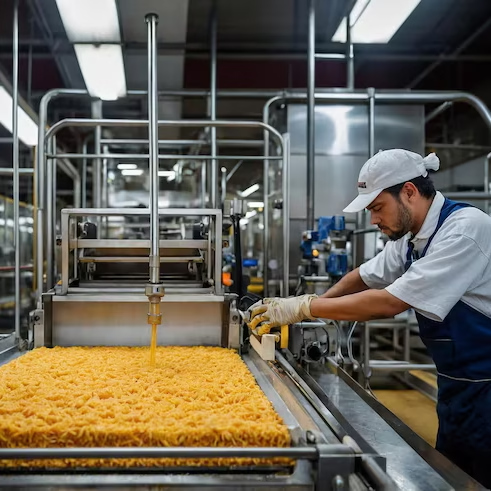
DTU belt weighfeeder in the food industry DTU

Food and cosmetics

Gentle feeding of breakfast cereals, dried fruit, seeds, food granules, milk powders and cosmetic components. The stainless steel construction with an FDA belt meets HACCP requirements, and the dust-tight enclosed version limits dust emission in the plant.

DTU belt weighfeeder in the chemical industry DTU

Chemicals and pet food

Feeding pigments, detergents, chemical additives, premixes and pet food components. For dusty and combustible materials the DTU is available in an ATEX version, and throughput up to 40,000 kg/h covers the usual continuous blending lines.

FAQ

The DTU belt weighfeeder: frequently asked questions

How does the DTU belt weighfeeder differ from a screw feeder?

+
In the DTU the material travels on a conveyor belt, with no shearing or abrasion by a screw. That is the best answer for friable products such as flakes, pellets and dried fruit, for coarse particles, and for products sensitive to mechanical action. A screw feeder copes better with fine, cohesive powders and takes up less space at lower rates. The DTU also needs less installation height.

Does the DTU meet food industry requirements?

+
Yes. It is built entirely of stainless steel 1.4301 (AISI 304) or 1.4404 (AISI 316L), and the PU/PVC belt is FDA approved. That build answers the requirements of HACCP and GMP systems. On request we also supply the DTU in an ATEX version for zones at risk of dust explosion.

How does the open DTU differ from the dust-tight version?

+
The open version gives full access to the belt and the feed hopper, which makes cleaning and visual checking of the process easier. The dust-tight enclosed version limits dust emission into the plant and protects the product from outside contamination; it is used with dusty materials and wherever an extraction connection is required. Both versions have the same feeding specifications.

How accurate is feeding with the DTU?

+
Below 0.5% of setpoint, and in selected applications below 0.25%. The accuracy depends among other things on the properties of the material, the steadiness of the feed, the right choice of feed hopper, and calibration of the system.

Can the DTU work in a multi-ingredient system?

+
Yes. Several DTU feeders deliver different ingredients onto a common take-away conveyor, holding the recipe ratios in master/slave mode. The systems communicate through 4–20 mA analogue signals or industrial protocols (Profibus, Profinet, Modbus, EtherNet/IP). It is the usual arrangement for food blends, premixes and pet food.

When should the DTC be chosen instead of the DTU?

+
When the material is of high bulk density, strongly abrasive, or the throughput required exceeds 40,000 kg/h. In such cases the right choice is the DTC belt weighfeeder: a rigid carbon steel structure, a belt 650–1400 mm wide and throughput up to 1000 t/h.

Why InterProcess

Why a DTU belt weighfeeder from InterProcess?

In-house manufacture

We design and build DTU feeders in our own works.

A complete feeder range

Belt, gravimetric and volumetric screw, and vibratory feeders.

Multi-ingredient systems

We design and integrate complete proportional feeding lines.

Experience across many industries

Food, cosmetics, chemicals and pet food.

Safety and hygiene

Builds compliant with FDA, HACCP, GMP and ATEX requirements.

Technical support and service

With a fast response, 24/7 if required.

Need a DTU belt weighfeeder?

Get in touch and our engineers will select the belt width, the enclosure variant and the feed hopper of the DTU to match the properties of your material and the demands of your process.

Feeding salt. Enclosed feeder.
Feeding salt. Enclosed feeder. · 1/3
‹ › ×
Feeding granules in the food industry.
Feeding granules in the food industry. · 2/3
‹ › ×
Feeding nuts in the food industry.
Feeding nuts in the food industry. · 3/3
‹ › ×