InterProcess Sp. z o.o. | Solutions for industry

Operating principle
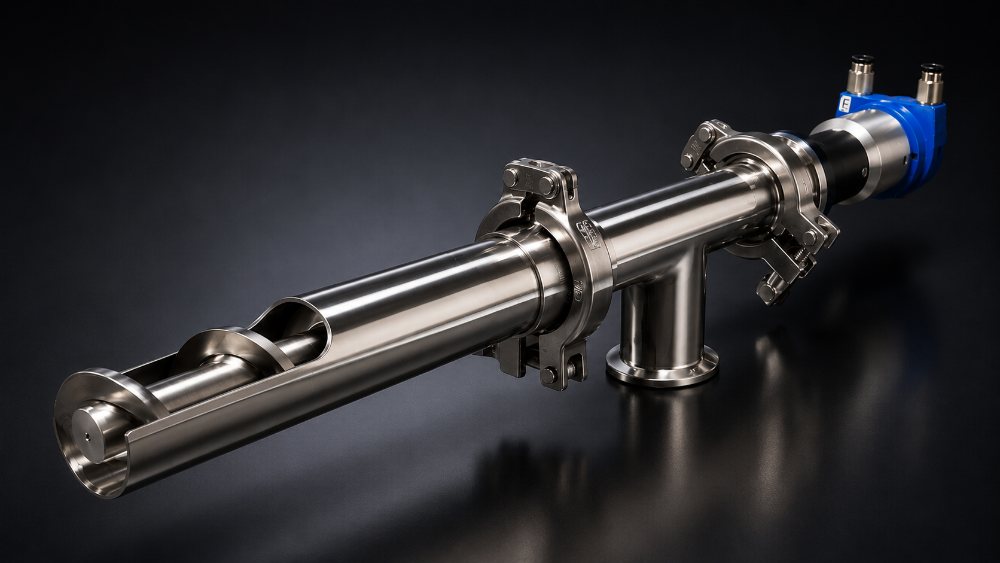
How an auger sampler works
Bulk materials segregate in vessels and packaging, so only a sample taken from the product stream is reliable. An auger sampler does exactly that, inside a closed installation, at repeatable intervals.
1
A single ferrule
A Tri-Clamp ferrule welded into the wall of the pipe or chute. The sampler is fitted with a clamp, without tools.
2
The auger takes the sample
Material from the stream travels along the sampling tube to the discharge port. The sample quantity is set by the run time of the drive.
3
Discharge and reverse
The sample drops into a bag or bottle (1.5″ Tri-Clamp). The reverse run clears the tube, so every subsequent sample is fresh.
Specifications
Materialpowders, granulates < 6 mm, pastes
Sample sizeset by run time, with no mechanical changes
Sampling modemanual or automatic: time-, volume- or event-based
ConnectionsTri-Clamp, 1.5″ discharge port
Material of construction1.4404 (AISI 316L) steel, steel or PA66 auger
Pressurised systemswith an isolation valve ahead of the container
Types of device
Auger, piston or vacuum
The choice depends on where the sample is taken – a closed installation or packaging – and on whether every sample has to have an identical volume.
discharge pipes · chutes · vessels
Auger sampler
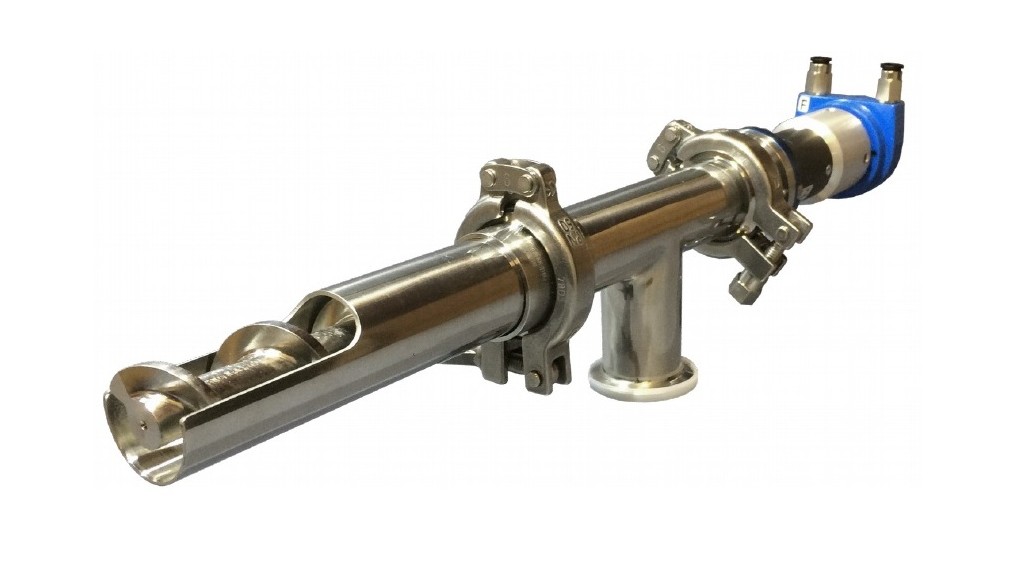
Continuous operation, with the sample quantity set by time. Manual, pneumatic or 24 V electric drive; PA66 or 1.4404 steel auger.
powders and granulates < 6 mm · pastes
a fixed volume for every sample
Piston sampler
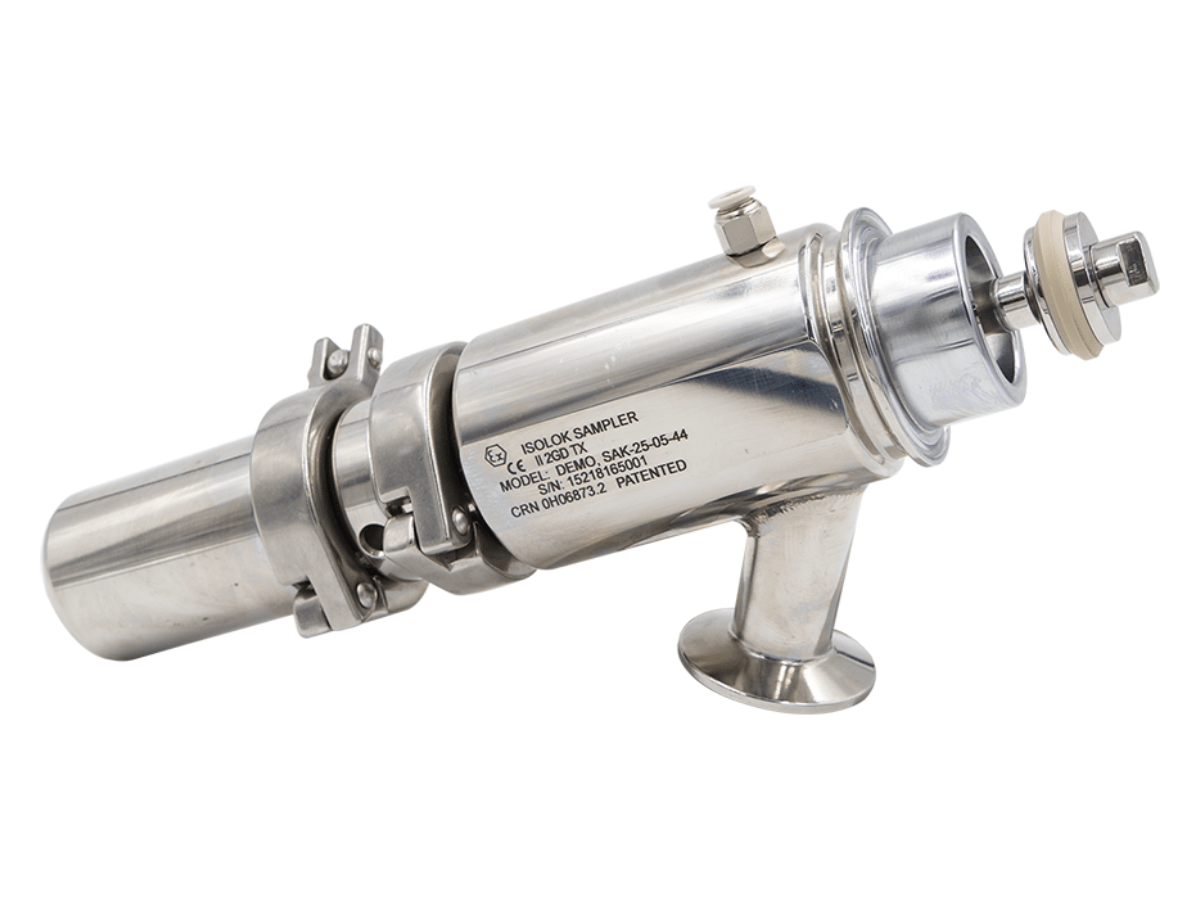
A pneumatic piston transfers an identical portion on every stroke. For spot and composite samples from free-flowing materials.
pipes · chutes · packing lines
sacks · big bags · drums · octabins
Vacuum lance sampler
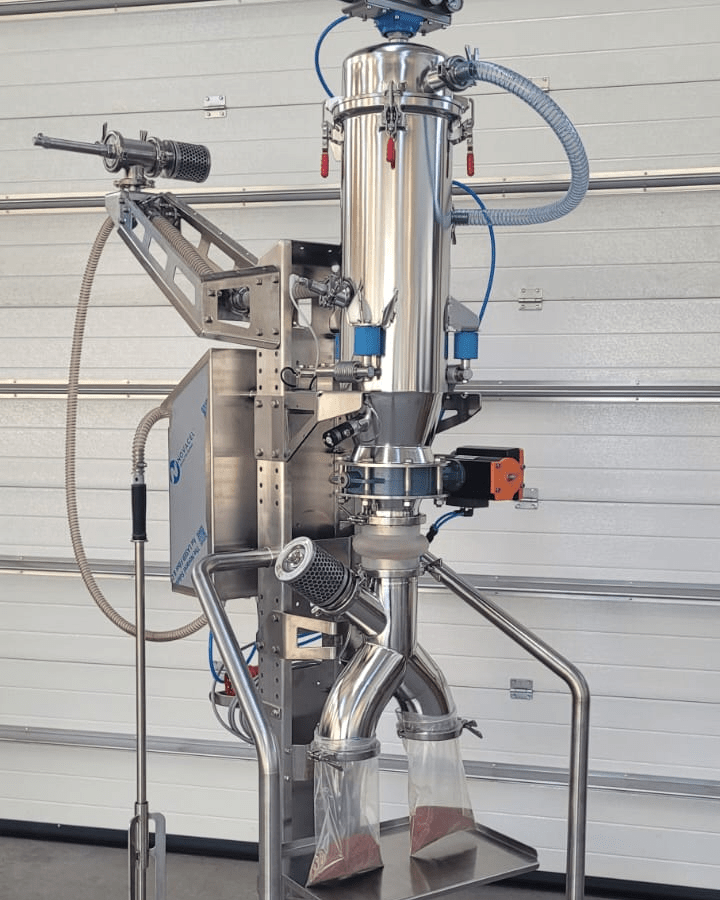
An in-house design based on a vacuum conveying receiver. The lance draws a set quantity from deep inside the packaging into a closed receiver and discharges it into a bag.
raw material intake · warehouse · mobile version
Sampler selection
Not sure which sampler to choose? Complete the selection questionnaire
The material, the sampling point, the services available and the required sample size are all our engineers need to select the sampler type, drive and collection system. We reply with a proposed configuration and a quotation.
Build variants
Drive and auger matched to the material and the location
| Variant | Build | Application |
|---|---|---|
| Drive | ||
| Manual (crank) | no services required | occasional samples, locations with no compressed air or power supply |
| Pneumatic | 4–6 bar, stall-proof motor, reverse run | ATEX zones, automatic operation |
| Electric | 24 V DC geared motor, IP65 | integration with the line controller, proportional sampling |
| Auger | ||
| Segmented | PA66 polyamide, up to 95 °C, replaceable segments | delicate and abrasive products |
| Machined | 1.4404 steel, from solid bar, Ra 0.8 µm, no welds | pharmaceuticals and food, GMP build |
| Wire | 1.4404 steel, 6 × 6 mm wire | granulates, poorly flowing materials, pastes |
Options
+collection systems: bags, bottles, containers with a valve
+a programmable controller or integration with the line PLC
+an isolation valve for systems under pressure or vacuum
+ATEX build, FDA seals, material documentation
Selecting the configuration
Tell us the material, the mounting location, the services available and the sample size. We will propose the drive, the auger and the collection system.
Send us your selection dataComparison of methods
An inline sampler or manual spear sampling?
| Criterion | Inline sampler | Manual spear |
|---|---|---|
| Sampling point | the product stream, at a fixed cross-section | a point in the packaging chosen by the operator |
| Representativeness | high, a composite sample from the whole batch | limited by segregation within the packaging |
| Repeatability of quantity | run time or piston volume | depends on the operator |
| Opening the installation | no | yes, with dust and contact with the product |
| Automation and logging | time, volume or event; logged in the controller | manual record keeping |
Selection
Which device should you choose?
| Situation | Solution |
|---|---|
| Powder or granulate < 6 mm in a pipe, chute or vessel | auger sampler |
| Every sample of identical volume | piston sampler |
| Raw material in sacks, big bags or drums | vacuum lance sampler |
| Pastes, slurries, poorly flowing materials | auger sampler with a wire auger |
| A system under pressure or vacuum | auger or piston sampler with an isolation valve |
| A potentially explosive atmosphere | pneumatic drive or an ATEX build |
| Pharmaceuticals, active ingredients, GMP | machined 1.4404 auger, Ra 0.8 µm, FDA seals |
Industries
The industries we specify samplers for
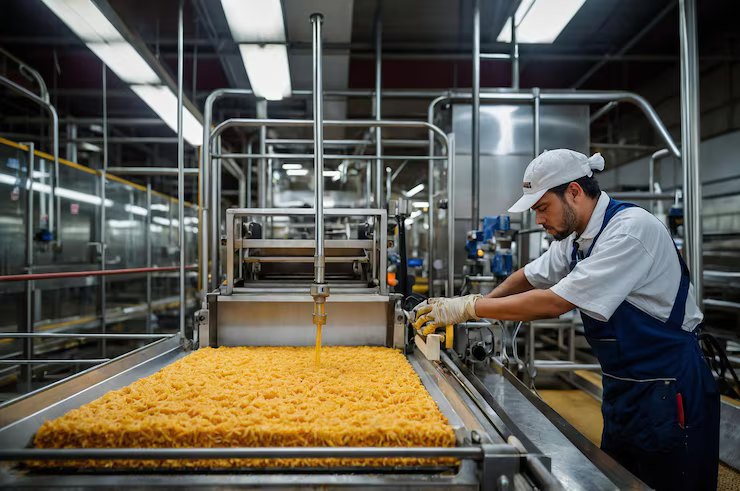
Food industry
Flour, sugar, milk powder, spices. A composite batch sample taken on the line, in a hygienic build.
EHEDG / FDA316L steelHACCP
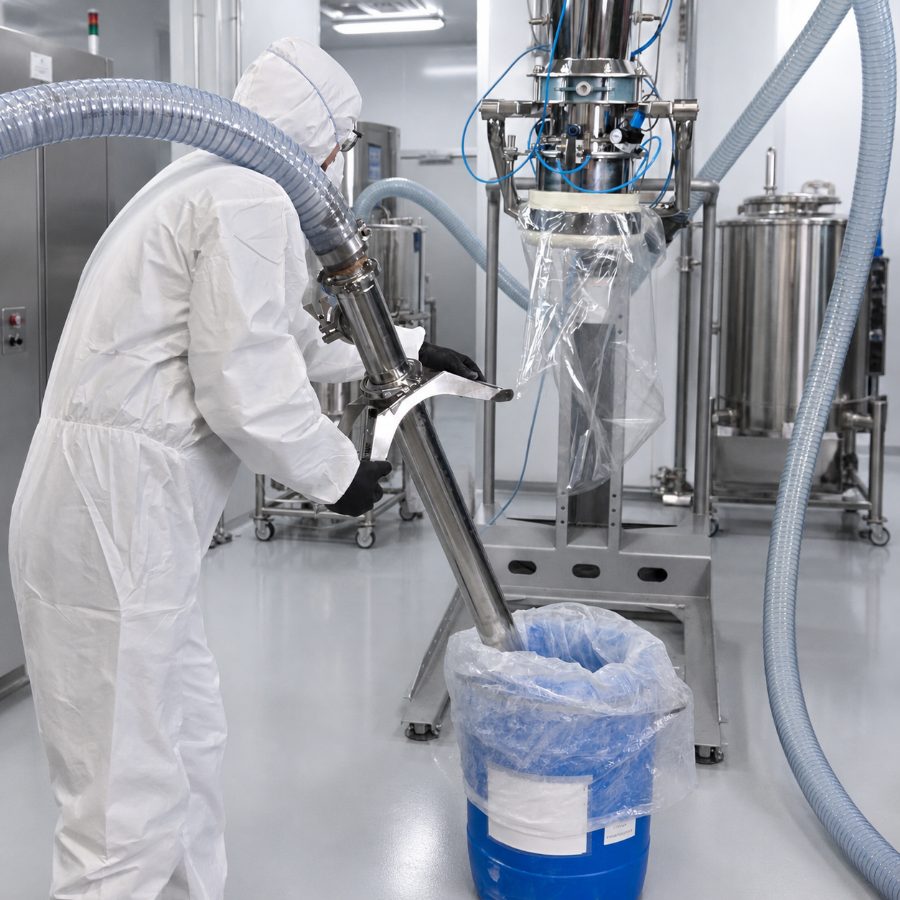
Pharmaceutical industry
APIs and excipients. Contained sampling with no operator exposure, plus cleaning validation.
GMPRa 0.8 µmIQ/OQ
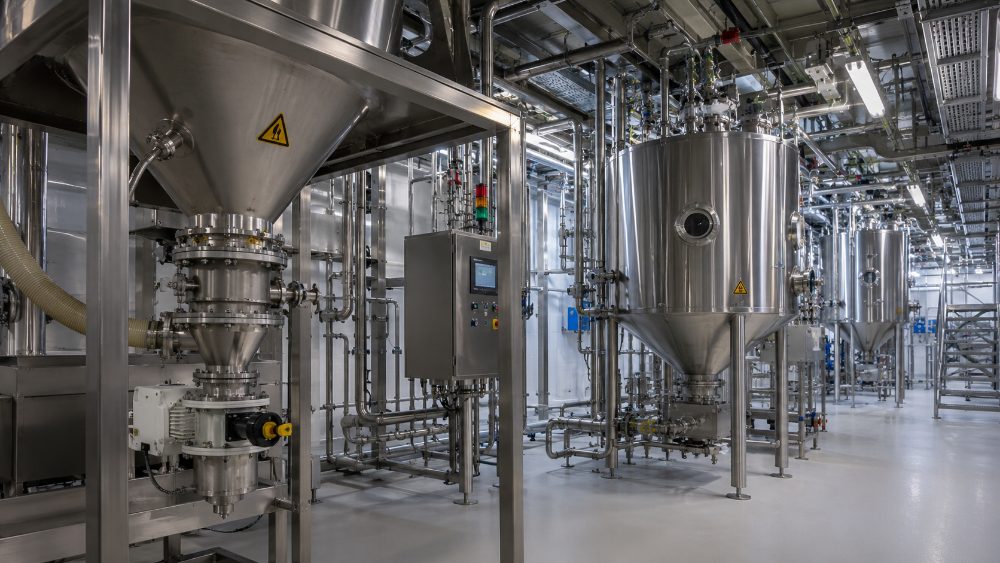
Chemical industry
Pigments, salts, fertilisers, polymers. A pneumatic drive for ATEX zones and sampling proportional to flow.
ATEXContainedReverse run
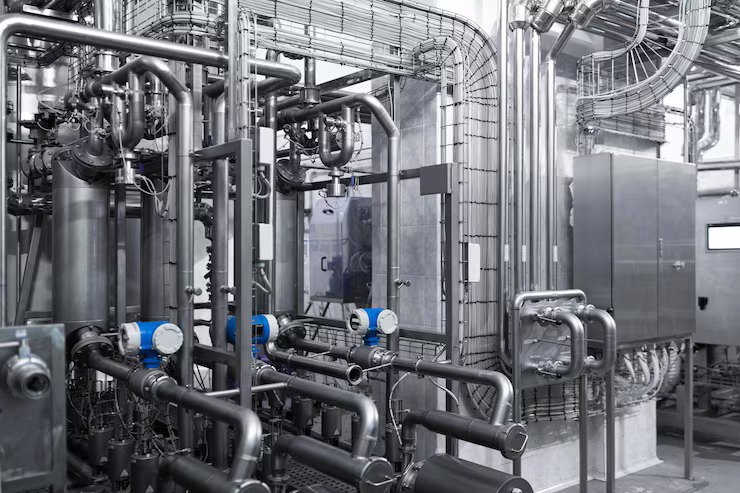
Cosmetics industry
Powders and pigments. Checking blend uniformity before packing.
GMPHygieneRecipes
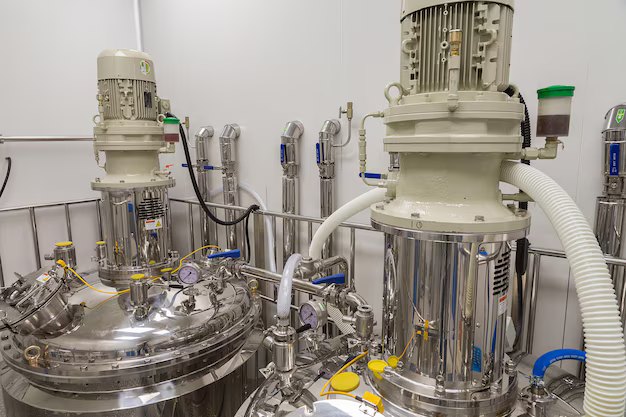
Dietary supplements
Active ingredients in small doses. A sample from every batch for testing and for the retained sample archive.
GMP / HACCPSmall samplesRetained samples
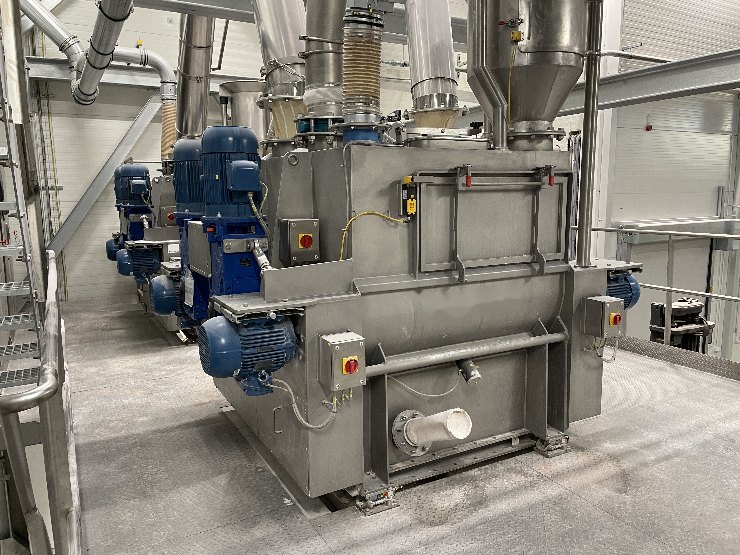
Animal feed industry
Raw materials, premixes, blends. A sampler beneath a big bag station or at the mixer outlet.
BlendsBIG-BAGContinuous duty
Related solutions
A sampler is one point in a larger installation
Big bag emptying
A sampler beneath the emptying station, checking every big bag.
View the page →Vacuum pneumatic conveying
VSU receivers, the basis of the vacuum lance sampler.
View the page →Packaging filling lines
A sample from every sack or big bag, triggered by an event.
View the page →PLC, HMI and SCADA control systems
Sampling sequences and batch records in the line controller.
View the page →FAQ
Frequently asked questions
How is the sample size set?+
By the run time of the drive: a longer run gives a larger portion, with no change to the device. The time is calibrated during commissioning on the real material, because bulk density and flowability determine the mass taken per unit of time.
What is the difference between an auger sampler and a piston sampler?+
The auger type runs continuously, the quantity is set by time, and it copes with pastes and poorly flowing materials. The piston type transfers a fixed volume on every stroke, so the samples are identical, but it needs a free-flowing material and a compressed air supply.
How is a sampler fitted to an existing installation?+
A single connection: a Tri-Clamp ferrule welded into the wall of the pipe, chute or vessel, with the sampler fitted using a clamp. The pipework does not have to be cut. Where the system runs under pressure or vacuum, an isolation valve is fitted between the sampler and the container.
Can the device work in a potentially explosive atmosphere?+
Yes. In ATEX zones we use a pneumatic drive that needs no electrical supply, or an ATEX build with appropriate seals and earthing. The zone classification is established at the selection stage.
How is the sampler cleaned when changing product?+
The sampler is removed from the Tri-Clamp ferrule as a whole and stripped down without tools. In the GMP build the auger is machined from solid 1.4404 bar and polished to Ra 0.8 µm, with no welds in contact with the product, which simplifies cleaning validation.