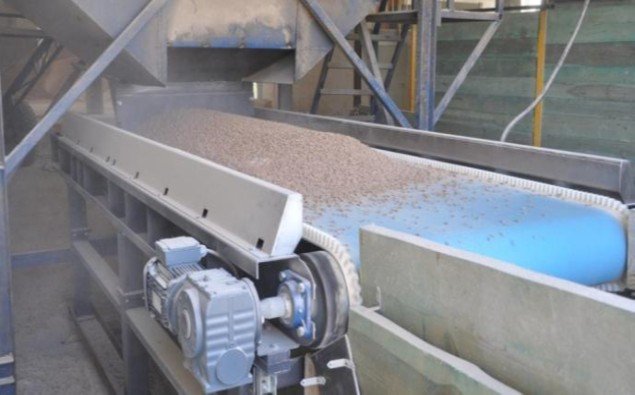
Belt Weighfeeders

Gravimetric belt weighfeeders

Gravimetric belt weighfeeders DTU and DTC

Continuous, precise feeding of bulk materials with mass flow measurement — from delicate food products to heavy construction materials. The material travels on a belt, with no shearing or abrasion of the particles.

<0.5% feeding accuracy 100 kg/h – 1000 t/h feed rate range FDA · ATEX · HACCP compliant builds

What belt weighfeeders are

Continuous feeding with gentle product handling

Gravimetric belt weighfeeders are designed for controlled feeding of bulk materials with continuous mass flow measurement. Unlike screw feeders, the material travels on a belt, which makes the handling exceptionally gentle — with no shearing, abrasion or damage to the particles. That makes belt weighfeeders the ideal solution for friable, large-particle, abrasive or shear-sensitive materials.

DTU belt weighfeeder

Precision and hygiene

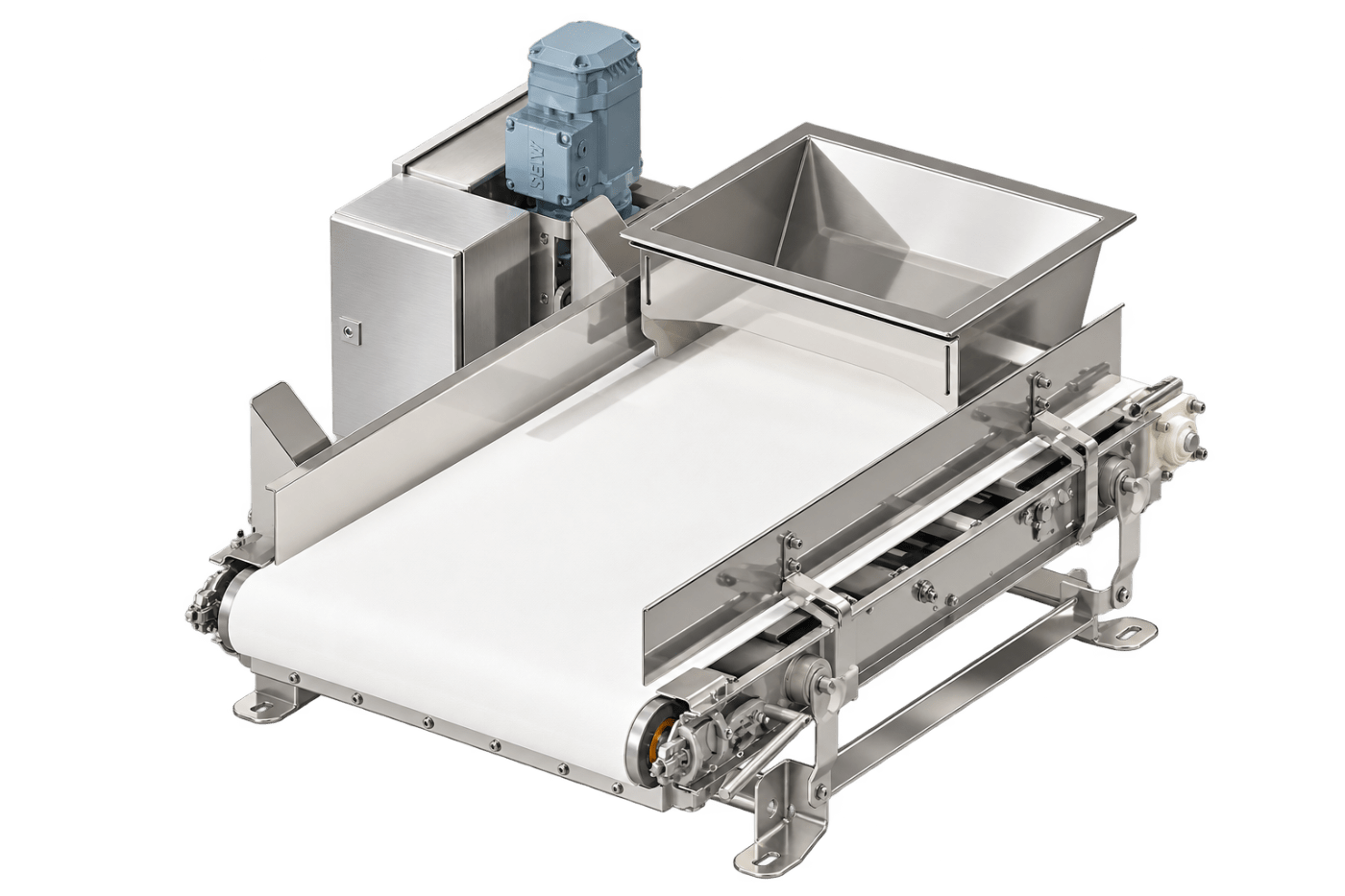
DTU600 belt weighfeeder, open version
DTU600 — open version
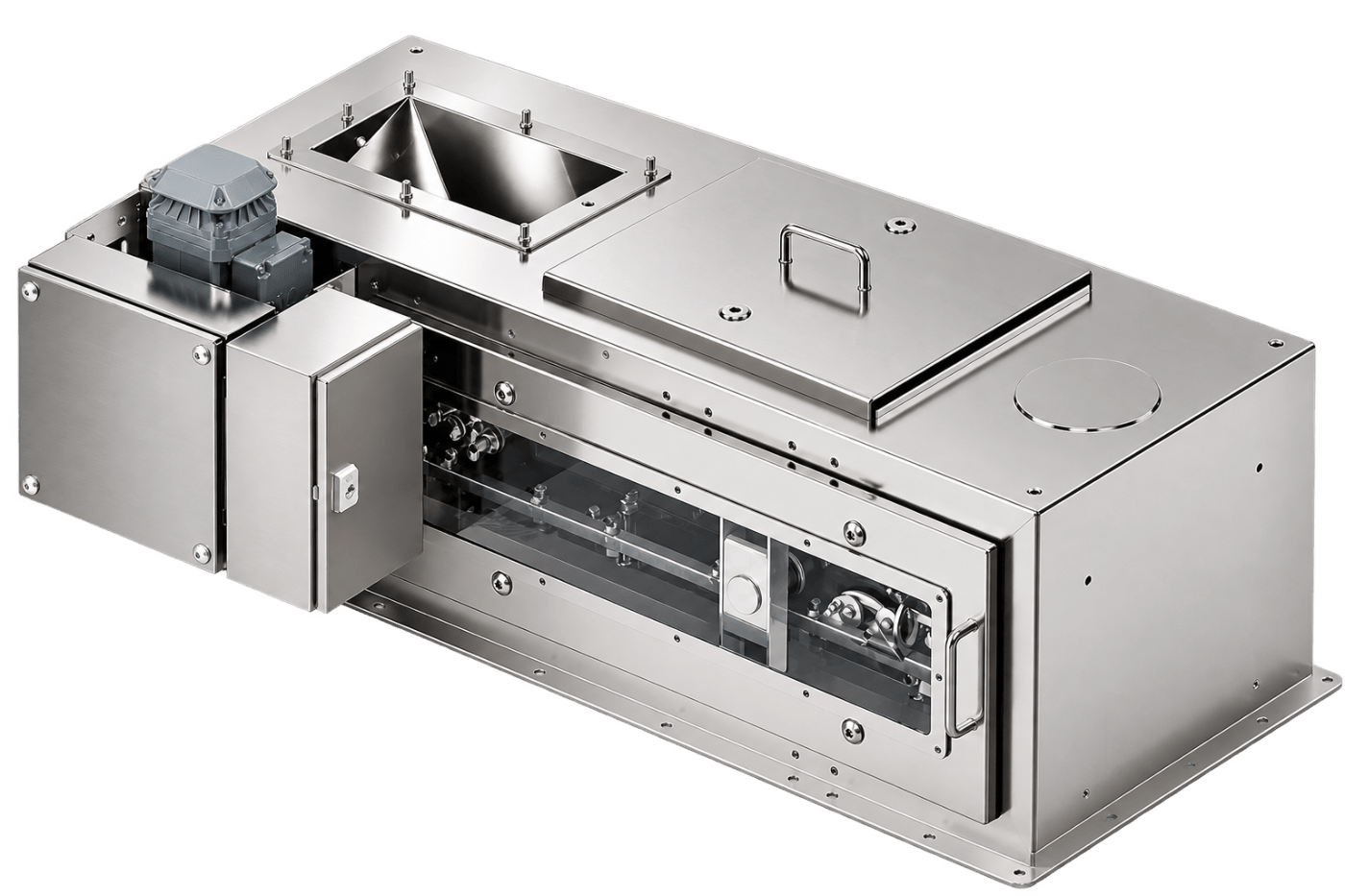
DTU600 belt weighfeeder in a dust-tight enclosure
DTU600 — dust-tight enclosure

DTU case studies — click to enlarge

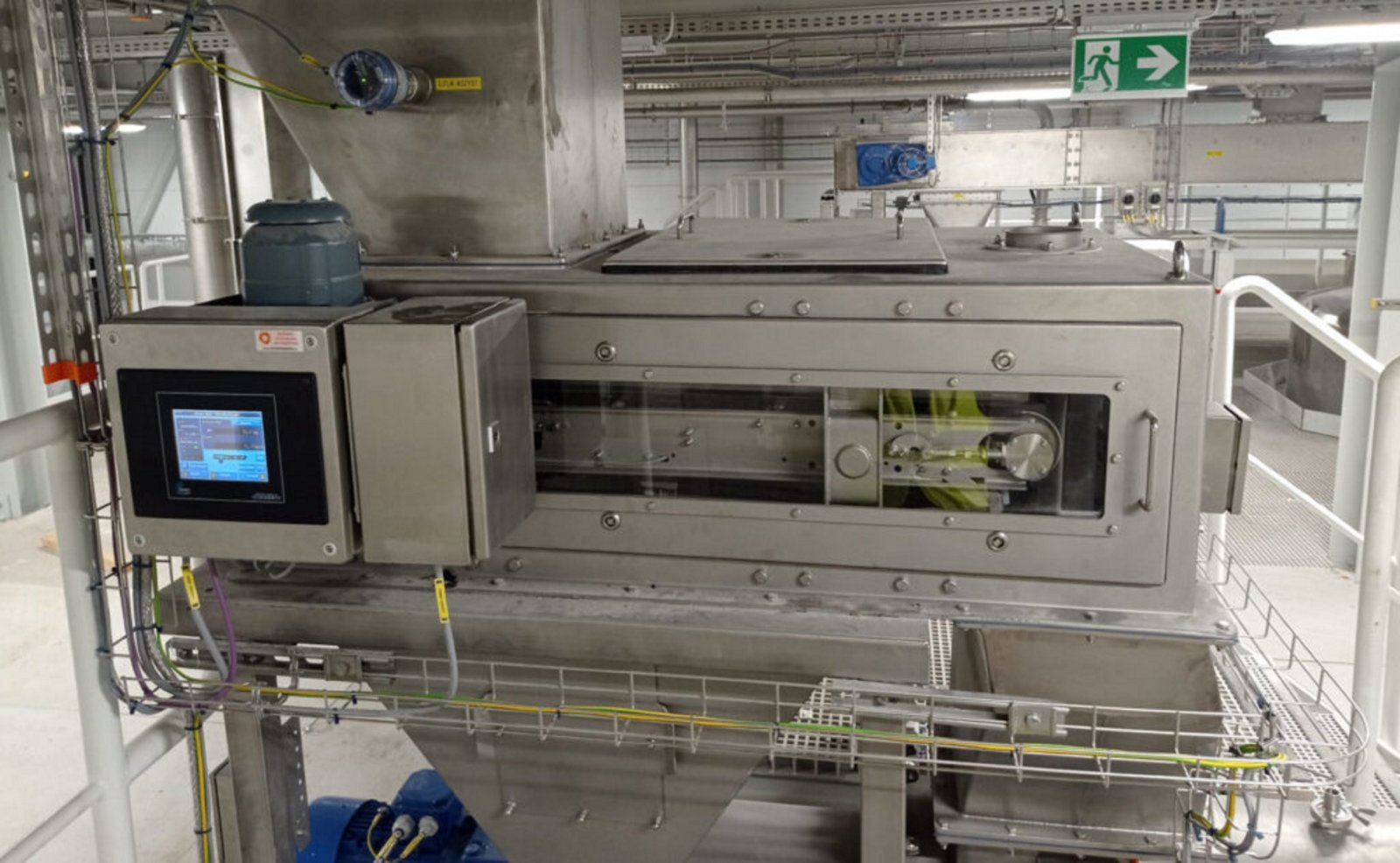
Salt feeding. Enclosed unit.
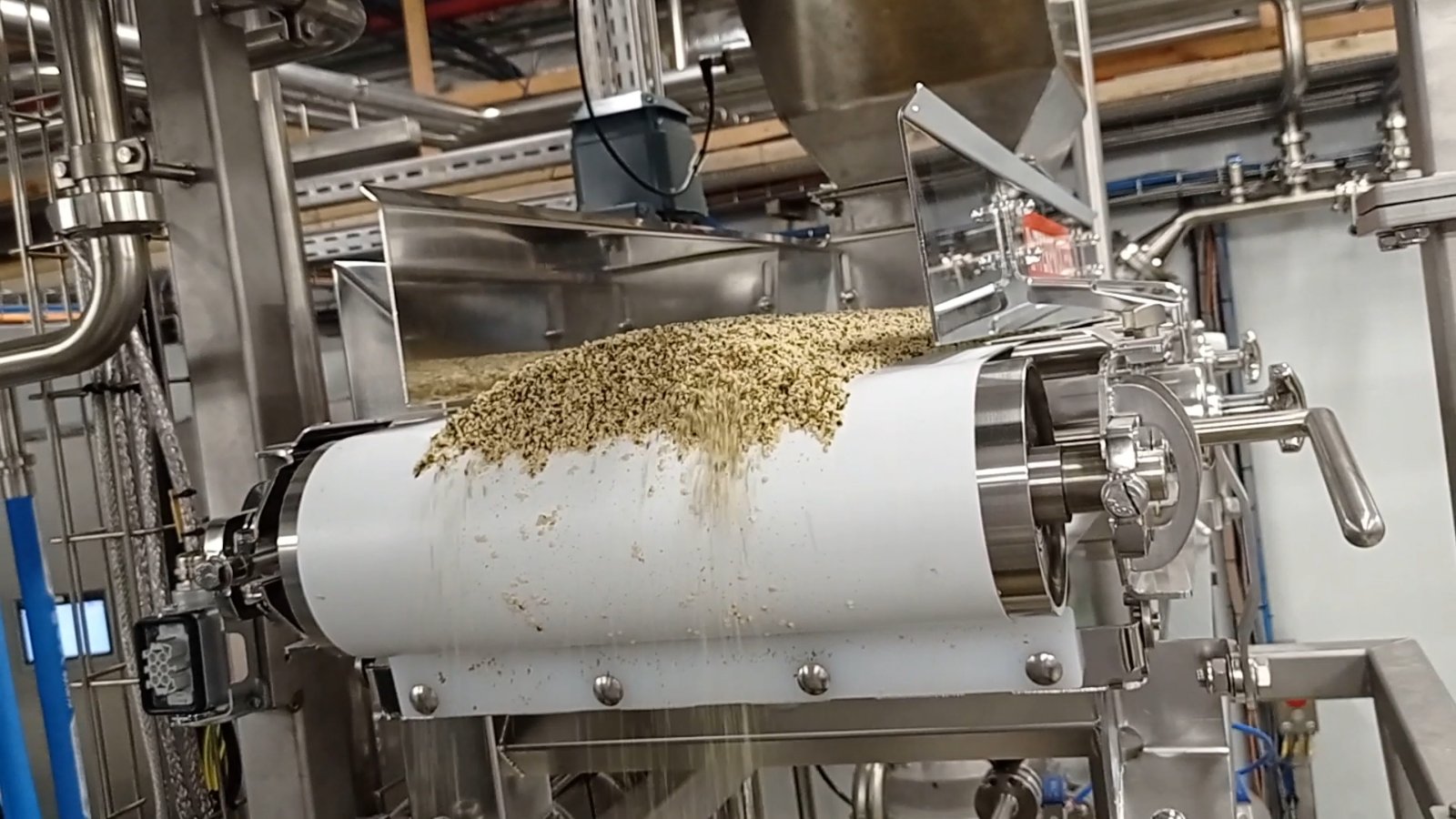
Granulate feeding in the food industry.
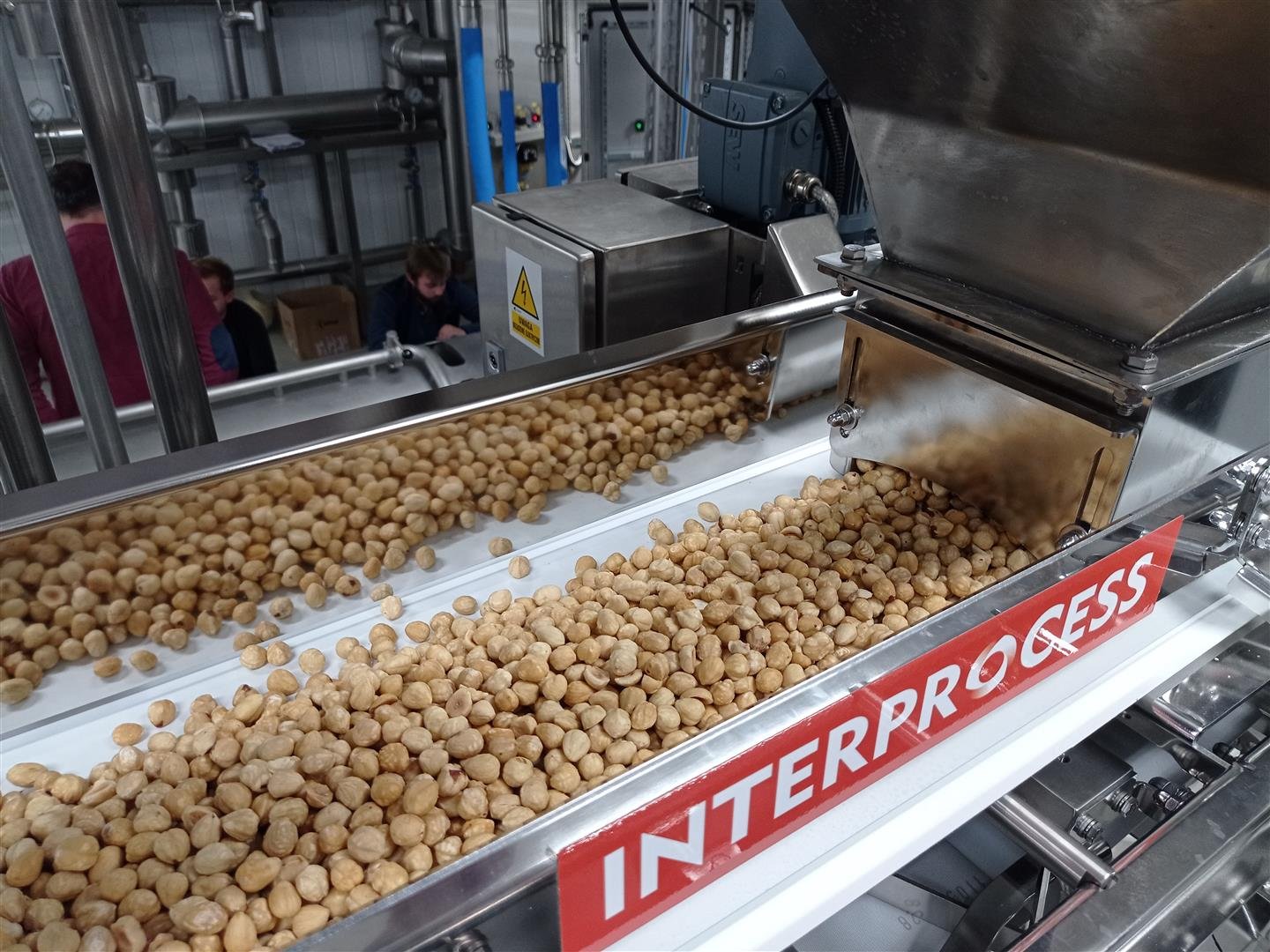
Nut feeding in the food industry.

DTU videos

Continuous feeding of nuts
Quick, trouble-free belt change on the DTU
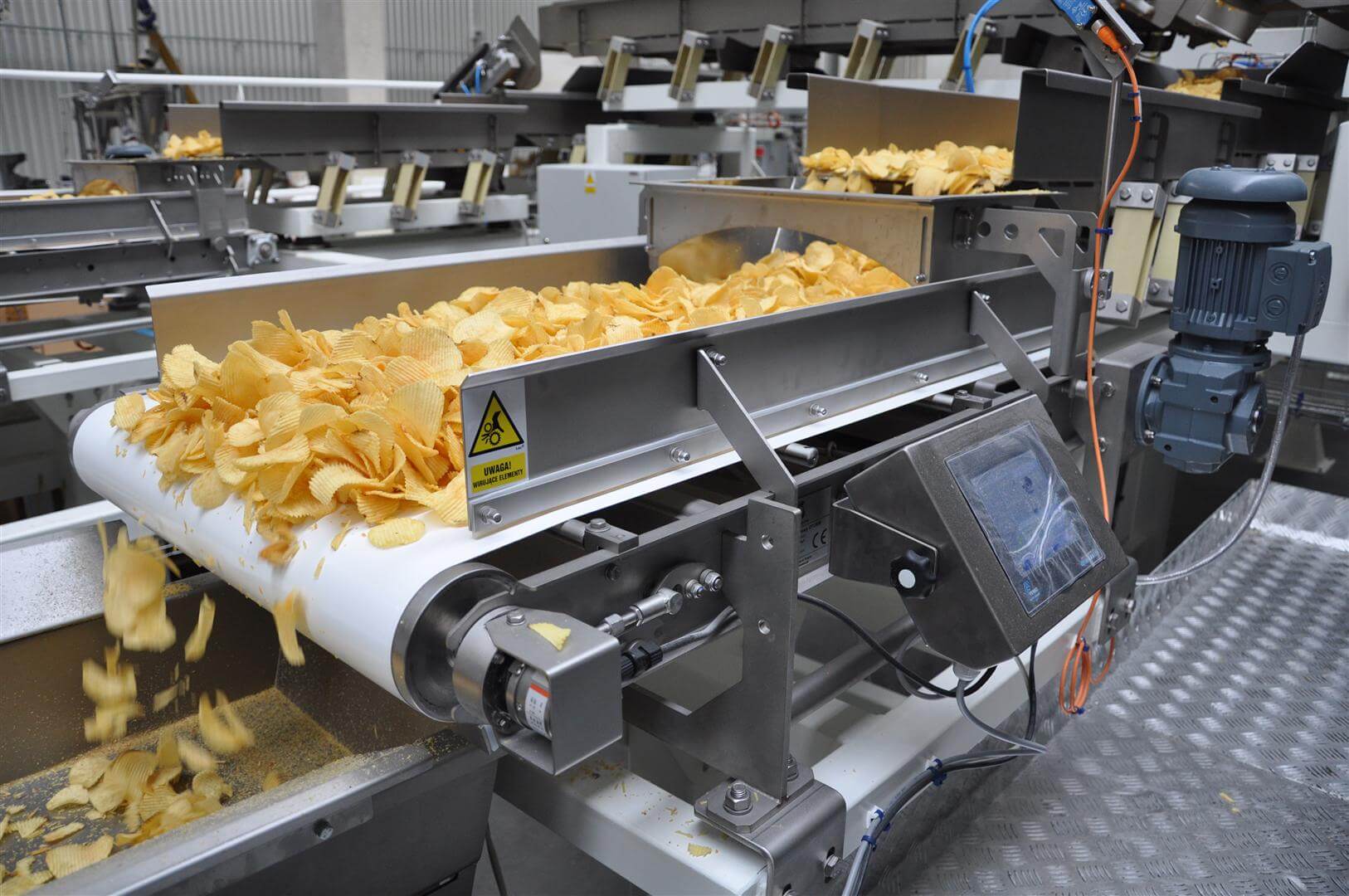
Flow measurement of crisps

The DTU belt weighfeeder is a compact, precise solution for feeding materials of low and medium bulk density. Its all-stainless-steel construction with an FDA-approved belt makes the unit well suited to the food, chemical and cosmetics industries. The DTU can run in an open version or a closed one, in a dust-tight enclosure.

Key DTU specifications

  • Accuracy<0.5% of set value (below 0.25% in selected applications)
  • Feed ratefrom 100 to 40000 kg/h
  • Belt width300 or 600 mm
  • Materials1.4301 (AISI 304) or 1.4404 (AISI 316L) steel
  • BeltPU/PVC, FDA-approved
  • Enclosureopen or dust-tight version
  • Intended forpowders, granulates, pellets, friable and delicate products

Downloads

DTC belt weighfeeder

Durability and throughput

The DTC belt weighfeeder is a heavy-duty solution engineered for materials of medium and high bulk density in the harshest industrial conditions. Its rigid carbon steel construction (stainless steel optional) and the range of inlet hopper designs allow reliable operation even with highly abrasive, aerating or flood-prone materials. The gravity take-up substantially extends belt life and improves measuring accuracy.

Key DTC specifications

  • Accuracy<0.5% of set value
  • Feed ratefrom 1 to 1000 t/h
  • Belt width650, 800, 1000, 1200 or 1400 mm
  • Pulley centre distancefrom 1500 to 8000 mm (in 500 mm steps)
  • Constructionpainted carbon steel (stainless steel optional)
  • Intended forcement, lime, gypsum, coal, aggregates, raw meal

Downloads
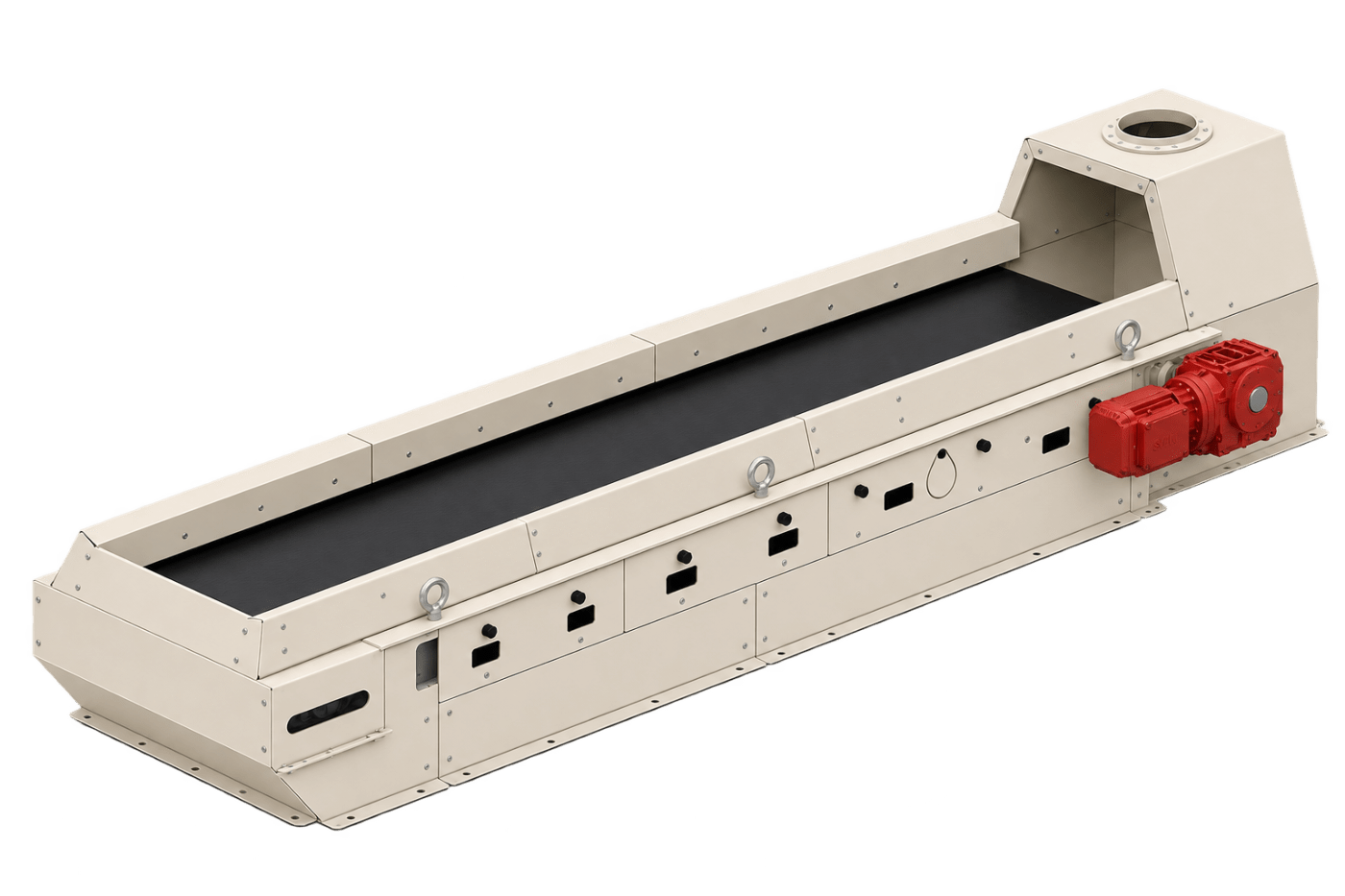
DTC belt weighfeeder — general view
DTC — carbon steel construction, side drive

DTC case studies — click to enlarge

Feeding ground limestone.
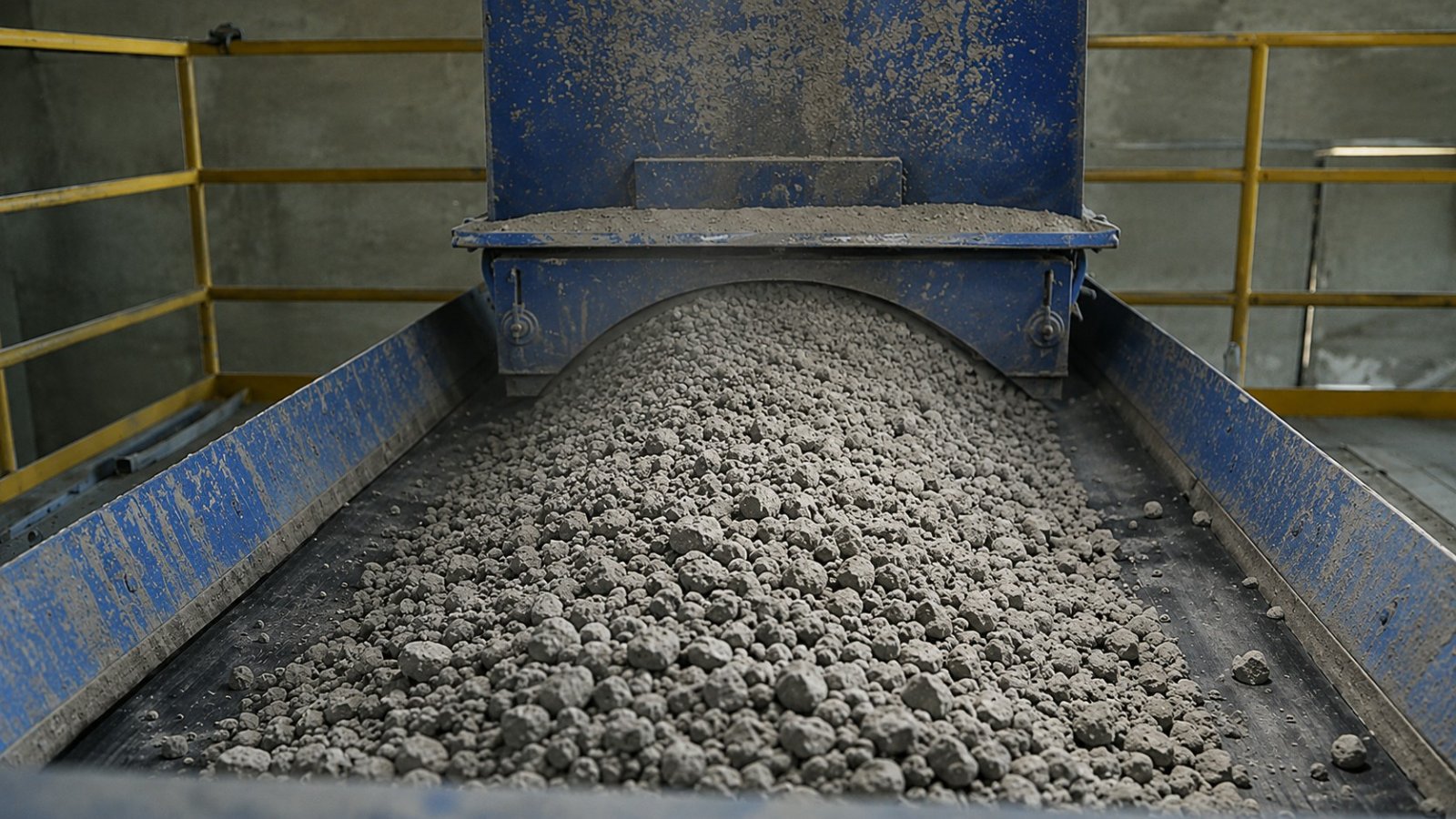
Feeding cement granulate.
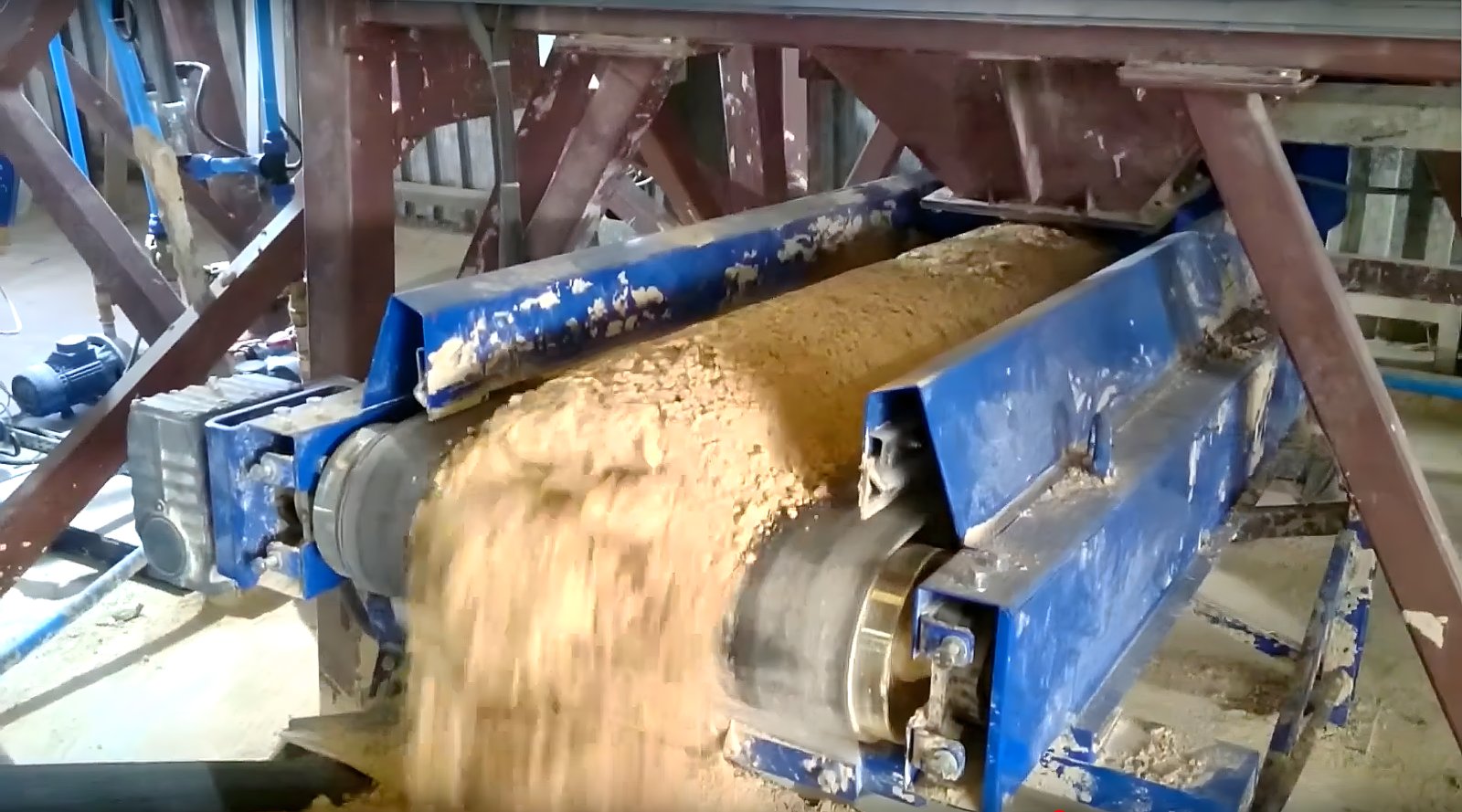
Flow weighing of rapeseed cake.

DTC videos

Feeding ground limestone

DTU vs DTC

Which belt weighfeeder should you choose?

The choice between the DTU and the DTC depends above all on the type of material being fed, the throughput required and the working conditions. The table below makes the decision easier.

Parameter DTU precision DTC heavy-duty
Accuracy<0.5% of set value (down to 0.25%)<0.5% of set value
Feed rate100–40000 kg/h1–1000 t/h
Belt width300 / 600 mm650–1400 mm
ConstructionStainless steel (AISI 304/316L)Painted carbon steel (stainless steel optional)
BeltPU/PVC, FDA-approvedRubber (up to 70 °C; 170 °C optional) or PU/PVC (FDA)
Dust-tight enclosureOptionalOptional (cover, discharge chute)
Typical industriesFood, chemical, cosmetics, pet foodCement, lime, construction, mining, power generation
Optimum materialsPowders, granulates, pellets, friable productsCement, lime, gypsum, coal, aggregates, raw meal

Proportional feeding

Multi-component feeding systems

Belt weighfeeders are the ideal building block for continuous proportional feeding systems, in which several ingredients are delivered at the same time onto a shared receiving conveyor. One feeder acts as the master, setting the pace, while the others work as slaves, holding a constant mass ratio to the main ingredient.

A change of flow on the master automatically produces a proportional correction on every slave feeder — the system keeps the recipe proportions constant whatever the line output does. InterProcess designs and integrates complete multi-component feeding lines: feeder selection, control systems with industrial communications (Profibus, Profinet, Modbus, EtherNet/IP) and recipe automation.

Feeder A MASTER Feeder B SLAVE 1 Feeder C SLAVE 2 Feeder D SLAVE 3 Control · fieldbus 4–20 mA · Profibus Profinet · Modbus EtherNet/IP Ingredient A Ingredient B Ingredient C Ingredient D to the process Shared receiving conveyor — a stable stream of the multi-component blend Continuous proportional feeding, with initial blending already on the conveyor

Industries and applications

Applications in key industries
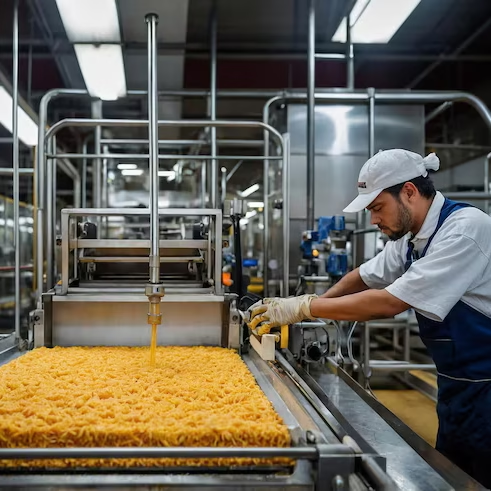
DTU belt weighfeeder in the food industry DTU

Food and cosmetics

Gentle feeding of cereal flakes, dried fruit and nuts, seeds, food-grade granulates, milk powders and cosmetic ingredients. The stainless steel construction with an FDA-approved belt meets HACCP requirements. A dust-tight enclosed version is available.

Belt weighfeeder in the chemical industry DTU / DTC

Chemical

Feeding pigments, fertilisers, detergents and industrial chemicals. Depending on the bulk density and the throughput required, we use the compact DTU (up to 40000 kg/h) or the heavy-duty DTC (up to 1000 t/h). Both types are available in ATEX versions.

DTC belt weighfeeder in the cement industry DTC

Cement and construction

Feeding cement, lime, gypsum, raw meal, coal and aggregates — high-density, highly abrasive materials that are often prone to aeration. The rigid DTC construction, the range of inlet hopper designs and the gravity take-up guarantee trouble-free operation.

FAQ

Frequently asked questions

How does a belt weighfeeder differ from a screw feeder?

+
In a belt weighfeeder the material travels on a conveyor belt, which makes the feeding exceptionally gentle — with no shearing or abrasion from a screw. It is the optimum solution for friable materials (flakes, pellets), large-particle products and highly abrasive bulk solids. A screw feeder copes better with fine, cohesive powders and takes up less space at lower feed rates. A belt weighfeeder also needs less headroom.

When should you choose the DTU and when the DTC?

+
The DTU is the optimum choice for materials of low and medium bulk density — in the food, chemical and cosmetics industries, where a hygienic stainless steel construction and an FDA-approved belt are required. The DTC suits heavy, highly abrasive materials and harsh industrial conditions — cement plants, lime works and building materials production, where feed rates of up to 1000 t/h and a robust carbon steel construction are needed.

Can a belt weighfeeder work in a multi-component system?

+
Yes — belt weighfeeders are ideally suited to building proportional multi-component feeding systems. Several feeders deliver different ingredients onto a shared receiving conveyor, holding constant recipe proportions in master/slave mode. The systems communicate over 4–20 mA analogue signals or industrial protocols (Profibus, Profinet, Modbus, EtherNet/IP). InterProcess designs and integrates such lines on a turnkey basis.

What accuracy do belt weighfeeders achieve?

+
Both types achieve an accuracy better than 0.5% of set value, and the DTU can reach below 0.25% in selected applications. Accuracy depends on several factors, among them the properties of the material, the consistency of the feed, correct selection of the inlet hopper and calibration of the system.

How is the inlet hopper selected?

+
The choice of inlet hopper (the feeding device) depends above all on the flow characteristics of the material. For free-flowing materials we use simple chute-type hoppers with an adjustable gate. For poorly flowing, bridging or aeration-prone materials we select specialised hoppers — with a vibratory feeder, a rotary valve or a screw pre-feeder. For dusty materials prone to fluidisation we also use settling chambers with deaeration chains. Correct hopper selection is critical to maintaining a stable material bed on the belt and therefore to feeding accuracy.

Why is a belt weighfeeder better than a conveyor with a standard belt scale?

+
Standard belt conveyors fitted with belt scales are designed primarily to transport material — weighing is an add-on function. A belt weighfeeder is purpose-built from the ground up for precise feeding. Its compact dimensions and short pulley centre distance minimise the influence of belt irregularities, temperature and vibration on the measurement. The gravity take-up provides constant, repeatable belt tension, eliminating zero drift. A dedicated control system with PID regulation of belt speed actively holds the target mass flow, while built-in belt cleaning and belt drift and slip detection add further reliability. The result is accuracy below 0.5%, against the 1–2% a typical belt scale offers.

Why InterProcess

Why choose our solutions?

In-house manufacturing

We design and build the DTU and DTC feeders at our own works.

A complete feeder range

Belt, gravimetric and volumetric screw, and vibratory feeders.

Multi-component systems

We design proportional feeding lines on a turnkey basis.

Experience across many industries

Food, chemical, cement and construction.

Safety and hygiene

Systems compliant with ATEX, HACCP and GMP.

Technical support and service

With a fast response, including 24/7 cover.

Need a belt weighfeeder?

Get in touch and our engineers will help you select the right type — the compact DTU or the heavy-duty DTC — matched to the properties of your material and the demands of your process.

Salt feeding. Enclosed unit.
Salt feeding. Enclosed unit. · 1/6
×
Granulate feeding in the food industry.
Granulate feeding in the food industry. · 2/6
×
Nut feeding in the food industry.
Nut feeding in the food industry. · 3/6
×
Feeding ground limestone.
Feeding ground limestone. · 4/6
×
Feeding cement granulate.
Feeding cement granulate. · 5/6
×
Flow weighing of rapeseed cake.
Flow weighing of rapeseed cake. · 6/6
×