InterProcess Sp. z o.o. | Rozwiązania dla przemysłu

Operating principle
How pressure conveying works: air pushes the material through the pipeline
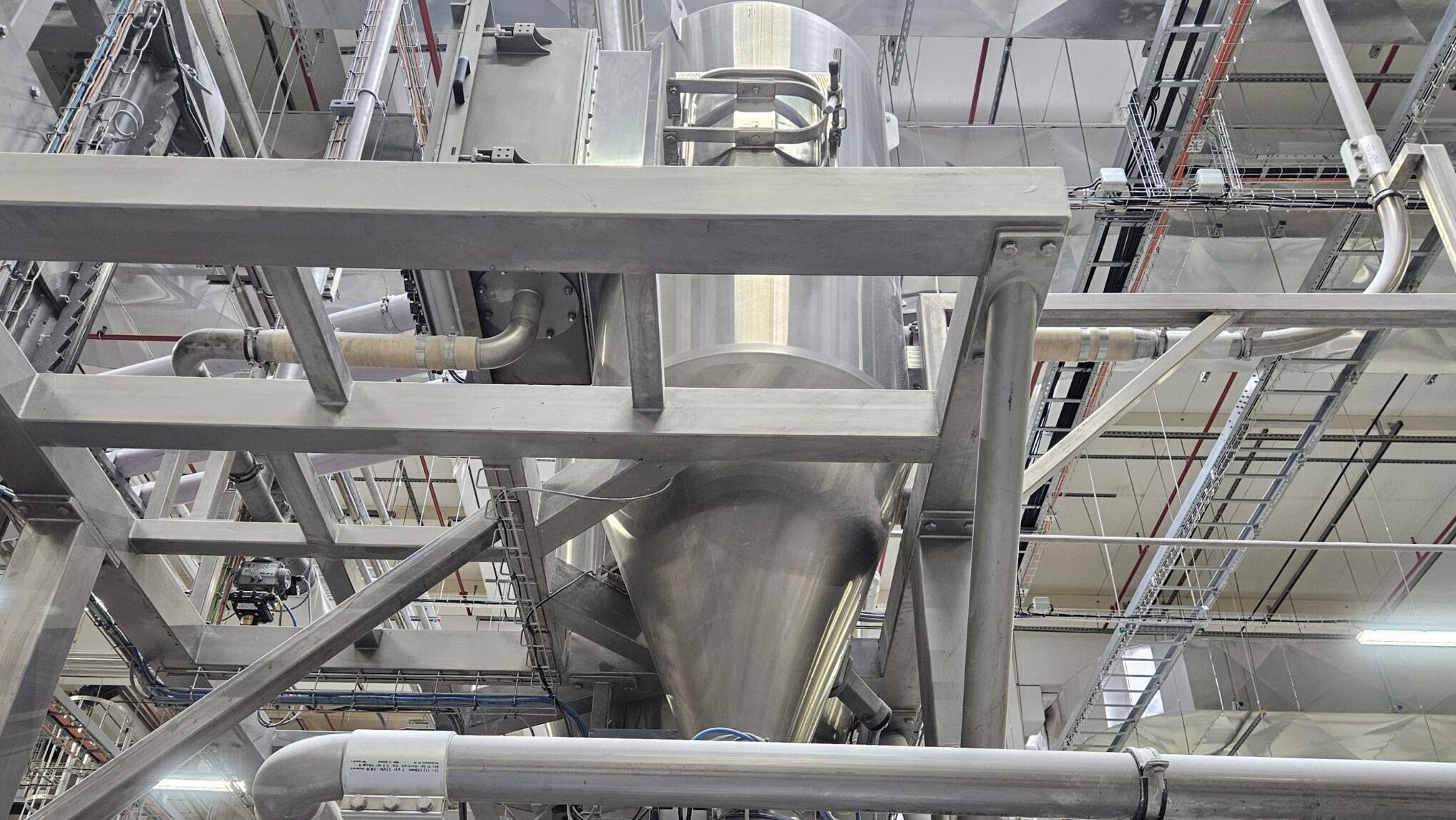
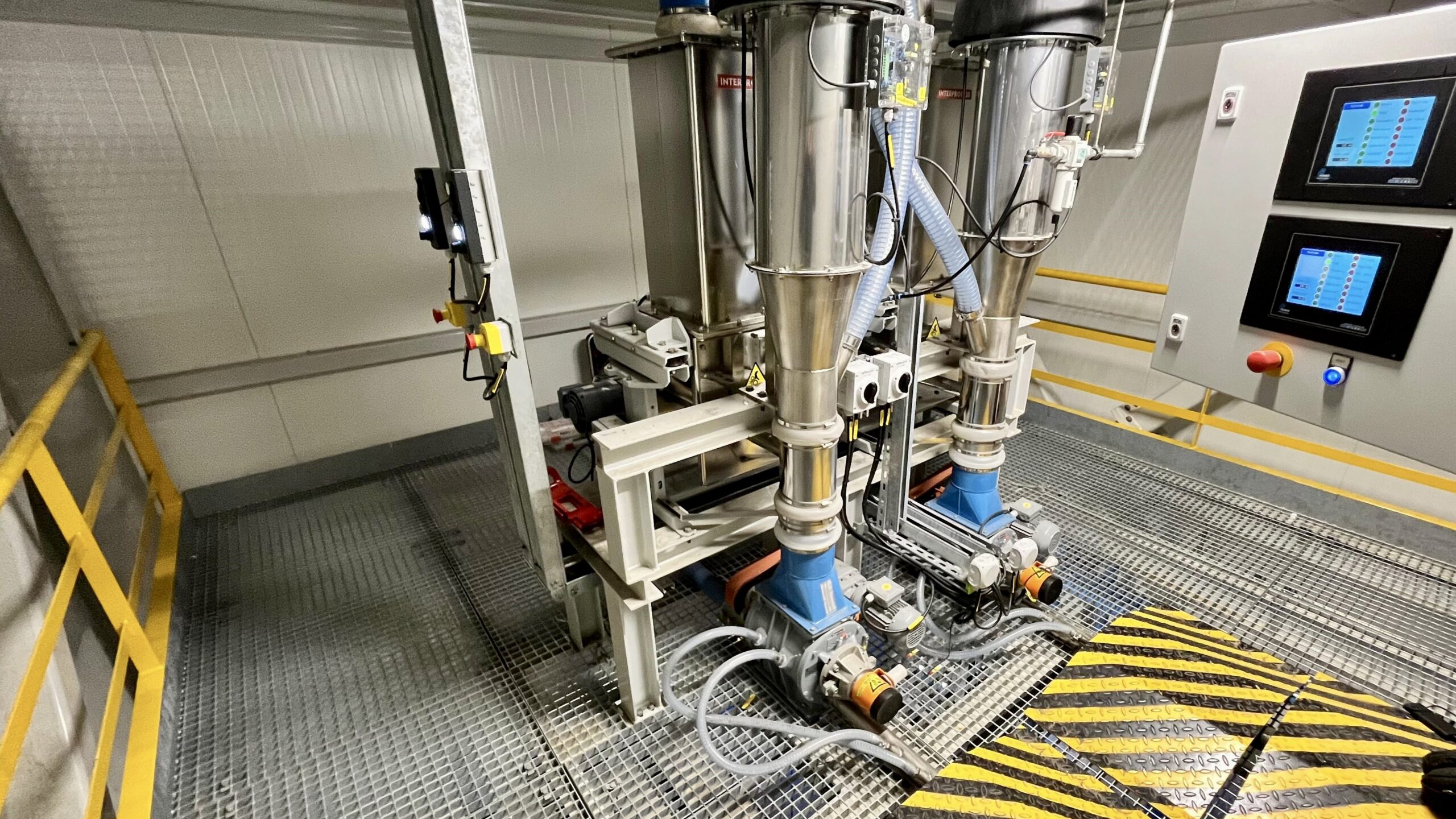
A blower generates a stream of compressed air, into which the material is fed through an airlock — usually a rotary valve or a pressure vessel. The airstream carries the material along the pipeline to the destination, where it is separated from the air and discharged into the process. The whole operation takes place in a closed system, with no dust emission.
1
Compressed air source
A Roots or side-channel blower selected to suit the material, the throughput and the length of the route. With an air cooler, inlet filter and safety valve.
2
Feeding into the pipeline
The material has to be introduced into the pipeline against the pressure, so we use an airlock: a rotary valve or a pressure vessel. Feeding is continuous and even.
3
Reception and separation
A receiving vessel with a filter separates the material from the conveying air. Diverter valves direct the flow to the chosen destination: a silo, a mixer or a feeder.
Conveying modes
Dilute phase or dense phase?
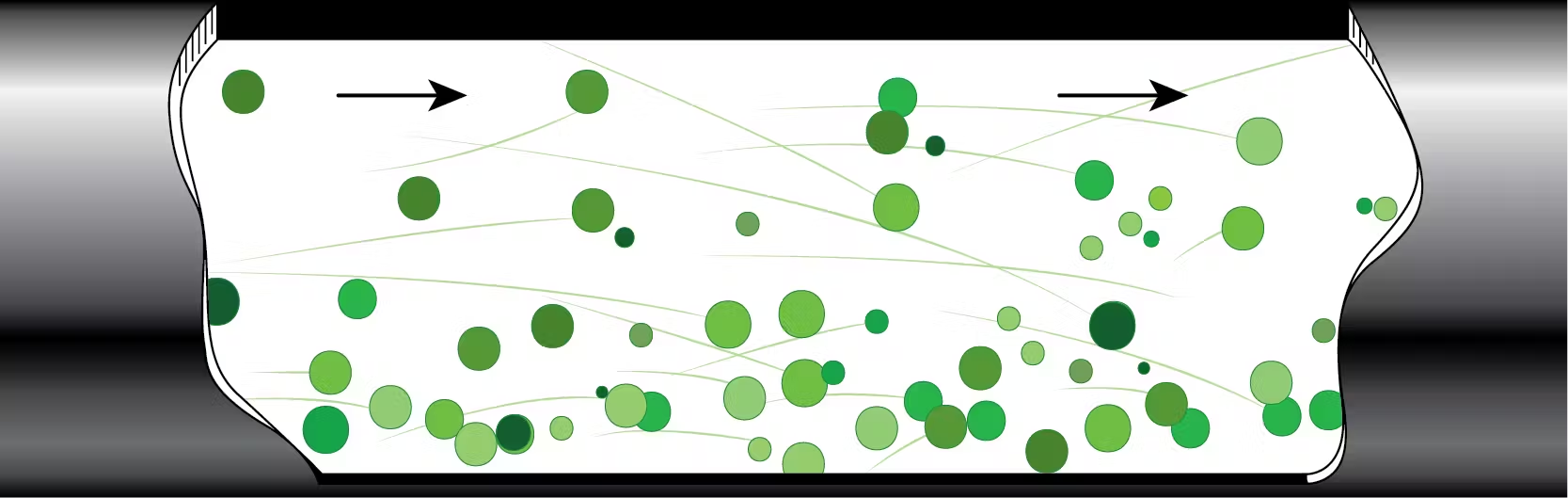
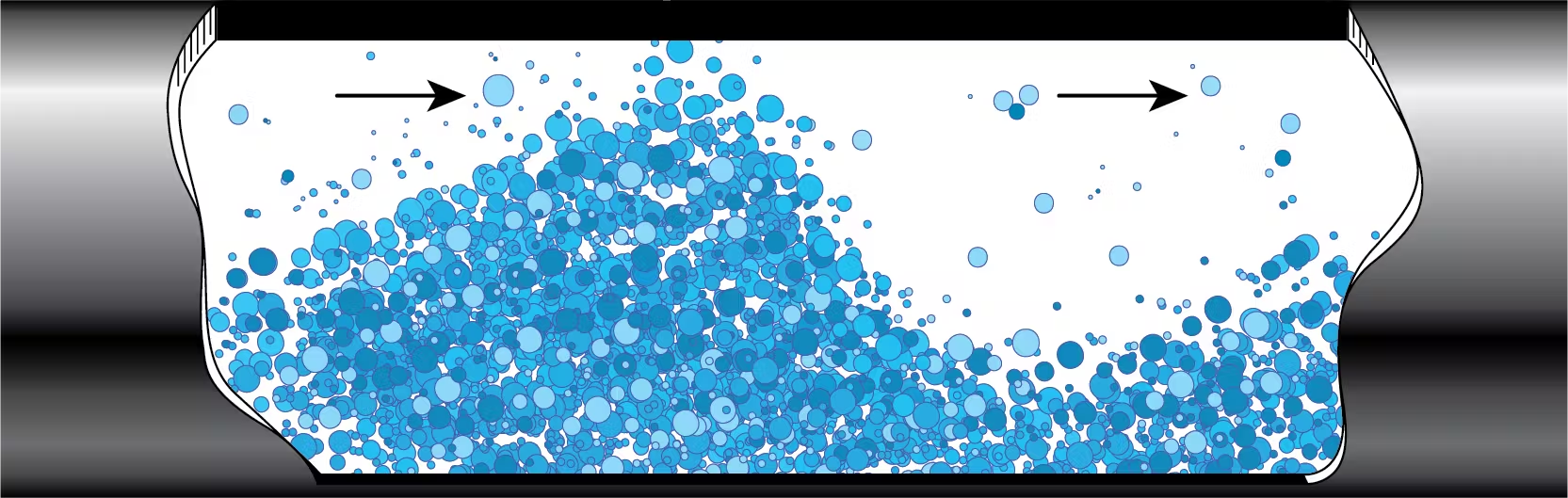
Dilute phase is the standard: the material is dispersed and carried on a high-velocity airstream. It is the most versatile mode for dry, well-flowing materials. For fragile, abrasive or pre-blended products we use dense phase: the material travels in slugs, with less air and at low velocity, which minimises degradation and segregation.
| Parameter | Dilute phase lean phase | Dense phase faza gęsta |
|---|---|---|
| Air velocity | high, material in suspension | low, material travels in slugs |
| Product degradation | moderate | minimal |
| Risk of blend segregation | possible | very low |
| Pipe, bend and energy consumption | higher | significantly lower |
| Typical materials | flour, sugar, chemical powders, granulates | flakes, premixes, crystals, abrasive and heavy materials |
System components
What a pressure conveying installation consists of
Every system is assembled from components chosen to suit the material, the throughput and the route: from the blower, through the feeding airlock, to the receiving vessel and the controls. We integrate the system with existing equipment: big bag stations, feeders, mixers and packing machines.
individually engineered
integrated with the control system
ATEX
- BlowersRoots or side-channel, with an air cooler and filtration
- Feeding airlocksrotary valves, pressure vessels
- Pipeworksteel or plastic, routed vertically and horizontally, with long-radius bends
- Valvesdiverter and non-return valves, letting one pipeline serve several discharge points
- Receiving vesselswith filters and automatic cleaning, built in stainless steel
- Quality controlmetal detectors, screeners, separators
- Automationsequence control, integrated with feeding, weighing and recipe management
System selection
Pressure conveying or vacuum conveying?
We offer both technologies and choose the one that fits the arrangement of pick-up and discharge points, the distance and the throughput — not the other way round. The main differences are set out below.
| Parameter | Pressure positive pressure | Vacuum negative pressure |
|---|---|---|
| System layout | one pick-up point → several destinations | several pick-up points → one destination |
| Conveying distance | long, over 100 m as well | typically up to about 50 m |
| Throughput | high, continuous duty | up to about 10000 kg/h, cyclic or continuous duty |
| Introducing the material | airlock: rotary valve or pressure vessel | suction hopper, pick-up wand, big bag station |
| Behaviour if a leak develops | dust may escape into the surroundings | air is drawn inwards, nothing escapes |
Need contained pick-up from several points to a single destination? Take a look at our VSU vacuum conveying system.
VSU vacuum conveyingIndustries and applications
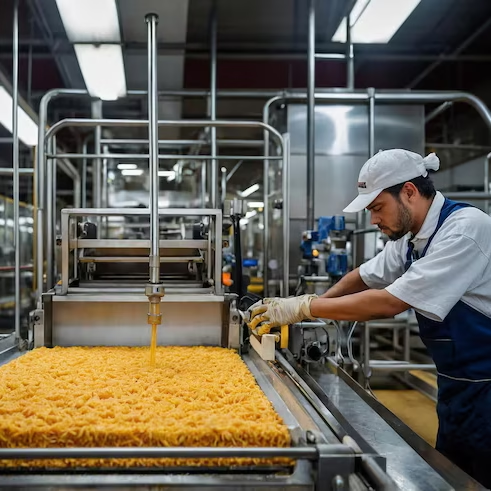
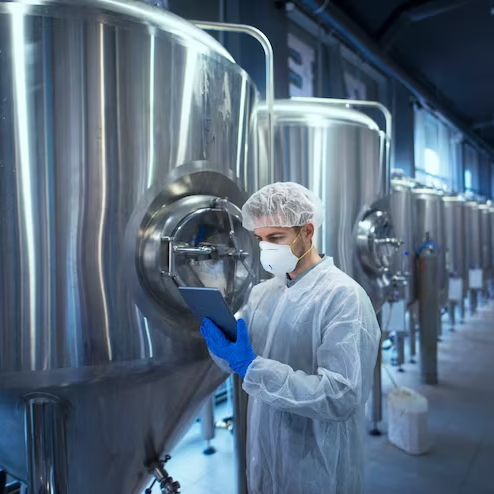
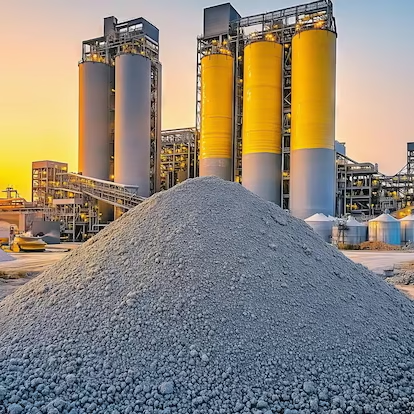
Conveying bulk materials in key industries
Why InterProcess
Why choose our solutions
A tailored approach
Every system is designed around the customer’s material, throughput and space, following a site survey.
End-to-end delivery
From design, through installation and commissioning, to service and spare parts.
Proven components
Reliable industrial equipment only, with no compromises on the critical assemblies.
Experience across many industries
Food, chemical, pharmaceutical, plastics, construction and animal feed.
Safety and hygiene
Systems compliant with ATEX, HACCP and GMP, including builds for potentially explosive atmospheres.
Technical support and service
Fast service response, including 24/7 cover. Audits and upgrades of existing installations.
FAQ