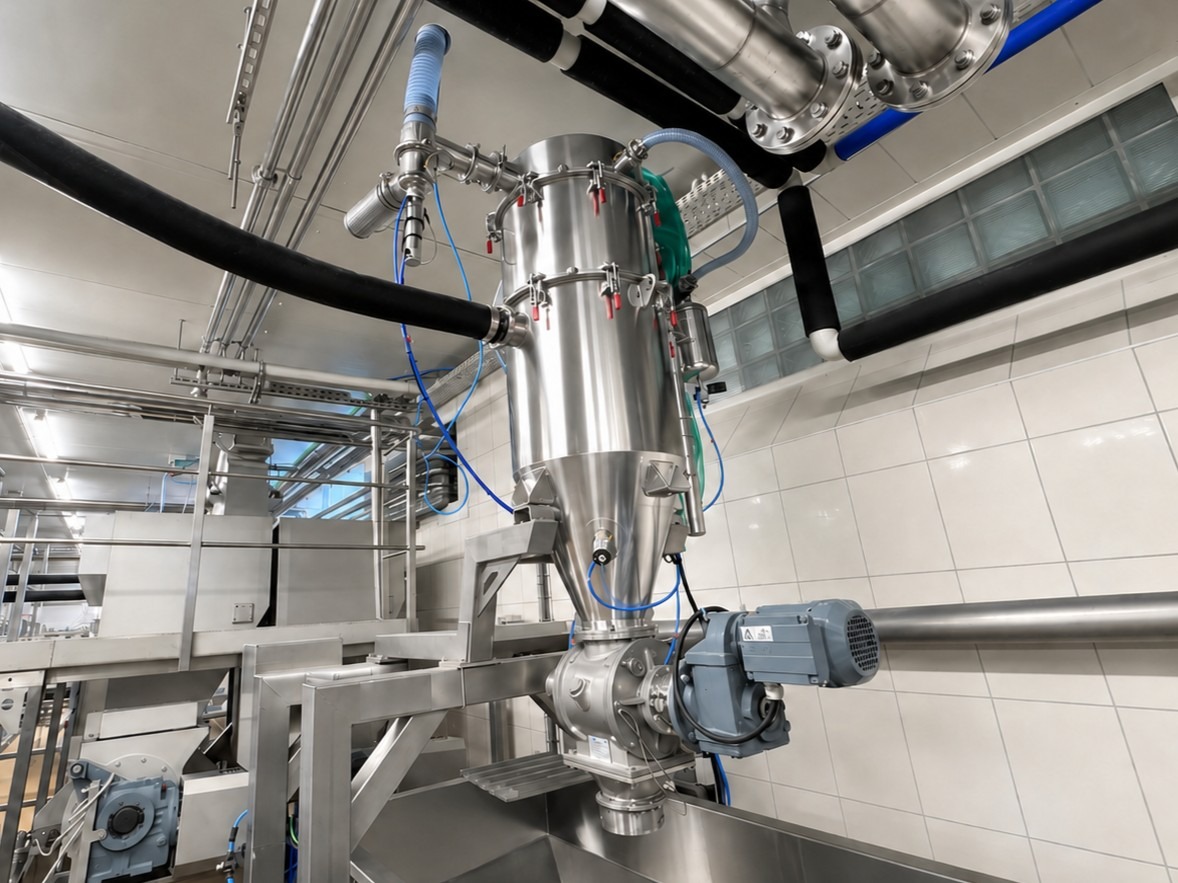
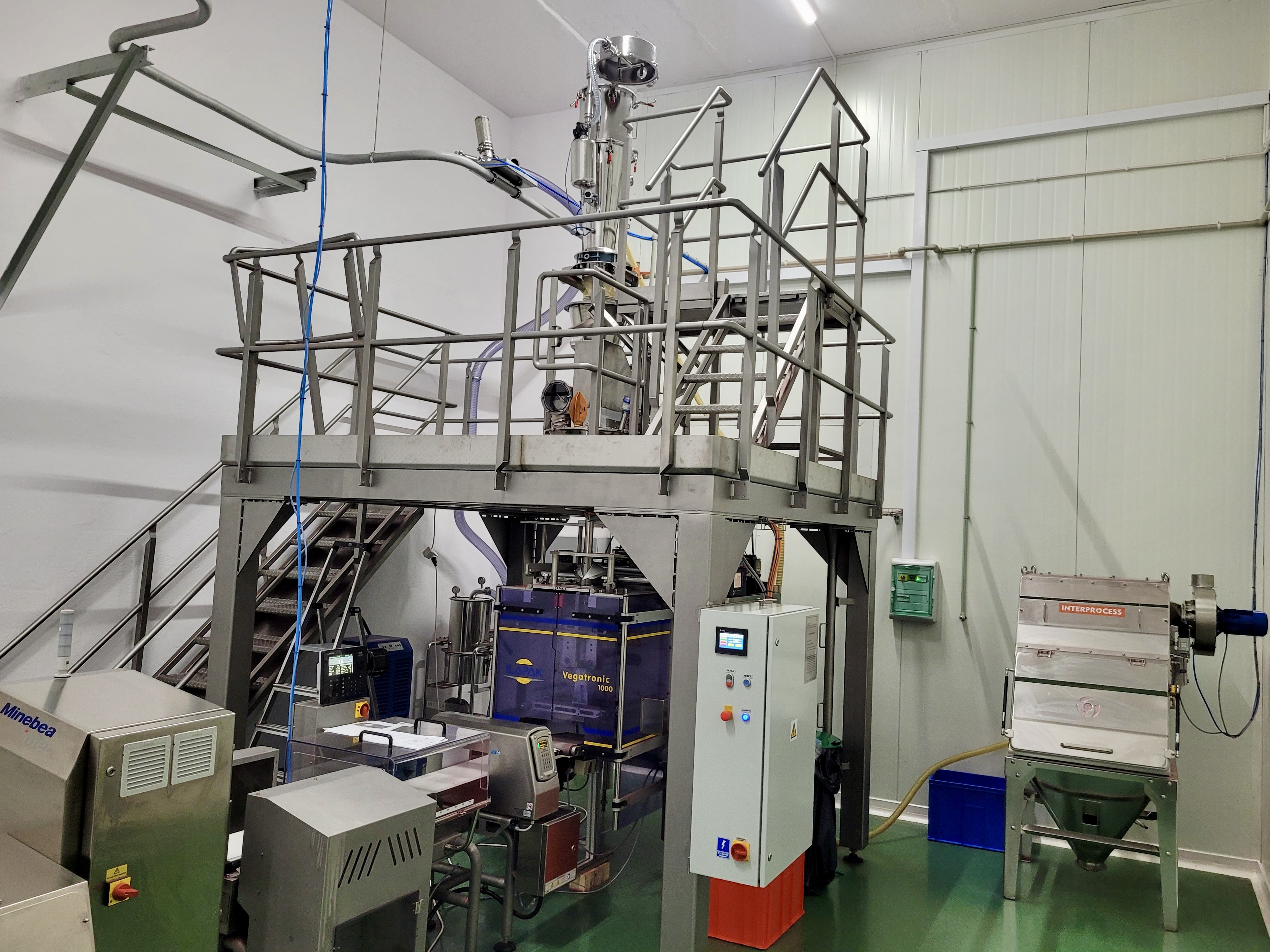
Pneumatic Vacuum Conveying

VSU vacuum conveying system

Pneumatic vacuum conveying of bulk materials

Vacuum conveying moves powders and granules dust-free and fully contained inside enclosed pipework, with no moving parts along the conveying route. Every system is engineered individually, from the pick-up point through to discharge and control.

up to 10000 kg/h conveying capacity 50+ m conveying distance 38–100 mm pipe diameters, routed in any direction ATEX · FDA · GMP compliant builds

Operating principle

How vacuum conveying works: three components, one closed cycle

Material is drawn in from the pick-up point, separated from the air in the receiver and discharged by gravity into the process. The suction–discharge cycle repeats automatically, and the product stays inside a closed, contained system throughout.

1

Material pick-up point

A suction hopper, pick-up wand, sack tip station or big bag station. The material is aerated before it enters the conveying line, which gives an even flow.

2

VSU vacuum receiver

The heart of the system. It separates the material from the air using cartridge or bag filters with reverse-pulse jet cleaning. Level sensor, discharge valve and optional discharge aids.

3

Vacuum generator

The vacuum source, selected to suit the material, the throughput and the distance: side-channel blower, Roots blower, rotary vane pump or ejector. With a secondary filter and sequence control.

The receiver working cycle in three phases

The standard arrangement is cyclic operation with a discharge valve (a butterfly valve), described below: the receiver draws in material, isolates the vacuum and discharges a batch into the process, and the cycle repeats automatically under the supervision of a level sensor. In selected applications we fit a rotary valve instead of a butterfly valve, which takes the material away continuously. The receiver then runs without pausing to discharge, keeping the vacuum in the chamber.
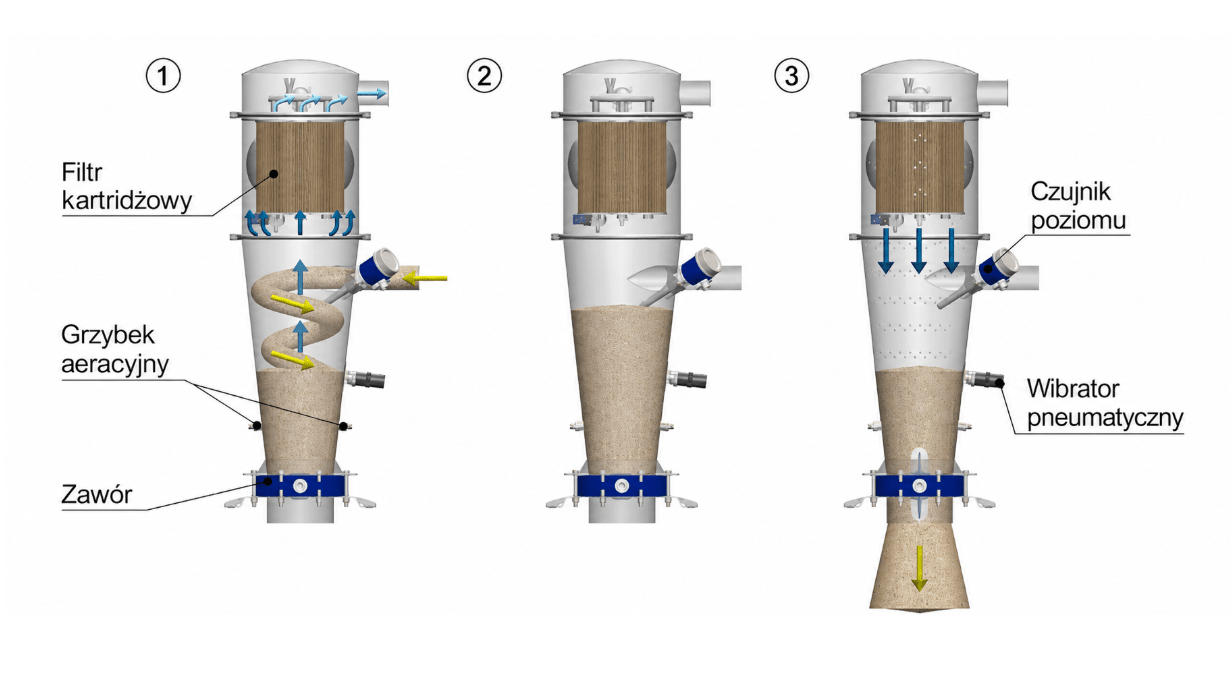
Working cycle of a VSU vacuum receiver: filling, settling, discharge with filter cleaning
1

Suction and filling

The generator creates the vacuum, material flows into the body of the receiver and settles at the bottom of the chamber. The air escapes upwards through cartridge or bag filters — the number of them chosen to suit the throughput — which hold back the dust. The discharge valve stays closed and aeration pads keep the material moving.

2

Vacuum isolation and settling

Once the chamber is full, as signalled by the level sensor, suction is cut off. The airflow stops, the material settles and the pressure in the receiver equalises with the surroundings, which allows the valve to be opened safely.

3

Discharge and filter cleaning

The valve opens and the batch of material falls by gravity into the process. At the same time a pulse of compressed air cleans the filters, while a pneumatic vibrator helps empty the cone. The receiver is ready for the next cycle.

VSU receivers

VSU vacuum receivers: types S, M and L
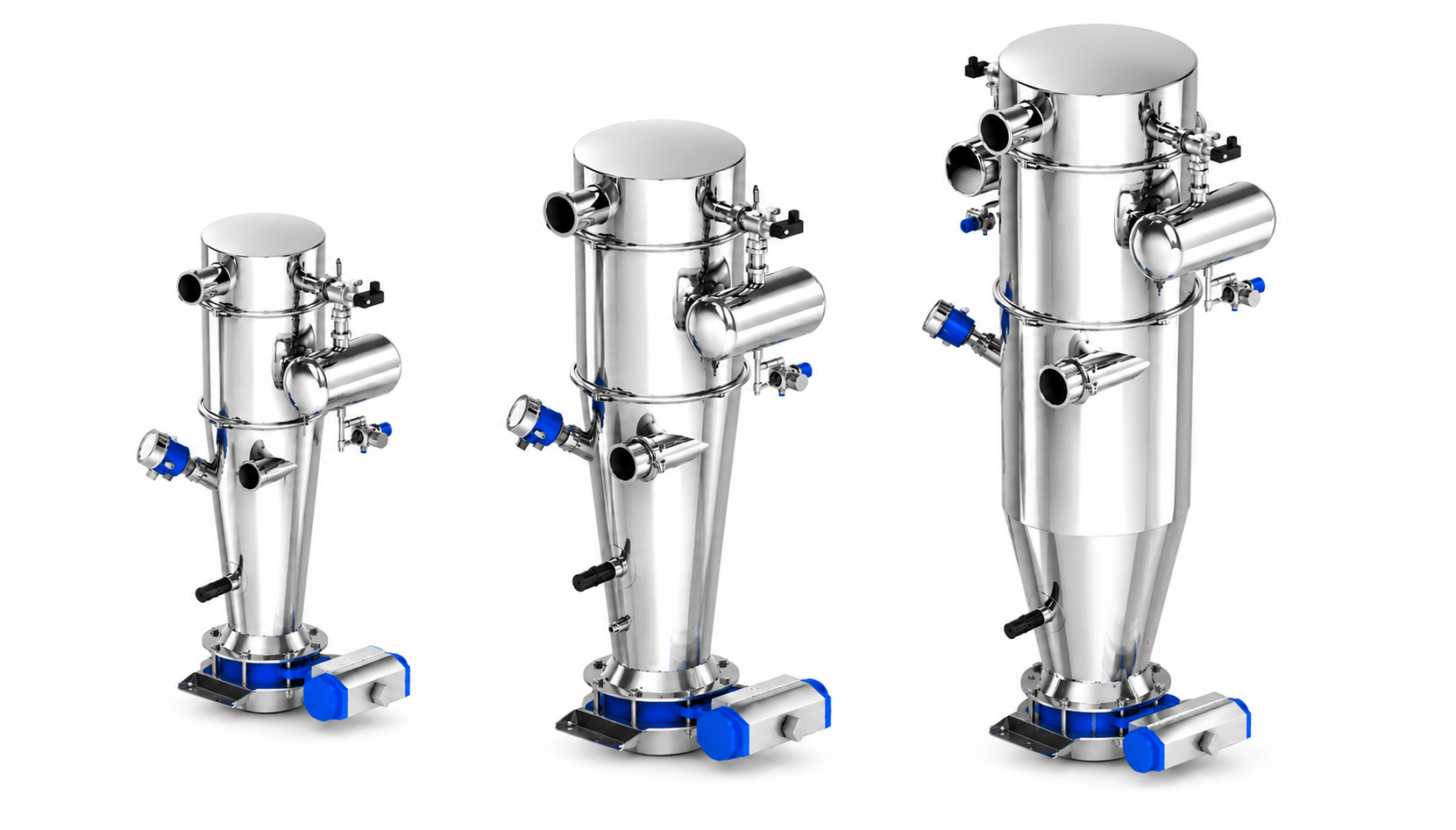
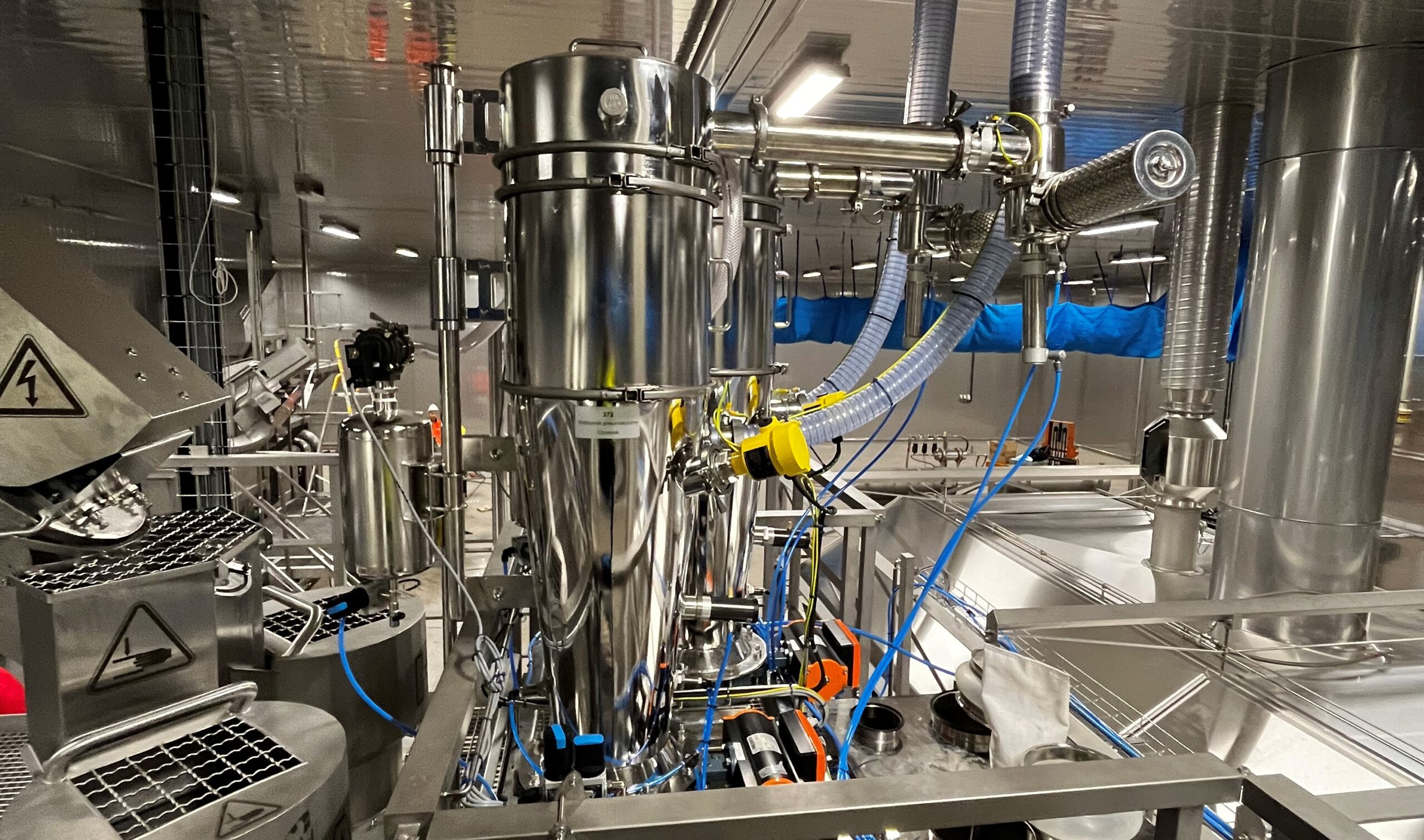
VSU vacuum receivers for conveying bulk materials, types S, M and L in stainless steel
VSU receivers: Type S, Type M and Type L

VSU receivers are built in stainless steel, in sizes chosen to suit the throughput and the working cycle, and in non-standard capacities where the process calls for it. Tool-free dismantling makes cleaning and validation straightforward.

Type S
5 l
Type M
25 l
Type L
120 l

Key features

  • Filtrationcartridge or bag filters with automatic reverse-pulse cleaning
  • Discharge valvebutterfly valve or rotary valve
  • Discharge aidsvibrator, aeration pads, level sensor
  • Materials1.4301 (AISI 304) as standard, 1.4404 (AISI 316L) optional
  • Weighing versionmounted on load cells, acting as a scale for batch dosing
  • Finishstandard, or to EHEDG requirements: product-contact surfaces electropolished to a roughness of Ra < 0.8 µm
  • Hygieneopened on clamp rings, without tools (FDA, GMP, ATEX)
Type S · Type M · Type L non-standard capacities ATEX

Conveying modes

Dilute phase or dense phase?

Dilute phase is the standard: material suspended in an airstream at velocities from around 15 m/s upwards, depending on the material and the route. For fragile, abrasive or pre-blended products we use dense phase: slug conveying at 3–15 m/s, which minimises degradation and segregation of the material.
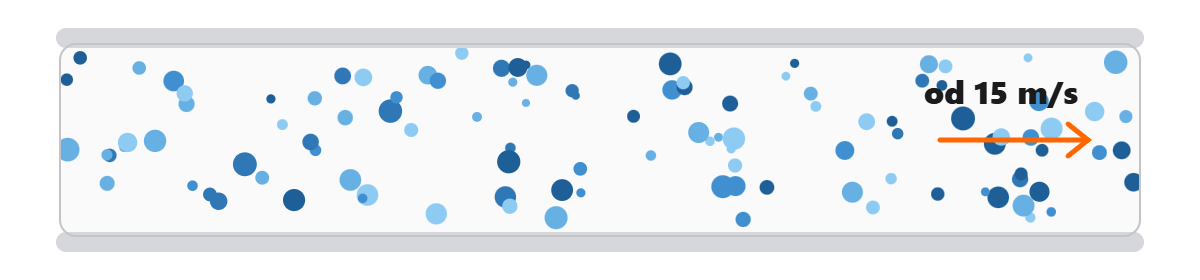

Cross-section of the pipe in dilute-phase conveying
Dilute phaseParticles dispersed across the whole cross-section of the pipe and carried by a high-velocity airstream, above 15 m/s.
Cross-section of the pipe in dense-phase conveying
Dense phaseThe material flows as a dense layer along the bottom of the pipe, forming travelling dunes. The particles move together, at low velocity.
Parameter Dilute phase faza rzadka Dense phase faza gęsta
Air velocityabove 15 m/s3–15 m/s
Product degradationmoderateminimal
Risk of blend segregationpossiblevery low
Pipe and bend wearhighersignificantly lower
Typical materialsflour, sugar, chemical powders, cementflakes, granulates, premixes, crystals, tablets

Vacuum generators

Vacuum generators. We are not tied to a single technology

The type of vacuum generator determines the throughput, the reach and the energy cost of the whole system. We work with all four types and choose the one that suits the material and the duty — not the one that happens to be in our range.
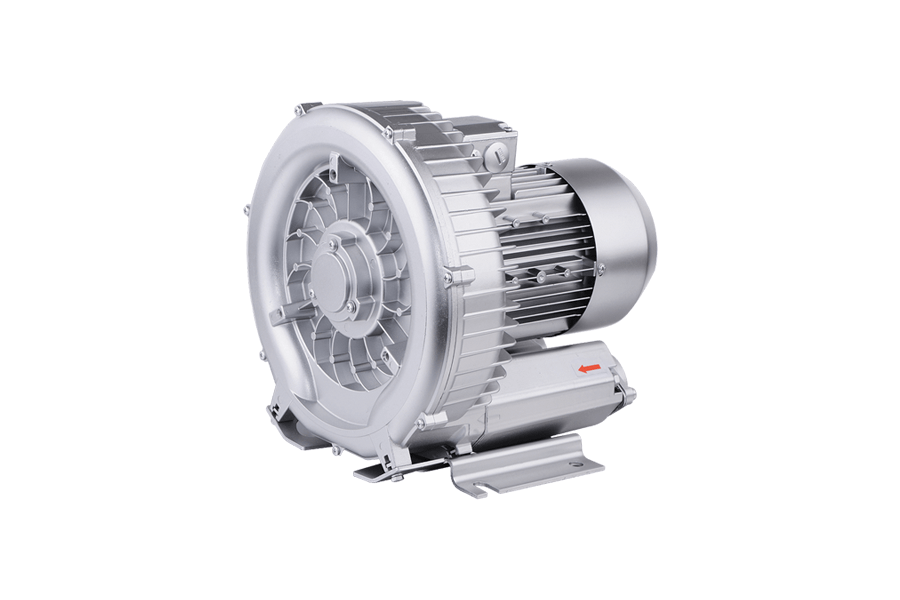
Side-channel blower as the vacuum generator in a vacuum conveying system

Side-channel blower

Simple, quiet and cheap to run. For compact systems and short routes: refilling feeders, mixers and packing machines.
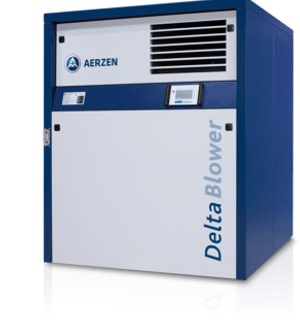
Roots blower as a vacuum generator

Roots blower

The answer for high throughputs and continuous duty. A single generator serves several conveying lines in the plant in sequence.
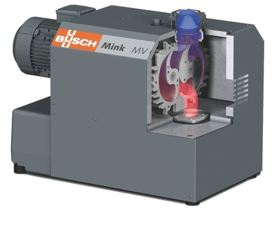
Claw vacuum pump for vacuum conveying of bulk materials

Rotary vane / claw pump

High vacuum at low energy consumption. For long routes, dense-phase conveying and delicate products.
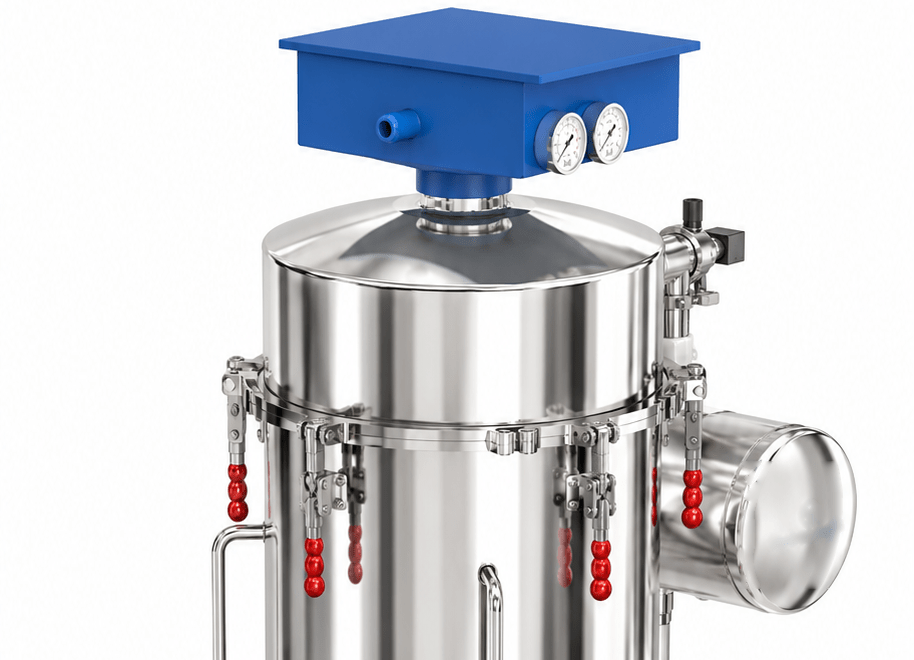
Multi-stage ejector mounted on a vacuum receiver

Multi-stage ejector

No moving parts and no electrical supply. For potentially explosive atmospheres, intermittent duty and mounting on the receiver.

Which one to choose? It depends on the material, the distance and the duty. Fill in the questionnaire and we will do the selecting for you.

Download the questionnaire

Configurations

Typical vacuum conveying system layouts

From simple single-line layouts to systems with multiple pick-up and discharge points, dense-phase conveying and batch dosing. Every one of them is engineered for a specific application.
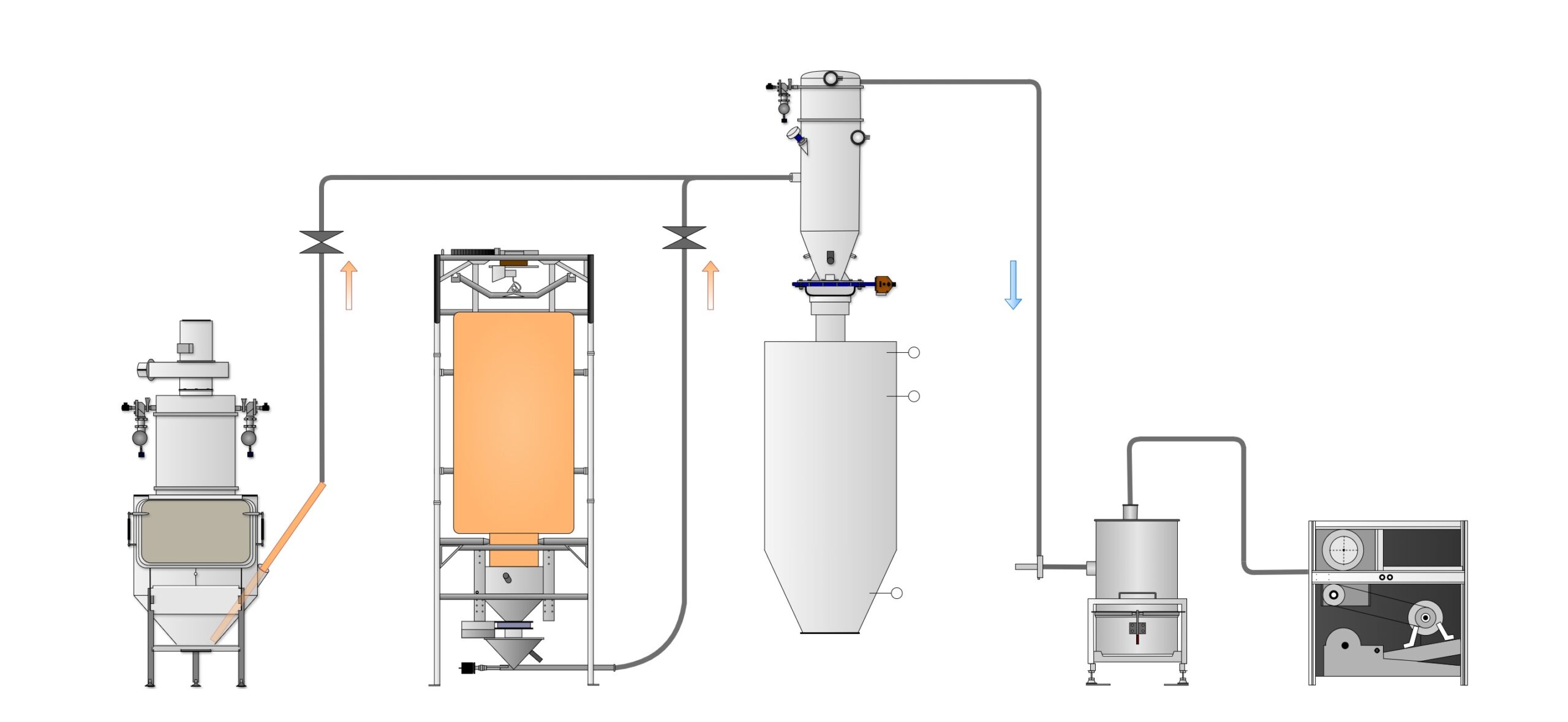
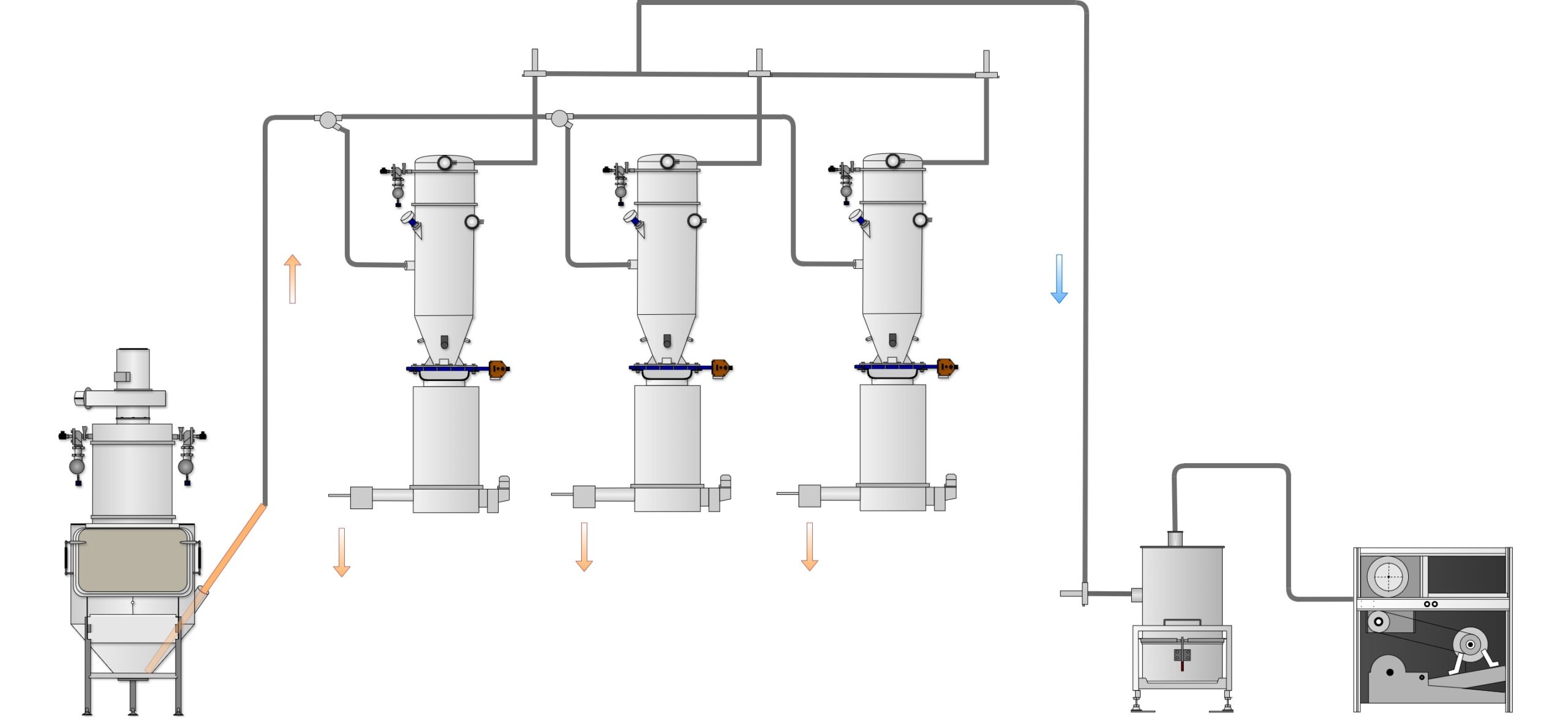
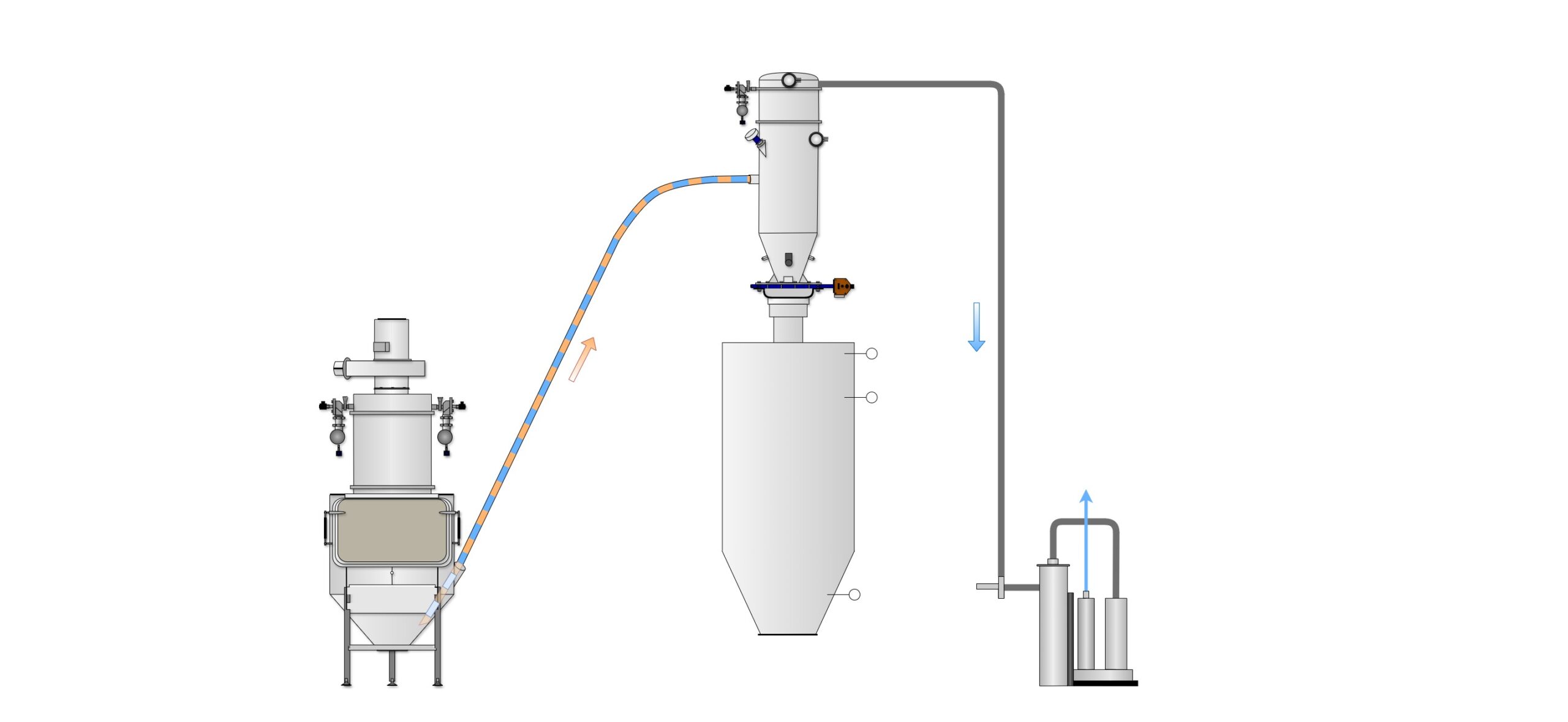
Diagram: multiple pick-up points, a single destination

01 · Multiple pick-up points

A single conveying line serves several material sources. The control system switches the pick-up between points according to the recipe, with no changeover of the installation and no operator involvement.

Diagram: a single pick-up point, three destination feeders

02 · Multiple discharge points

Material from a single pick-up point reaches several destinations. Diverter valves direct the flow, and one vacuum generator serves the lines in sequence, which lowers both capital and running costs.

Diagram: dense-phase conveying

03 · Dense phase

The answer for fragile and abrasive products and for ready-made blends. The material travels in slugs at 3–15 m/s rather than suspended in the airstream. The product arrives undamaged, the blend does not segregate and the bends wear more slowly.

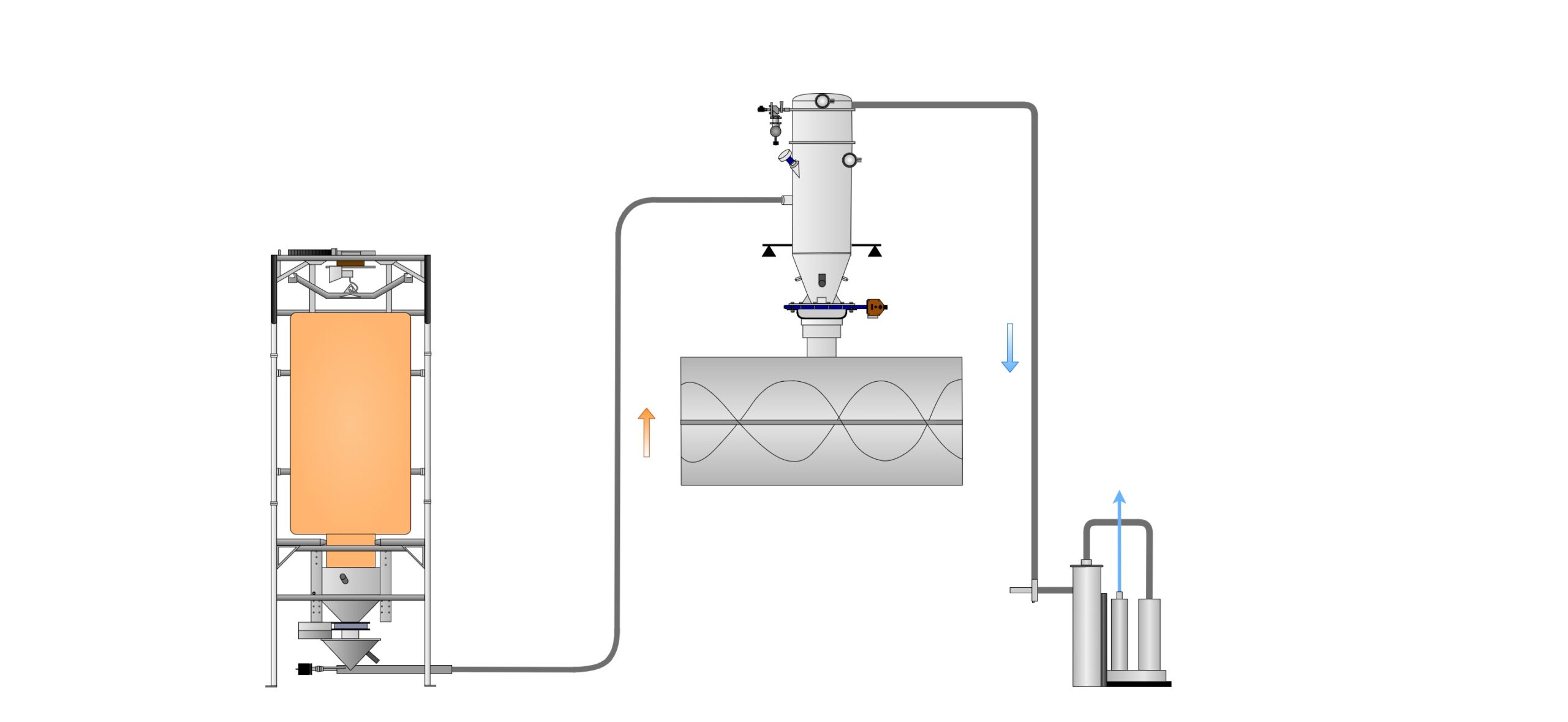
Diagram: batch dosing into a mixer

04 · Batch dosing

A receiver mounted on load cells acts as a scale: it weighs out the successive ingredients of the recipe and discharges the finished batch into the process. Conveying and weighing are handled by a single unit, with no separate hopper scale.

Industries and applications

Conveying bulk materials in key industries
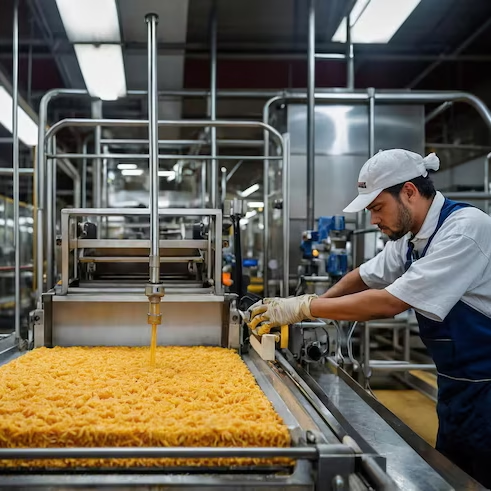
Vacuum conveying of bulk materials in the food industry

Food and animal feed

Flour, sugar, cocoa, milk powder, starch, premixes, animal feed. Loading mixers, refilling feeders, conveying from big bags. FDA and HACCP compliant builds.

Vacuum conveying of powders in the pharmaceutical industry

Pharmaceutical and chemical

Active pharmaceutical ingredients (APIs), tablets, pigments, resins, plastic granulates. Contained conveying, ATEX zones, tool-free dismantling for cleaning and validation.

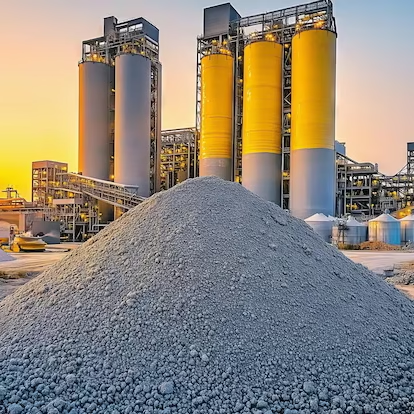
Pneumatic conveying of granulates and cement in the construction industry

Plastics and construction

PE and PP granulates, PVC, cement, lime, titanium dioxide, fly ash. Discharging silos and tankers, feeding extruders and reactors.

Video

VSU vacuum conveying on film

Introductory film: how the VSU system works
Dismantling a Type L receiver without tools
Drawing material from a DSL screw feeder
Picking up material with a suction lance

Trials on your own material

Hire a VSU system before you decide

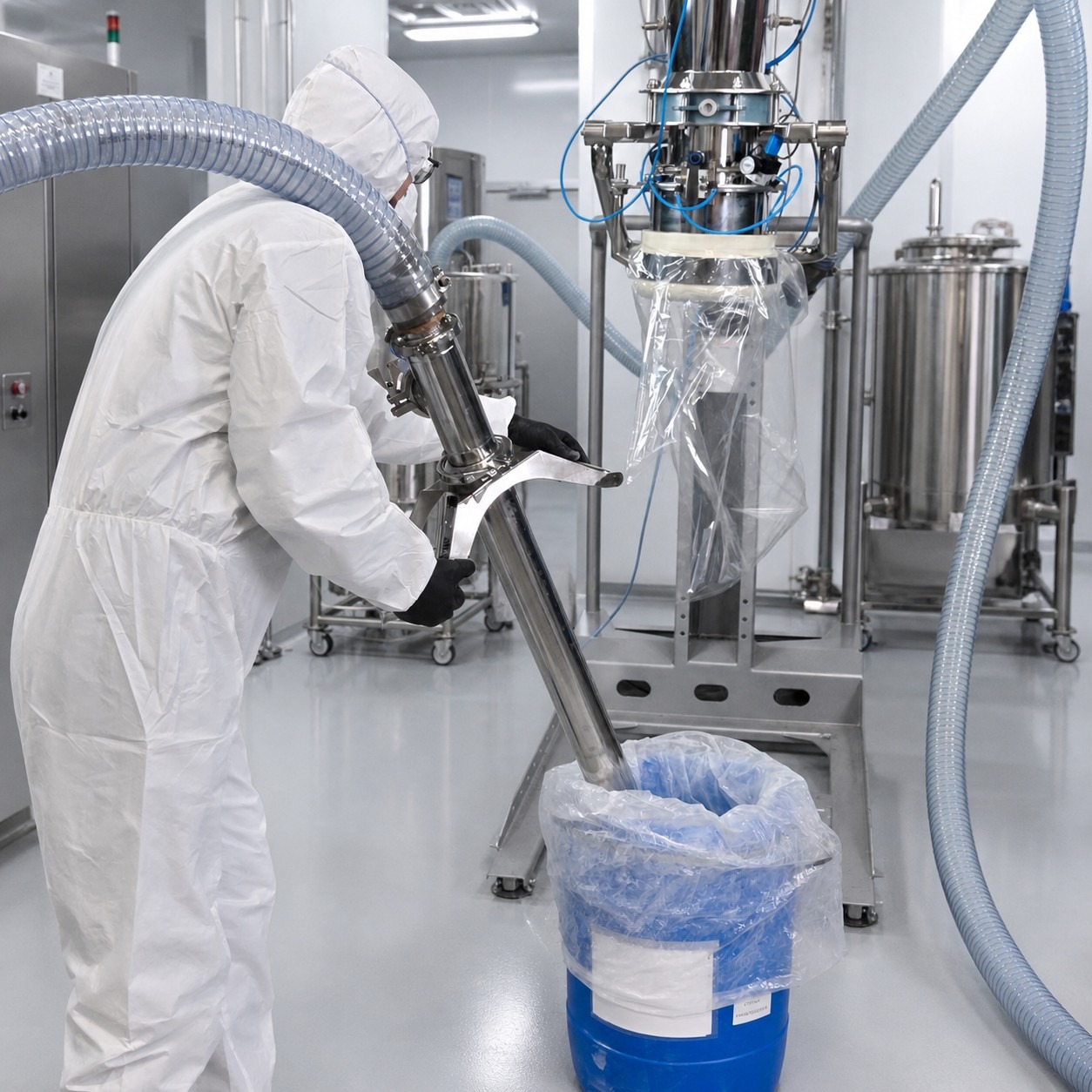
Every bulk material behaves differently. Rather than relying on catalogue figures, we make a mobile VSU system available for trials at your own plant: on your product, along your route and in your working cycle. You can check the real throughput, how the material behaves and how well the filtration works before committing to a purchase.

  • trials on your material, at your plant
  • a complete set-up: receiver, vacuum generator and pipework
  • support from our engineer during commissioning and in assessing the results
Ask about hire
Vacuum conveying trials on a customer's material, with a hired VSU system

FAQ

Frequently asked questions

What are the advantages of vacuum conveying over mechanical conveyors?

+
Having no moving parts along the route means minimal maintenance and no risk of contaminating the product. The material travels inside enclosed pipework, which makes the process completely dust-free — critical in the food and pharmaceutical industries and in potentially explosive atmospheres. Pipes can be routed through walls and between floors, and if a vacuum system develops a leak the material does not escape. A single installation can pick material up from several points and deliver it to one destination.

Will a vacuum conveying system fit into a plant with limited space?

+
Yes. Pipes of 38–100 mm diameter are routed vertically, horizontally, through walls and floors, and around existing equipment. The vacuum generator can stand in a different room from the receiver. Every system is designed after a site survey, taking account of the existing infrastructure and of any future expansion.

Do you build vacuum conveying systems to order?

+
Yes, and it is our key strength. We size the receiver to the throughput and the working cycle (including non-standard capacities), design the route around existing obstacles, choose the vacuum generator to suit the material, and integrate the system with feeders, big bag stations, mixers and the control system. From the site survey through to commissioning and service.

Which materials can be conveyed by vacuum?

+
Practically every dry bulk material: fine powders (flour, cocoa, titanium dioxide), granulates (PE/PP, PVC, fertilisers), fragile materials (flakes, tablets) and abrasive ones (cement, quartz). The limitation is wet or strongly adhesive materials; in such cases we recommend a conversation with our application engineer.

Can a vacuum conveying system dose in batches?

+
Yes. A receiver mounted on load cells acts as a scale. The controller monitors the increase in mass in real time and closes the valve once the set value is reached; when the reading has stabilised, the batch falls by gravity into the process. The controller handles multi-ingredient recipes, weighing out the successive ingredients before discharging the batch.

Need a vacuum conveying system?

We will design a system around your material, your throughput and your space. Audits of existing installations, upgrades, and full support from design through to commissioning.

Get in touch
Diagram: multiple pick-up points, a single destination
Multiple pick-up points · 1/4
×
Diagram: a single pick-up point, three destination feeders
Multiple discharge points · 2/4
×
Diagram: dense-phase conveying
Dense phase · 3/4
×
Diagram: batch dosing into a mixer
Batch dosing · 4/4
×
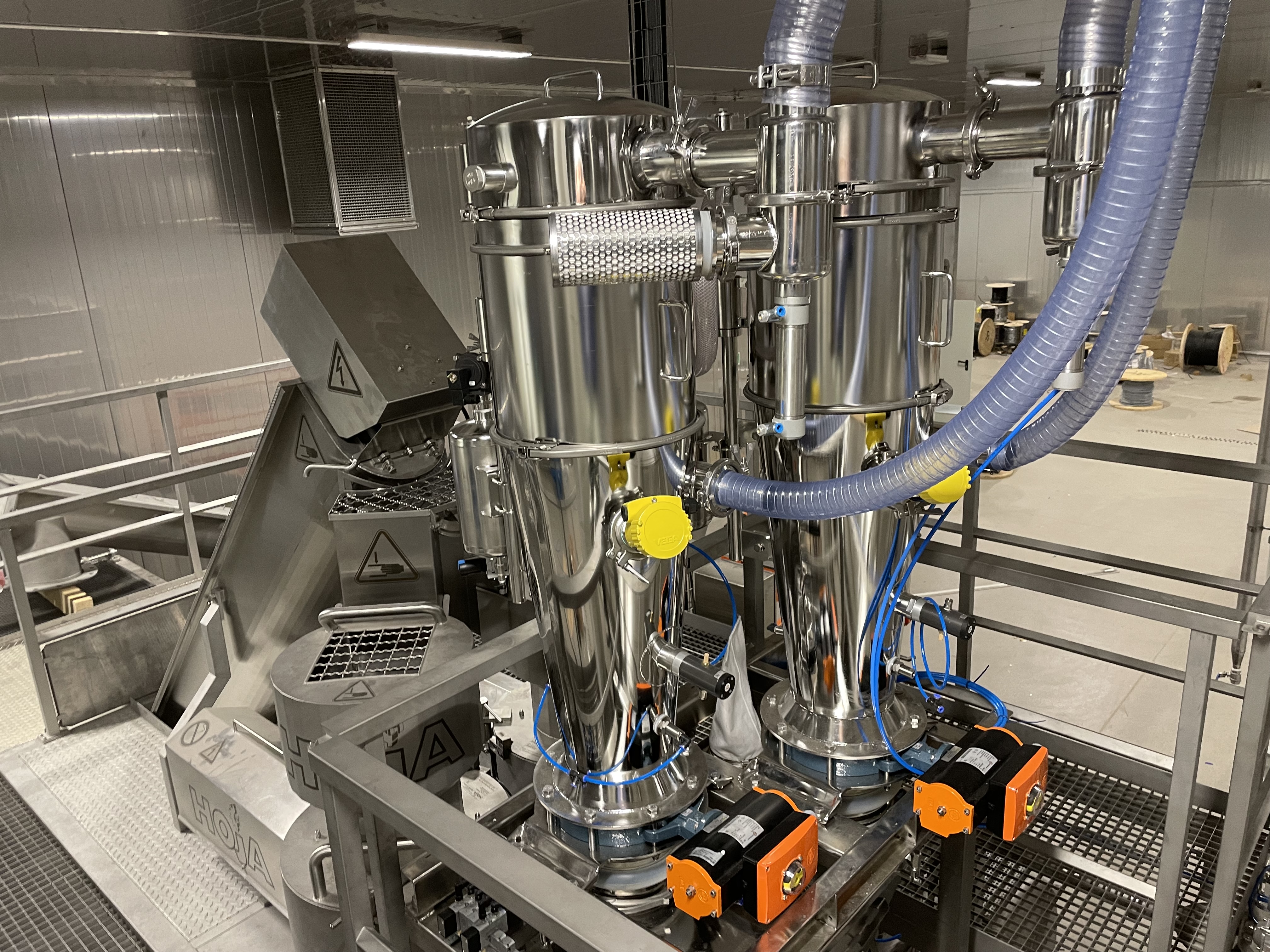
Type M receivers conveying spices and dough ingredients
Type M receivers conveying spices and dough ingredients · 1/5
×
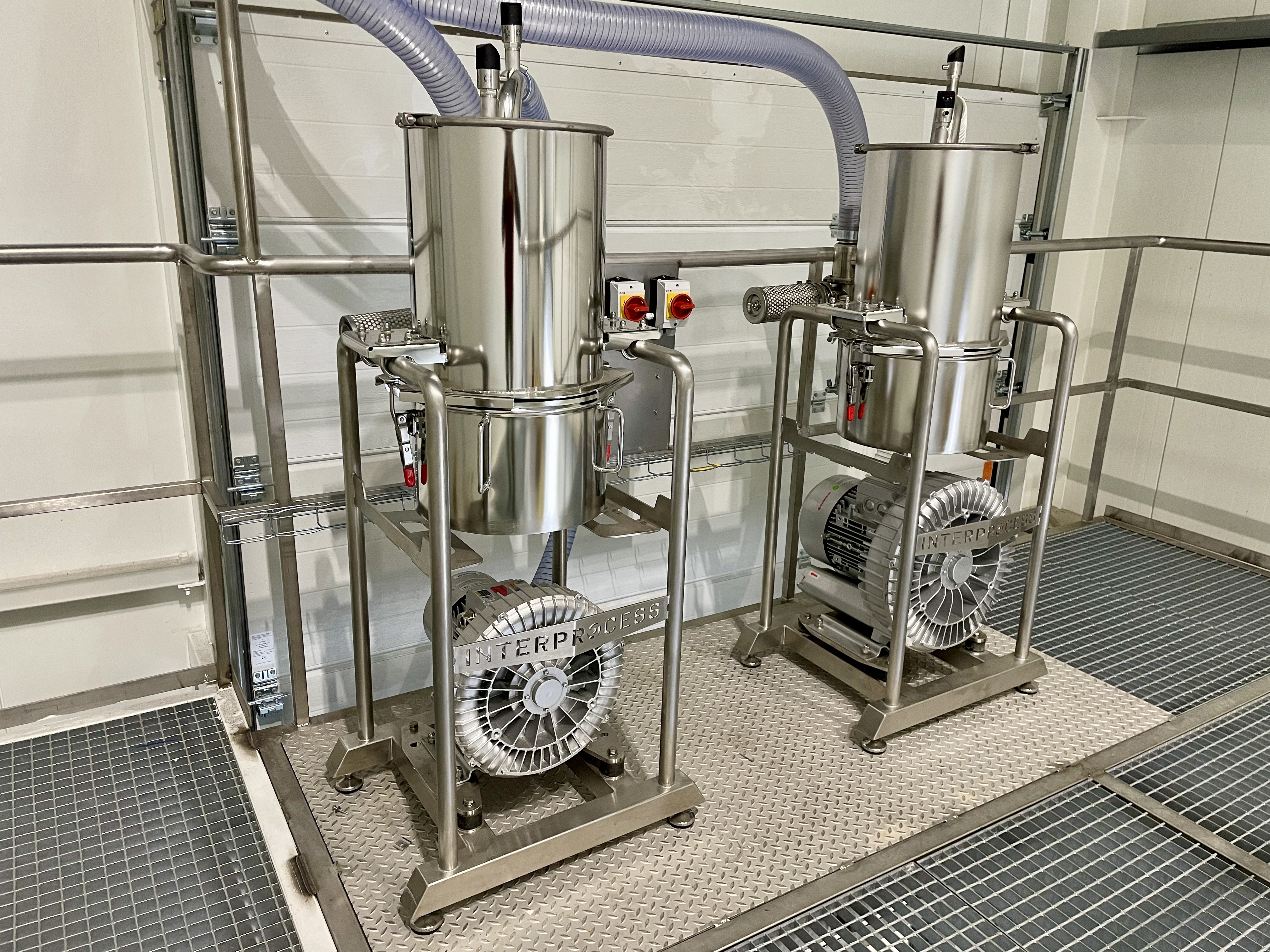
Vacuum generators with side-channel blowers
Vacuum generators with side-channel blowers · 2/5
×
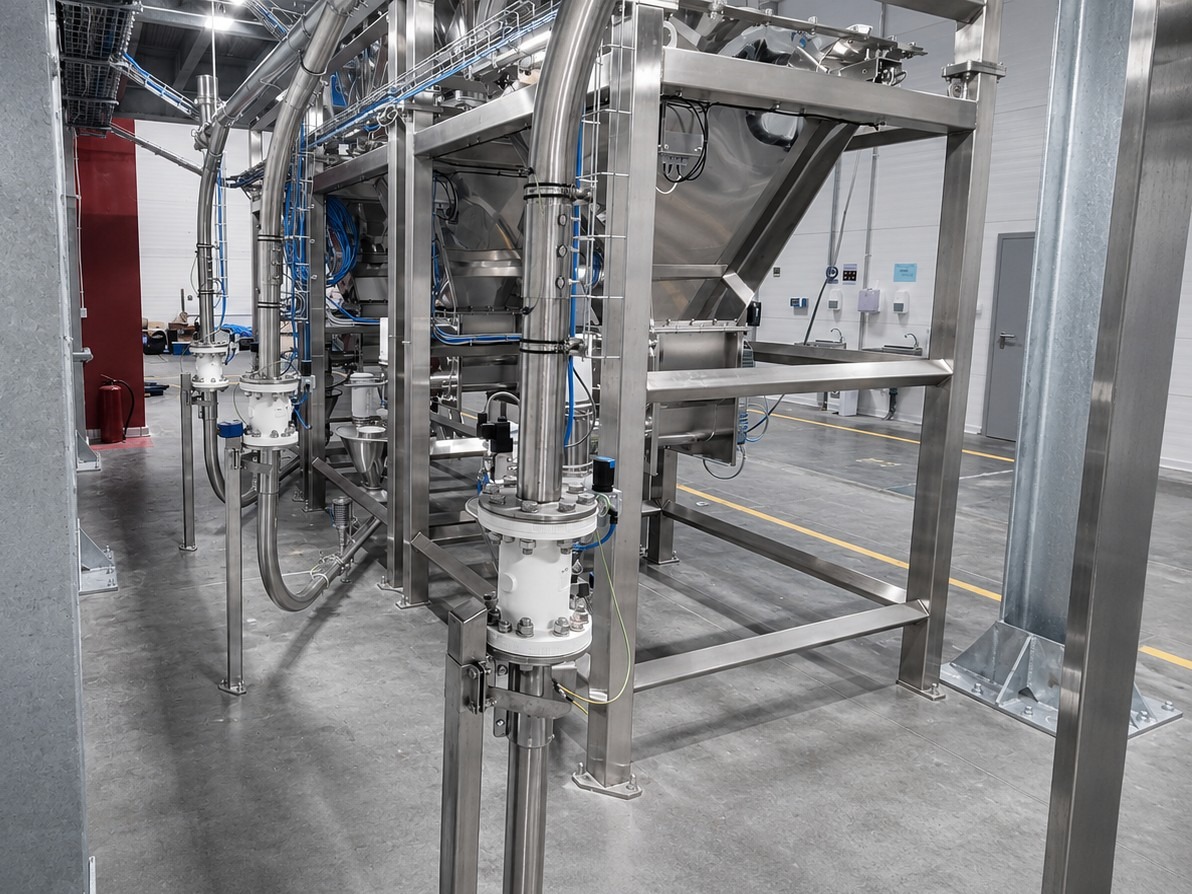
Conveying line for jelly and blancmange ingredients
Conveying line for jelly and blancmange ingredients · 3/5
×
Type L receiver prepared for continuous sugar conveying
Type L receiver prepared for continuous sugar conveying · 4/5
×
Vacuum conveying line taking freeze-dried product to a packing machine
Vacuum conveying line taking freeze-dried product to a packing machine · 5/5
×